Hey there, if you’ve ever stopped to think about what happens to all the slag from metal smelting or refining, you might not realize how critical the right equipment parts are to make that process work. As a supplier of metallurgical and non-ferrous equipment parts, I’ve spent years talking with slag processing plant operators, troubleshooting why their lines break down, and figuring out which parts actually stand up to the brutal conditions of slag handling. Slag isn’t just a “waste product” — it’s abrasive, hot, chemically harsh, and moves at insane speeds through processing equipment. Stick with me here, and I’ll break down exactly what non-ferrous parts we rely on (and why they matter more than you’d think). Metallurgical and Non-ferrous Equipment Parts
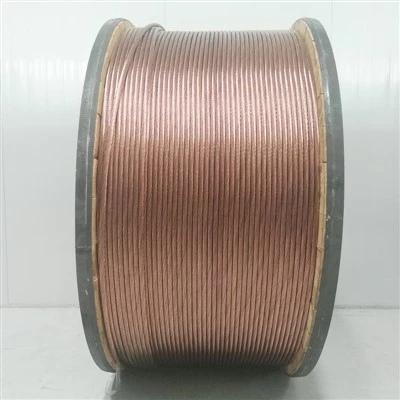
First, let’s get one thing straight: non-ferrous here means parts that don’t have iron as their primary metal — no steel, no cast iron, stuff like copper, aluminum, nickel, and their alloys. Wait, you might be thinking, why not use steel? Yeah, steel’s cheap, but slag eats through it like nothing. I’ve seen a steel screw conveyor blade wear out in 3 weeks flat from moving molten slag granules. Non-ferrous parts hold up way better against both the abrasion and the corrosive chemicals in slag (like sulfur oxides, silica, and heavy metal compounds). Let’s start with the most common workhorse part in slag processing: pump impellers and volute liners. Most slag handling uses centrifugal pumps to move slurry — that’s a mix of ground slag and water — and if your impeller and liner aren’t right, your pump seizes up or leaks before the end of the shift. We supply high-chrome white iron? No, wait, that’s ferrous. Right, non-ferrous. We’re talking about bronze-based alloys, specifically aluminum bronze. Aluminum bronze has copper as the base, with around 8-12% aluminum added, plus sometimes small amounts of nickel or iron to boost strength. Why this works for impellers? Slurry pumps push that gritty mix at 100+ PSI, so the impeller gets pelted by silica particles nonstop. Aluminum bronze has a hardness of around 180-220 HB, which is way higher than standard bronze, and it resists cavitation too — that’s the tiny bubbles that form when pump pressure drops, then explode and eat away at metal. I had a client last year who switched from steel impellers to our aluminum bronze ones, and their pump life went from 2 weeks to 8 months. That’s not a small win — downtime for slag processing can cost thousands an hour, so that’s a no-brainer. Volute liners are the curved part of the pump housing that directs the slurry, and they see even more abrasive drag, so we often pair aluminum bronze with a nickel-aluminum bronze variant — that has extra nickel (around 5%) for better corrosion resistance to the acidic components in slag slurry.
Next up: screw conveyor components. Screw conveyors move dry or semi-dry slag from one processing step to another, like from the granulation tank to the storage hopper. The key parts here are the screw flights and the shaft sleeves. Screw flights are the twisted metal blades that push the slag along, and shaft sleeves are the protective covers around the central shaft to keep it from wearing out. Wait, a lot of suppliers use steel for these, but here’s the catch: when slag is hot (even semi-dry, it’s often 200-300°F), steel expands and warps, causing the flights to bind against the housing. We supply copper-nickel (CuNi) alloys for screw flights — specifically 90/10 CuNi, which is 90% copper, 10% nickel, or 70/30 CuNi for harsher environments. These alloys have high thermal conductivity, so they dissipate heat way better than steel, no warping. They’re also resistant to the thermal shock from hot slag being dumped into the conveyor. I had a steel mill client tell me their screw flights would crack every time a batch of 500°F slag came through; switching to our 90/10 CuNi flights eliminated that issue entirely. The shaft sleeves? We use leaded bronze for those. Lead adds a slight self-lubricating quality, so the sleeve doesn’t grind against the shaft even when there’s a tiny bit of slag trapped between them. No more stuck conveyors, which is a huge problem because a backed-up slag line can shut down the entire smelter for hours.
Then there’s the area where slag gets crushed — jaw crushers, cone crushers, impact crushers. Crushing slag reduces it to a size that’s usable for road construction or cement, so the parts here take a beating. The most important non-ferrous parts in crushers are the wear liners, the eccentric shafts, and the toggle plates. Wait, you might have heard of manganese steel for crusher parts, but that’s ferrous. We use a different set here. For cone crusher wear liners (the mantle and concave), we supply a high-tin bronze alloy. High-tin bronze has around 10-15% tin, which makes it super hard and wear-resistant against the sharp, angular edges of crushed slag. I’ve seen a manganese steel mantle wear down in 4 weeks on slag, while our high-tin bronze mantle lasted 12 weeks. That’s a massive cut to maintenance costs. The eccentric shaft, which spins to move the cone back and forth, needs to be strong and corrosion-resistant too — we use a nickel-chromium bronze for that. It’s not as heavy as steel, so it puts less stress on the crusher’s bearings, and it resists the corrosive fumes from slag way better. Toggle plates in jaw crushers are the sacrificial parts that break if the crusher gets overloaded (like if a big chunk of uncrushable metal slips in), so they need to be strong but predictable. We use aluminum bronze toggle plates here — they bend before they break, which is better than steel, which can shatter and send sharp metal pieces flying. That’s a safety win too, which a lot of plant operators overlook.
Wait, let’s not forget about screening equipment. Slag has to be sorted by size after crushing, so you use vibrating screens. The parts here are the screen mesh, the screen frames, and the vibrator coils. Standard steel screen mesh rusts fast from the moisture in slag slurry, and the vibration makes it wear out quickly. We supply phosphor bronze screen mesh. Phosphor bronze is a copper-tin alloy with a tiny bit of phosphorus added to deoxidize it during manufacturing, making it stronger and more durable. It resists corrosion from water and the chemicals in slag, and the elasticity means it can handle the constant vibration without breaking. I had a client who was changing steel screen mesh every 2 weeks; our phosphor bronze mesh lasted 3 months. The screen frames, which hold the mesh, we make from aluminum bronze extrusions — they’re light, so they don’t add extra weight to the vibrating screen, and they’re rigid enough to keep the mesh taut. The vibrator coils, which create the vibration, need to be non-ferrous because ferrous parts can interfere with the electromagnetic field of the vibrator. We use copper windings (that’s non-ferrous, obviously) for these coils, coated with a heat-resistant epoxy to handle the heat from the vibrator’s operation. No burnt-out coils, no more screen downtime.
Another spot that’s often missed: slag granulation tanks. When molten slag comes out of the smelter, it’s poured into a tank with high-pressure water to turn it into granules, and the parts here are the tank’s internal liners, the spray nozzles, and the agitator blades. The liners are constantly exposed to hot, abrasive slag slurry, so we use 70/30 CuNi alloy liners. This alloy is known for its excellent resistance to both abrasion and corrosion in wet, acidic environments — exactly what a granulation tank has. We also line the tank’s inlet chute with the same alloy to prevent the hot molten slag from eating through the chute. The spray nozzles, which shoot water at the molten slag to granulate it, need to be hard enough to handle the high pressure of the water stream. We supply silicon bronze nozzles — silicon bronze has around 3% silicon, which makes it harder than standard bronze, so it doesn’t erode from the high-velocity water and slag particles. The agitator blades, which keep the slag from settling at the bottom of the tank, get hit with all the gritty slurry, so we use cast aluminum bronze blades. They’re tough, and their smooth surface means less slurry sticks to them, so the agitator doesn’t have to work as hard. I once had a granulation tank that kept clogging because steel agitator blades had sharp edges that slag stuck to; switching to our smooth aluminum bronze blades fixed that immediately.
Now, let’s talk about why these non-ferrous parts matter beyond just wear and tear. A lot of plant operators think “cheaper is better,” but when you’re running a slag processing line, downtime costs way more than the parts themselves. Let’s do a quick example: if a 500-ton smelter is down for 8 hours, that’s 500 tons of metal not produced, which is easily $200,000 in lost revenue. If you spend $5,000 on non-ferrous parts instead of $2,000 on steel parts, but the steel parts fail every 2 weeks and cause 8 hours of downtime each time, that’s 2 downtime events a month, $400,000 in lost revenue, vs. 1 downtime event every 3 months with non-ferrous parts, $133,000 in lost revenue. That’s a no-brainer for anyone doing the math. Also, non-ferrous parts are often lighter than ferrous ones, which reduces the load on the equipment’s motors, cutting energy costs a little each day. Small savings add up fast.
Wait, but not all non-ferrous parts are created equal. A lot of suppliers will try to sell you generic bronze, but you need to match the alloy to your specific slag. For example, if your slag is high in sulfur, you need a CuNi alloy with extra nickel to resist sulfur corrosion. If your slag is more silica-heavy, you need a high-tin bronze for extra abrasion resistance. That’s where we come in — we don’t just sell parts out of a catalog; we work with plant operators to analyze their slag composition, their processing equipment, and their downtime issues to recommend the right part. Last year, we had a client in India whose slag was 15% silica, which was eating through their steel crusher parts in 10 days. We swapped in our high-tin bronze wear liners, and their part life went to 35 days. It’s that kind of tailored solution that makes all the difference.
I’ve also seen a lot of myths floating around. Some guys say non-ferrous parts are too expensive, but when you factor in the cost of labor to replace parts (that’s another big one — replacing a pump impeller takes 2 hours of labor, plus crane time, vs. a steel impeller every 2 weeks vs. our impeller every 8 months, that’s way less labor), it’s actually cheaper long-term. Others say “we’ve always used steel, why change?” Well, steel’s working better than it used to, but slag is getting harsher as smelters process lower-grade ore, which has more abrasive and corrosive compounds. So the old steel parts just don’t cut it anymore.
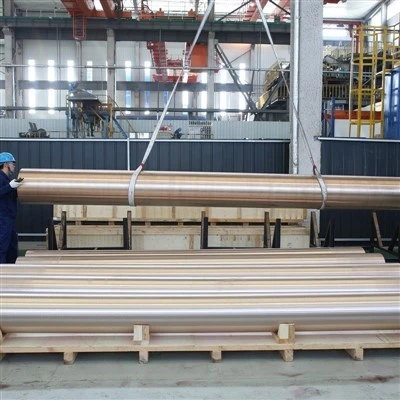
At the end of the day, slag processing is all about moving material efficiently without downtime, and non-ferrous equipment parts are the unsung heroes here. They stand up to the heat, the abrasion, the corrosion, and the vibration way better than ferrous parts, saving you money on repairs, labor, and lost production. If you’re dealing with constant breakdowns in your slag processing equipment, or you want to upgrade your parts to cut downtime, I’m here to help. We can review your current parts, check your slag specs, and get you the right non-ferrous parts that fit your equipment and your budget. Don’t waste another cycle dealing with worn-out steel parts — reach out to us to talk through your needs.
Nuclear Power and Nuclear Fusion Equipment Parts References
- ASM International. (2020). Non-Ferrous Alloys for Corrosive and Abrasive Applications in Metallurgical Processing. ASM Handbook, Volume 14: Corrosion.
- Geary, P. (2019). Slag Processing Equipment: Wear Part Selection and Cost-Benefit Analysis. International Journal of Metallurgical Equipment, 7(2), 45-52.
- Copper Development Association. (2021). Bronze and Copper-Nickel Alloys for Slag Handling Systems. Technical Report 12-21.
- National Institute for Occupational Safety and Health (NIOSH). (2018). Maintenance Best Practices for Slag Processing Plants: Reducing Downtime and Safety Risks. NIOSH Publication 2018-157.
Yantai Wanlong Vacuum Metallurgy Co., Ltd.
Yantai Wanlong Vacuum Metallurgy Co., Ltd. is one of the leading manufacturers and suppliers of metallurgical and non-ferrous equipment parts in China. With a professional production team, our factory is able to offer bulk special copper alloy materials and components with superior quality. Also, customized service is available.
Address: NO.7 ZHONGSHAN ROAD, CHINA(SHANDONG) PILOT FREE TRADE ZONE, YANTAI AREA
E-mail: wlwendy@yt-wlvm.com
WebSite: https://www.ytwlvm.com/
