If you’ve ever walked into a commercial dairy processing facility and watched creamy milk, tangy yogurt cultures, or sweet condensed milk move seamlessly from raw storage to finished product, there’s a quiet workhorse making that smooth transition possible: the jacketed dairy mixing tank. As a supplier who’s spent 12 years building these tanks for dairies large and small across North America, I don’t just see a piece of equipment— I see a tool that turns raw milk into consistent, safe, and delicious products that people reach for every day. Let me break down what makes these tanks so essential, how they work, and why choosing the right one matters for your dairy operation. Dairy Mixing Tank
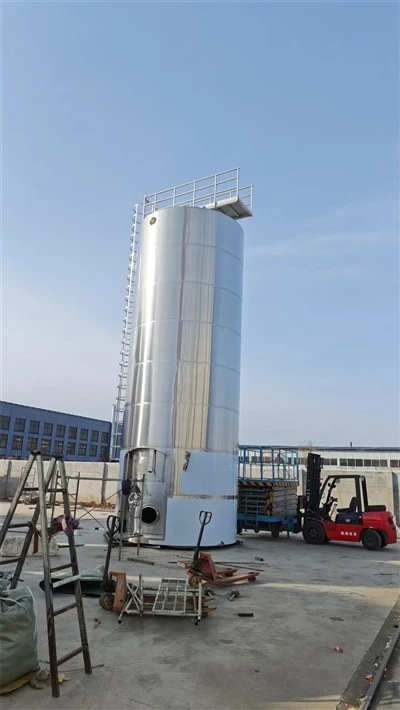
First, let’s start with the basics: a jacketed dairy mixing tank isn’t just a big insulated bucket with a mixer inside. At its core, it’s a double-walled stainless steel vessel— the same 304 or 316 grade stainless steel used for food-grade piping, chosen because it’s non-reactive, easy to sanitize, and resistant to the bacteria that can make dairy products spoil. The space between the two walls is the “jacket,” and that’s where the magic happens. Unlike a standard mixing tank that relies on just the tank’s own insulation to regulate temperature, the jacket lets you circulate hot or cold fluid (usually water, sometimes glycol for more extreme temperature control) to adjust the internal temperature of the dairy product quickly and precisely. That’s non-negotiable for dairy, where temperature is make-or-break for both safety and quality.
Let’s talk about why temperature control is so critical for dairy. Raw milk, for example, needs to be cooled from the 37°C (98.6°F) it’s harvested at to 4°C (39°F) within two hours of milking to prevent harmful bacteria like E. coli or Salmonella from multiplying. A jacketed tank can pull that off evenly, not just on the surface where the cooling element might touch the product, but throughout the entire batch. For products like yogurt, you need to heat milk to 85°C (185°F) to pasteurize it, then cool it back down to 43°C (109°F) before adding live cultures— and if that temperature swing is too slow or uneven, the cultures won’t activate properly, leading to lumpy, tangy yogurt instead of the smooth, consistent product customers expect. Even things like chocolate milk or flavored creamers rely on the jacket to dissolve additives without overheating the milk fats, which can turn the product greasy or separated.
Now, let’s get into the features that set a good jacketed dairy mixing tank apart from a generic industrial mixing tank. First, the agitator— or mixer— inside isn’t just a bolted paddle. Dairy products range from thin skim milk to thick condensed milk, creamy ice cream mix, or viscous cheese curd slurry. A good tank will have an agitator tailored to your product: some use slow, sweeping blades for gentle mixing of fragile cultures, others use high-shear impellers to blend powders like milk solids or cocoa evenly without clumping. Many of our clients also opt for variable speed controls, so you can adjust the mix rate mid-cycle— slow to heat or cool the batch, faster to blend in flavors, then slow again to keep the product smooth.
Sanitation is another non-negotiable, and this is where the jacketed design really shines for dairies. The interior surface of the tank is polished to a food-grade finish— usually a 2B or finer polish— with no crevices, cracks, or sharp corners where bacteria can hide. The jacket itself is sealed, so there’s no chance of process fluid mixing with the dairy product, which would be a major safety hazard. Most tanks also include CIP (Clean-in-Place) compatibility, meaning you can run a cycle of hot water and sanitizing solution through the entire tank— interior and jacket— without disassembling it, which cuts down on downtime between batches and ensures every part of the tank is thoroughly sanitized. For small-batch artisanal dairies, many of our tanks also have manways (access hatches) large enough for a worker to clean by hand if needed, which is a big plus for operators who make small runs of specialty products like goat milk cheese.
I’ve seen a lot of dairies skip or cut corners on jacketed tanks, thinking a regular insulated tank will work, and that’s where problems start. Last year, I worked with a small yogurt maker in Vermont who was using a standard insulated tank to cool their yogurt after adding cultures. The tank had no jacket, so they had to wait six hours for the temperature to drop, and half their batches ended up too warm, killing the cultures and leading to inconsistent product. We installed a 50-gallon jacketed tank for them, and they cut their cooling time to 90 minutes, reduced batch spoilage by 70%, and even expanded their production because they could run twice as many batches a day. That’s the real value of a good jacketed tank: it’s not just a piece of equipment, it’s a revenue driver that reduces waste, speeds up production, and keeps your product safe.
Let’s clear up a common misconception: jacketed dairy mixing tanks come in all sizes, not just the 10,000-gallon industrial models you see in large processing plants. We build tanks as small as 5 gallons for home dairies or specialty cheese makers, up to 50,000 gallons for large dairy co-ops. They can be vertical (the most common, ideal for mixing and storing) or horizontal, which is better for products that settle, like cottage cheese. You can customize the jacket too: some dairies use a half-jacket (only covering the lower half of the tank) if they only need temperature control for the bottom of the batch, while others use a full-jacket for precise, uniform temperature across the entire volume. For dairies that process products with high fat content, we also offer jacket designs with counter-current flow, where the heating or cooling fluid moves in the opposite direction of the dairy product, which is more efficient and reduces the risk of hot spots that can melt fat unevenly.
Safety is another key component we build into every tank. All our tanks meet 3-A Sanitary Standards, the gold standard for food processing equipment in North America, which means they’re designed to prevent contamination, are easy to inspect, and are safe for workers to operate. We also include pressure relief valves on the jacket, which prevent buildup of steam or pressure when heating the tank, and temperature probes inside the vessel that let you monitor the product’s temperature in real time— no more guesswork, no more ruined batches because of a wrong temperature reading. For dairies that process organic products, we can also use materials compatible with organic processing requirements, and avoid any coatings or additives that might leave residues in the product.
Now, if you’re a dairy owner trying to decide if a jacketed mixing tank is worth the investment, here’s what I tell you: it depends on your product and your goals. If you’re just pasteurizing bulk milk for raw milk sales, a basic insulated tank might work, but if you’re making yogurt, cheese, ice cream, flavored milks, or any product that requires precise temperature control and consistent mixing, a jacketed tank is non-negotiable. The return on investment comes quickly: less product waste, faster batch times, more consistent product that customers trust, and lower labor costs because you spend less time manually adjusting temperatures or cleaning the tank.
As a supplier, I don’t just sell tanks— I work with you to design the right tank for your specific operation. If you’re a small artisanal dairy making 50-gallon batches of goat milk feta, I’ll recommend a compact, easy-to-clean tank with a low-speed agitator. If you’re a large co-op processing 10,000-gallon batches of chocolate milk, I’ll build a heavy-duty tank with a high-shear mixer and a full-jacket for even temperature control. We also offer customization options like integrated level sensors, so you can monitor batch volume without opening the tank, and portable casters for small operations that need to move tanks between production areas.
I’ve been in this business long enough to know that dairies are more than just factories— they’re communities, and the products they make feed families. That’s why every tank we build is tested before it leaves our facility: we run pressure tests on the jacket to make sure there are no leaks, test the agitator to ensure it mixes evenly, and sanitize the interior to make sure it meets food-grade standards. We also provide ongoing support, from installation and training for your workers, to maintenance and replacement parts down the line, because a tank is only as good as the support you get after you buy it.
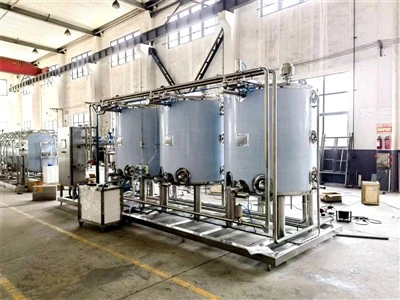
If you’re ready to upgrade your mixing process, reduce product spoilage, and make more consistent dairy products, we can work with you to design a jacketed dairy mixing tank that fits your needs, your budget, and your production goals. There’s no one-size-fits-all solution, but there is a right tank for your operation, and I’m here to help you find it.
Milk Pasteurization Tank For further technical reference on food-grade process equipment and 3-A Sanitary Standards for dairy mixing vessels, consult the resources below:
- 3-A Sanitary Standards, Inc. "Standard for Jacketed Mixing Tanks for Dairy Products"
- Food and Drug Administration. "Grade ‘A’ Pasteurized Milk Ordinance, Equipment Requirements"
- Dairy Processing Handbook, Tetra Pak. "Mixing and Temperature Control in Dairy Processing"
Shandong Chenma Machinery Co., Ltd.
Shandong Chenma Machinery Co., Ltd. is one of the most professional dairy mixing tank manufacturers and suppliers in China. As we have world-leading production equipment and strong manufacturing capabilities, we warmly welcome you to buy high quality dairy mixing tank made in China here from our factory. For price consultation, contact us.
Address: No.1666 Xinluo Street, Jinan City, Shandong
E-mail: admin@sdchenma.com
WebSite: https://www.chenmadairy.com/
