As a silicon carbide (SiC) high-voltage (HV) diode supplier, I’ve spent thousands of hours walking customers through the most common storage mistakes that turn these robust components into scrap before they even reach a production line. Let me be clear: SiC HV diodes aren’t like the old silicon diodes you might have worked with for decades. They’re made of a material that’s harder, more heat-resistant, and far more sensitive to environmental contaminants if stored incorrectly. I’ve seen it happen too many times—an engineer orders a 10,000-unit batch of 1,700V SiC diodes, leaves them in a cardboard box on a warehouse shelf for six months, and then wonders why 15% fail pre-assembly. The fix isn’t complicated, but it requires paying attention to details that most suppliers and fabricators overlook. SIC HV Diode
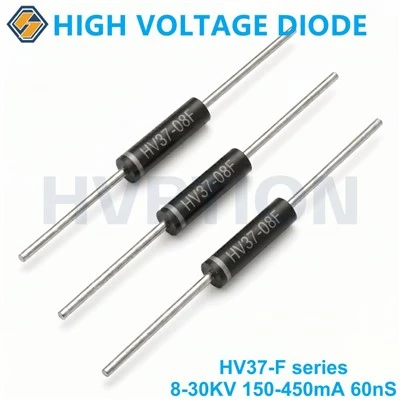
First, let’s ground this in why SiC HV diodes have different storage needs than standard silicon parts. SiC’s inherent properties give it a 3x higher band gap, 2x higher thermal conductivity, and nearly 10x higher electric field strength than silicon—all of which make it ideal for electric vehicle (EV) powertrains, industrial inverters, and renewable energy converters. But those same properties also mean the die and packaging are far less tolerant of moisture, electrostatic discharge (ESD), and physical stress than their silicon counterparts. Silicon can sit in a dusty garage for a year with minimal degradation; SiC? Not so much. I’ll break this down by the three core storage factors: environment, ESD protection, and handling best practices, plus what to do if you’ve already got diodes stored wrong and need to revalidate them.
Let’s start with environmental controls, because this is where 70% of storage-related failures originate. SiC HV diodes, especially those with plastic packaging (which is the industry standard for most high-volume applications today), are hygroscopic. That means they absorb moisture from the air, and when that moisture gets trapped in the package’s mold compound, it expands when heated during soldering. This causes micro-cracks in the SiC die, which can lead to premature breakdown or total failure once the diode is in use. The standard for moisture-sensitive devices (MSDs) is IPC/JEDEC J-STD-033, and for SiC HV diodes, we enforce a far stricter limit: Moisture Sensitivity Level (MSL) 1, or MSL 2 at the absolute max. Wait, no—let’s be accurate: most of our grade 1,200V to 3,300V SiC HV diodes are rated MSL 2, which means their moisture absorption limit is 0.1% by weight, and their floor life (how long they can be exposed to ambient conditions before soldering) is 168 hours (7 days) at 23°C, 60% relative humidity (RH). MSL 1 parts have unlimited floor life, but SiC’s packaging is still advancing, so MSL 2 is more common for cost-effective high-voltage ranges.
Here’s the mistake I see: customers receive our diodes in sealed anti-static moisture barrier bags, then immediately tear the open when they arrive to inspect them, leaving them out on a lab bench for 10 hours while they run tests. That’s 10 hours off your floor life in one go. If you can’t inspect them quickly, keep them sealed. Even worse, some customers store the unopened bags in a warehouse with no climate control—if your warehouse is consistently over 30°C and 70% RH, those bags won’t keep moisture out indefinitely. We test our packaging to maintain <5% RH inside the bag for 12 months when unopened, but only if the warehouse temperature is between 10°C and 25°C, RH <60%. If your storage space is hotter or more humid, you need to adjust: either store unopened bags in a temperature-controlled cabinet, or set a reminder to use the diodes within 8 months, not 12.
Another environmental factor: dust and particulate contamination. SiC diodes have very small die sizes—for a 3,300V HV diode, the active die might be only 2mm x 3mm, covered by a thin layer of passivation (usually silicon dioxide or silicon nitride). A single dust particle, especially one with conductive properties (like metal shavings from nearby factory equipment), can get trapped between the die and the package or inside the leads, causing a short circuit during operation. We recommend storing diodes in a clean room environment (Class 100 or better, per ISO 14644-1) if you’re keeping them for more than 3 months, but if you don’t have a clean room, seal the anti-static bags tightly and store them on a shelf away from high-traffic areas, woodworking tools, or metal stamping equipment. Never stack other heavy items on top of the diode packaging—even a 50lb box of resistors can puncture a moisture barrier bag, letting in moisture and dust.
Next, ESD protection. This is non-negotiable for SiC HV diodes, because their high electric field strength makes them far more susceptible to ESD damage than silicon diodes. A static discharge as small as 100V can create a micro-pit on the SiC die’s surface that doesn’t show up during initial testing, but will grow over time when the diode is operating at high voltage and temperature, leading to early failure. For context, the human body’s static charge can be up to 5,000V in dry conditions (common in winter in warehouses and labs), and industrial equipment can generate up to 20,000V. So how do you store diodes to prevent ESD?
First, never remove diodes from their original anti-static moisture barrier packaging unless you’re in an ESD-protected area (EPA) with grounded work surfaces, ESD wrist straps, and grounded tools. If you need to take diodes out for handling, do it only when you’re ready to mount them to a PCB or module. Second, when storing diodes long-term, keep them in ESD-safe containers—we supply our diodes with ESD-safe tubes or trays for through-hole and surface-mount packages, respectively, and those containers are tested to dissipate static charge at a rate of 10^6 to 10^12 ohms per square, which is the sweet spot for protecting sensitive semiconductors. Avoid plastic bins that aren’t labeled ESD-safe; cheap plastics can build up static charge, and if you set a bin full of diodes on a metal table, the charge will jump to the table and damage the parts.
A common question I get: can I reuse the original packaging once I open it? The short answer is no, not for long. If you open a bag to take out a few diodes, the remaining diodes are exposed to ambient moisture and ESD risk, so you need to transfer them to a small, ESD-safe, moisture-proof container and seal it immediately. We supply free, bulk ESD moisture tubes for exactly this scenario—just reach out to our customer service team and we’ll send them at no extra cost. Storing opened diodes in the original (now compromised) bag is a recipe for contamination.
Then there’s physical handling and storage logistics that people rarely think about. SiC HV diodes have very thin, fragile leads—for surface-mount devices (SMDs), the leads are often only 0.1mm thick, and through-hole diodes have leads that can bend easily during storage. If you stack a heavy box on top of a tube of through-hole diodes, the leads will bend, which makes soldering impossible and can create a stress crack in the die. The fix here is simple: store diodes upright, not on their sides. For tubes, stand them vertically on a shelf, not lying flat. For trays, use tray racks that hold each tray level, so the weight of the parts doesn’t press down on the bottom ones. Also, avoid temperature fluctuations. If you move diodes from a cold warehouse (10°C) to a warm lab (25°C), moisture will condense on the surface of the parts—this is called sweating, and it’s a quick way to introduce contamination. Let diodes acclimate to the environment for 24 hours before opening their packaging, even if you’re just moving them across a room.
Now, what if you’ve already made a storage mistake? Maybe you left a bag open for two weeks, or stored diodes in a non-climate-controlled space for 6 months, and you’re not sure if they’re still good. Don’t throw them out—there’s a process to recondition them. The standard reconditioning method for MSDs like SiC HV diodes is dry-baking, per IPC/JEDEC J-STD-033: 125°C for 24 hours, with a relative humidity below 10% during the process. But here’s a critical note: don’t over-bake them. SiC diodes can handle high temperatures, but over-baking for more than 72 hours at 125°C can degrade the passivation layer on the die, leading to lower breakdown voltage. We always recommend that customers test a small sample of reconditioned diodes first—run a DC breakdown test at 1.5x the rated voltage, and a forward current test at 1.2x the rated current, to make sure they’re still within specs before using the entire batch. I’ve seen customers recondition a whole batch of diodes only to have half fail, because they baked them for three days. Stick to the 24-hour rule.
Let’s wrap this up with actionable steps, because I know you don’t want a bunch of theory—you want a checklist you can use right now. First, for unopened packaging: store in a 10-25°C, <60% RH environment, away from heavy items and high-particulate areas, and use within 12 months of delivery. Second, for opened packaging: seal remaining diodes in ESD-safe moisture-proof containers, store in the same temperature/humidity range, and use within 7 days (for MSL 2 parts). Third, for long-term storage (over 3 months): add a humidity monitor (a small, inexpensive sensor) inside each storage container, so you can track if moisture levels stay below 5% RH. Fourth, for handling: always use ESD-safe tools, wear a grounded wrist strap, and never leave diodes exposed to ambient conditions for more than 1 hour.
At the end of the day, SiC HV diodes are a significant investment—they cost 5-10x more than comparable silicon parts, so preserving their performance is critical. As a SiC HV diode supplier, we don’t just sell parts—we partner with customers to help them extend the life of their components and reduce waste. If you’re unsure about your current storage setup, or you have a batch of diodes that you’re worried might have been stored incorrectly, don’t hesitate to reach out to our team for a free consultation. We can walk you through testing, reconditioning, or adjusting your storage processes to avoid future failures.
RI40 Thick Film Resistor References
IPC/JEDEC J-STD-033B. Moisture/Reflow Sensitivity Classification for Nonhermetic Solid State Surface Mount Devices. Joint Electron Device Engineering Council, 2020.
ISO 14644-1. Cleanrooms and Associated Controlled Environments – Part 1: Classification of Air Cleanliness. International Organization for Standardization, 2015.
Kazazis, N., et al. "Moisture Sensitivity and Degradation in Silicon Carbide Power Devices." IEEE Transactions on Power Electronics, vol. 32, no. 10, 2017, pp. 7528-7536.
Ambacher, O., et al. "Silicon Carbide: Material Properties and Device Applications." Journal of Applied Physics, vol. 87, no. 8, 2000, pp. 3315-3335.
Anshan HVRTION Electronic Technology Co., Ltd.
As one of the most professional sic hv diode manufacturers and suppliers in China, we’re featured by quality products and good price. Please rest assured to buy discount sic hv diode for sale here and get quotation from our factory. We also accept customized orders.
Address: 17 East Jiefang RD., Tiedong District, Anshan, Liaoning, China.
E-mail: hvrtion@hotmail.com
WebSite: https://www.hvrtion.com/
