If you’ve ever watched a construction crane lower a beam smoothly, or a factory robot arm extend and retract without a single sputter, you’ve seen a rod seal at work. I’m in the rod seal business—been supplying these parts to heavy equipment manufacturers, hydraulic repair shops, and factory automation teams for over a decade—and I still get asked the same question over and over by new clients: “What exactly does a rod seal do, anyway?” It’s a fair question. Most people don’t spend their days staring at the inside of a hydraulic cylinder, and rod seals are small, unassuming parts—usually less than an inch thick, often made of polyurethane, nitrile rubber, or a blended polymer mix. But make no mistake: they’re the backbone of any hydraulic or pneumatic system that moves linear force. Mess with a rod seal, and you’ll be dealing with leaks, downtime, or even catastrophic equipment failure before you know it. Let’s break down their core functions, the science behind why they work, and why getting the right rod seal matters more than most people think. Rod Seal
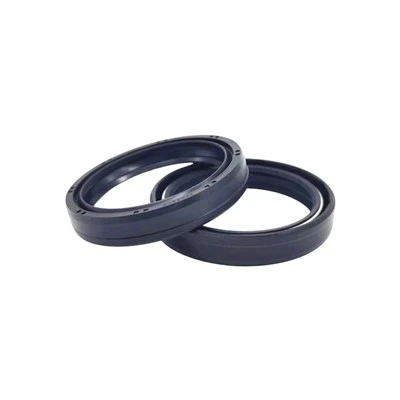
First, let’s set the scene. A hydraulic cylinder is a pretty simple machine at its core: a hollow metal tube (the barrel), a piston inside that barrel attached to a long metal rod, and ports that pump pressurized oil into either side of the piston. When oil flows into the side pushing the piston, the rod extends out of the barrel to lift a load, push a bucket, or maneuver a factory press. When oil flows the other way, the rod retracts back inside. But here’s the problem: that rod isn’t a perfect fit for the hole in the end of the barrel that it slides through. It’s a precision-machined part, yes, but there’s always a tiny gap between the rod’s smooth surface and the inner edge of the barrel’s head. If there was no seal in that gap, pressurized hydraulic fluid would jet out the first time the system ran—creating a slippery mess on the shop floor, wasting thousands of dollars in oil every month, and posing a safety hazard for workers who walk near moving equipment. That’s the most obvious function, but it’s not the only one.
The primary job of a rod seal is containment: it seals the pressurized hydraulic fluid inside the cylinder so it doesn’t leak out past the moving rod. But that’s only half the story. A good rod seal also has to keep contaminants out of the cylinder. Think about the environments these systems operate in: construction sites with dust, dirt, and rain; agricultural fields with mud and crop residue; manufacturing plants with metal shavings and machining coolant. If any of that stuff gets past the rod seal and into the barrel, it can scratch the rod’s surface, wear down the piston, or contaminate the hydraulic oil, leading to friction, pressure loss, and even full system failure. I’ve seen this firsthand: last year, a small construction company bought cheap, generic rod seals for their dozers to save a few bucks. Within six months, the seals had worn down from dirt getting past them, and each dozer was leaking two gallons of oil a week—not to mention the $12,000 in downtime when they had to replace the entire cylinder barrels. That’s the kind of headache a proper rod seal prevents.
Wait, but let’s get specific about how that containment works, because it’s not just a perfect rubber ring sitting around the rod. Most modern rod seals are designed with a lip that’s angled to press tightly against the rod as it moves. That lip is made of a material that has just the right balance of elasticity and rigidity: soft enough to conform to the slight irregularities on the rod’s surface (even precision rods have tiny micro-scratches from machining) and hard enough to hold up against repeated friction from thousands of extend/retract cycles. The lip also has a slight preload—meaning it’s designed to sit a tiny bit tighter than the rod’s diameter at rest, so when the system is pressurized, it presses even harder against the rod to create a consistent seal. That preload is calculated based on the operating pressure of the cylinder, the speed the rod moves at, and the temperature of the system—all things we take into account when we help clients pick the right seal for their application.
There’s another function people rarely talk about: pressure stabilization. A rod seal doesn’t just stop oil from leaking out—it also helps regulate the pressure inside the cylinder. When the system is in use, the pressure inside the barrel fluctuates as the load changes. If there was no rod seal, pressure would bleed off through the gap, making the system less efficient and less responsive. A properly designed rod seal creates a dynamic seal that adjusts to pressure changes: when pressure spikes, the lip expands slightly to create a tighter seal, and when pressure drops, it relaxes enough to let the rod move smoothly without excessive friction. That’s why some of our higher-performance rod seals for heavy construction equipment have a secondary support ring—called a back-up ring—that prevents the seal lip from extruding into the gap between the rod and barrel when pressure gets really high. Extrusion is a common failure mode: if a seal gets squeezed into that gap under high pressure, it can tear or deform, leading to leaks. The back-up ring solves that, extending the seal’s life and reliability.
Let’s talk about different types of rod seals, because their functions can shift a little depending on the design, and that’s where a lot of clients make mistakes. For example, a U-cup seal is one of the most common types for hydraulic cylinders. It has that characteristic U-shape, with the open side facing the pressurized oil. When pressure pushes on the open side, the U expands, pressing both sides against the barrel head and the rod to create a seal. That’s a great all-around seal for medium pressure applications, like forklifts or small construction equipment. Then there’s the lip seal, which is thinner and designed for higher speed applications—like in pneumatic systems, where pressures are lower but movement is faster. Pneumatic rod seals have to handle a lot of back-and-forth movement without wearing out, so their design prioritizes low friction as much as sealing. For extreme applications—like offshore drilling rigs, where systems are exposed to saltwater, extreme temperatures, and 10,000 PSI of pressure—we supply metal-faced rod seals coated in a specialized polymer that can handle corrosive environments and massive loads. Those seals don’t just do basic containment; they also act as a barrier against saltwater corrosion, which would eat through standard rubber seals in a matter of months.
I’ve spent hours on phone calls with clients who didn’t realize that their rod seal’s material is just as important as its design. A lot of cheap seals are made from generic nitrile rubber (Buna-N), which works fine in temperatures between -40°F and 200°F, and for mineral-based hydraulic oil. But if a client is using biodegradable hydraulic fluid, or operating in temperatures below -20°F, nitrile won’t hold up. In those cases, we recommend polyurethane or a fluoropolymer blend, which has better chemical resistance and lower temperature tolerance. Last year, a wind turbine maintenance team reached out to us because their original rod seals were cracking after just two years in service. The turbines are in mountainous areas where temperatures drop to -50°F in winter, and the original seals were made of standard Buna-N, which gets brittle in cold. We switched them to a special low-temperature polyurethane rod seal, and they’ve gone four years without a leak—saving them tens of thousands in repair costs. That’s the function of a rod seal, really, when it’s chosen right: it adapts to the specific conditions of the job, not just a one-size-fits-all part.
Another often-overlooked function is compatibility. Rod seals have to work with the other parts of the cylinder, too. If the seal is too soft, it will wear out fast from contact with debris; if it’s too hard, it will scratch the rod’s surface as it moves, creating more leaks over time. That’s why we don’t just sell seals—we help clients assess their whole system, from rod diameter and surface finish to operating pressure and environmental conditions, to pick the right seal. I’ve had clients come to us after buying a seal online that claimed to be for their 2-inch hydraulic cylinder, only to find that the seal’s lip was too tight, causing the rod to move 20% slower than it should, wasting energy. A good rod seal isn’t just a barrier—it’s a component that maintains the efficiency of the entire system. When a seal works right, you don’t even notice it’s there; when it’s wrong, every part of the system suffers.
Let’s circle back to that initial question: what is the function of a rod seal? It’s not just to stop leaks. It’s to contain pressurized fluid so the system operates as designed, keep contaminants out to protect critical internal parts, stabilize pressure to maintain efficiency, adapt to varying operating conditions to extend equipment life, and prevent costly downtime and safety hazards. It’s a small part, but it’s one that can make or break a piece of equipment. After 12 years in this business, I’ve seen too many operators cut corners on rod seals, thinking it’s a trivial part, only to end up stranded on a job site at 2 a.m. waiting for a replacement cylinder, or paying thousands in oil and repair costs. The best investment a business can make isn’t in the cheapest rod seal—it’s in a reliable partner who understands what rod seals do, and can supply the right one for their specific application.

If you’re dealing with hydraulic leaks, shortening cylinder life, or just trying to make sure your equipment runs smoothly, let’s connect. We work with all types of clients, from small farm operators to large industrial manufacturers, and we can help you find the right rod seal for your system, no matter how extreme the conditions. Whether you need a standard U-cup seal for a forklift, a high-performance back-up ring for a construction crane, or a corrosion-resistant seal for offshore equipment, we’ve got you covered. Don’t wait until a small seal issue turns into a big problem—reach out to discuss your rod seal needs today.
Wiper Seal References
Hydraulic Seal Technology: Principles and Practice, 2nd Edition, Fluid Power Publications.
Polymer Rod Seal Performance in Extreme Environments, Journal of Tribology, Vol. 142, No. 5, 2020.
Design Guidelines for Hydraulic Cylinder Seals, International Organization for Standardization (ISO) 6020-2, 2017.
Hebei Jinwo Machinery Technology Co., Ltd.
Hebei Jinwo Machinery Technology Co., Ltd. is one of the most professional rod seal manufacturers and suppliers in China, featured by quality products and good price. Welcome to buy bulk advanced rod seal in stock here and get pricelist from our factory. We also accept customized orders.
Address: Room 2109, Tower A, Meidong International, No.16 Guang’an Avenue, Chang’an District, Shijiazhuang City, Hebei Province, China
E-mail: info@jinwoseal.com
WebSite: https://www.jinwoseal.com/
