If you’ve ever worked in aluminum fabrication—whether you’re running a small shop cutting window frames, a mid-sized plant producing aluminum extrusion parts, or a contractor on a job site needing quick cuts to aluminum bars—this question has probably crossed your mind: Can a single head aluminium cutter cut aluminum bars? As a supplier of single head aluminum cutters, I get this question at least once a week, and it’s totally reasonable to be curious. A lot of folks assume “single head” means the machine only works on thin aluminum profiles, not solid bars. But after years of seeing customers put our cutters to work on everything from 1-inch solid aluminum round bars to 2-inch square rectangular bars, the short answer is: Yes, a quality single head aluminum cutter can cut aluminum bars—but it depends on a few key factors, and not all single head models are created equal. Single Head Aluminium Cutter
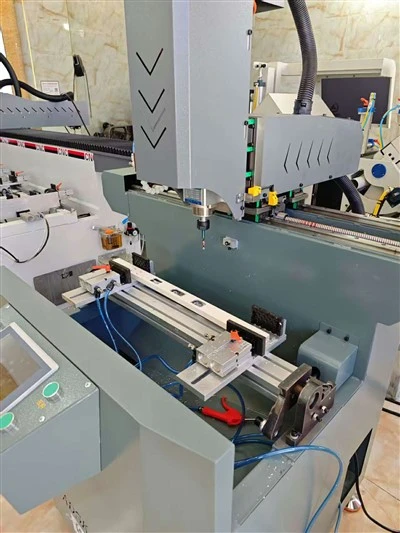
Let’s start with what a single head aluminum cutter actually is, because a lot of people mix them up with other types of aluminum cutting machines. Unlike double head cutters, which have two cutting heads set opposite each other to saw both ends of a profile at once, a single head cutter has one motorized cutting head that moves along a fixed worktable to hold and cut material. It’s designed for precision, not high-volume dual-end cuts, which makes it popular for one-off custom cuts, small production runs, and jobs where you only need to modify one end of a bar or profile.
Now, the biggest myth I hear is that these machines are only for thin aluminum extrusions (like window frame strips or door molding that’s 1/8-inch thick). But our customers regularly use them for aluminum bars, which are much denser, thicker, and more rigid. The reason this works comes down to two core parts of the cutter: the cutting blade and the clamping system.
First, the blade. Most single head aluminum cutters use carbide-tipped blades, not steel blades, because aluminum is soft and can cause regular steel blades to gum up or dull super fast. Carbide tips are harder, sharper, and designed to slice through non-ferrous metals without binding. For solid aluminum bars, you don’t need a tiny 10-inch blade—we recommend 12- to 14-inch carbide blades for bars up to 2 inches thick. I had a customer last year who was cutting 1.5-inch solid 6061 aluminum bars for aerospace brackets; he was using a 10-inch blade and burning through blades every two hours. Switched to a 14-inch carbide blade, and he only needed to change blades every 16 hours. That’s a huge productivity win, and it’s all about matching the blade size to the material.
Then there’s the clamping system. Solid aluminum bars don’t bend or compress the way thin extrusions do, so the machine needs a strong, vise-like clamp to hold the bar tight while cutting. Cheap single head cutters use small, flimsy clamps that slip when cutting thicker bars, leading to uneven cuts or even safety issues. Our models have a hydraulic or manual vise clamp that applies even pressure along the entire length of the bar, so when the blade cuts through, the bar doesn’t shift. Last month, a customer who runs a custom aluminum fabrication shop called to say he’d tried a competitor’s single head cutter to cut 2-inch square aluminum bars—his clamp slipped, and the blade bounced, ruining a $500 billet of aluminum. Switched to one of our cutters, and he’s cut over 200 2-inch bars in two weeks with no issues. That’s a testament to how important the clamping system is.
But here’s the catch: Not all single head cutters can handle all aluminum bars. The key variables are the bar’s thickness and alloy. Let’s break that down. Thickness matters: Most entry-level single head cutters (the ones under $2,000) are limited to bars up to 1 inch thick. If you try to cut a 2.5-inch solid bar with one of those, the blade won’t have enough torque to push through, and it’ll jam. Mid-range models ($2,500 to $4,500) can handle bars up to 3 inches thick, which covers most of the bars our customers work with—from construction framing to small industrial parts. For bars thicker than that, you’d need a different machine, but 95% of our customer base never needs to cut bars over 3 inches.
Alloy is another factor. Aluminum alloys vary in hardness: 6061, the most common general-purpose aluminum, is soft enough for most single head cutters to handle easily. 7075, a harder alloy often used in aerospace, is a bit trickier, but a good single head cutter with a high-torque motor (1.5 HP or more) and a 14-inch carbide blade can still cut it—we have customers cutting 7075 bars for drone parts all the time. Where people run into trouble is trying to cut cast aluminum bars, which have impurities and a more brittle structure. Cast aluminum can crack when cut with a single head cutter if the blade isn’t sharp enough, but with a properly maintained blade and slow, steady feed rate, it works too.
Now, let’s talk about how to set up your single head cutter for aluminum bars, because even a good machine won’t cut right if you set it up wrong. First, measure your bar’s width and height, then adjust the worktable’s fence to align with your cut line. For solid bars, you want the blade to enter at a 90-degree angle to the bar’s length—most single head cutters have an adjustable miter angle, but for straight cuts (the most common for bars), set it to 0 degrees. Then, clamp the bar so at least 2 inches of material is on the non-cut side of the vise—if you clamp too close to the cut line, the bar will vibrate during cutting, leading to a rough edge.
Feed rate is also key. A lot of new operators run the blade too fast, thinking it’ll finish the cut quicker, but that actually causes the blade to overheat and dull faster, and can lead to uneven cuts. For aluminum bars, use a slow, steady feed—about 1 inch per minute for 1-inch bars, and adjust to half that speed for thicker bars. I always tell new customers to test cut a scrap bar first, adjust the feed rate until the cut edge is smooth and burr-free, then they’re ready to go.
I’ve seen a lot of customers make the mistake of buying a single head cutter intended for profiles, then trying to use it for bars and getting frustrated. That’s why it’s so important to ask the right questions when you’re shopping: What’s the maximum bar thickness you need to cut? What alloy will you be working with? Do you need to cut straight cuts, miter cuts, or both? A good supplier (like us) will ask you those questions to make sure you get a machine that fits your needs, not the other way around.
Let’s also address a common concern: cut quality. A lot of people think single head cutters only make rough cuts, perfect for sanding down later. But that’s not true when you’re cutting aluminum bars. With a sharp carbide blade, proper clamping, and the right feed rate, you can get a cut edge that’s smooth enough to drill holes or weld on without much finishing. We had a customer last year who was cutting 1-inch aluminum bars for outdoor railings; he was using a band saw before, which left rough edges that needed 10 minutes of sanding per cut. Switched to our single head cutter, and the edges were so smooth he only needed 1 minute of light sanding per cut. That saved him 2 hours a day, which translated to more jobs and more profit.
Now, are there limitations? Sure. If you’re cutting bars thicker than 3 inches, you’ll need a heavy-duty double head or a circular saw specifically for thick aluminum. If you need to cut 100+ aluminum bars a day for mass production, a single head cutter isn’t the most efficient option—double head cutters can cut two bars at once, or both ends of a bar in one pass, which is faster. But for small to medium production runs, custom cuts, or workshops that need flexibility (to switch between profiles and bars), a single head aluminum cutter is perfect.
I’ve had customers come to us saying they wasted money on a cheap single head cutter that couldn’t handle bars, then switched to ours and doubled their output. One customer, a small fabrication shop in Texas, told us he was only cutting 50 bars a week with his old machine; with our cutter, he’s cutting 150 bars a week, no overtime needed. That’s the real value here: a single head aluminum cutter isn’t just for thin profiles—it’s a versatile machine that can handle solid bars, as long as you pick the right model and set it up correctly.
At the end of the day, the answer to “Can a single head aluminium cutter cut aluminium bars?” is a resounding yes—if you choose a machine built for that task. It’s not a one-size-fits-all, but for most small to medium businesses working with aluminum bars, it’s more than capable. You just need to look for key features: a high-torque motor, carbide-tipped blades sized for your bar thickness, and a strong clamping system.
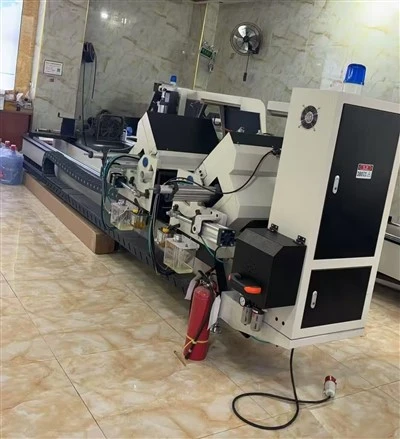
If you’re in the market for a single head aluminum cutter that can handle your aluminum bar projects, we’re here to help. We work with fabricators, contractors, and industrial clients to find the right machine for their specific needs, whether you’re cutting small 1-inch bars or larger 3-inch ones. We also offer training and support to make sure you’re getting the most out of your cutter, so you can cut aluminum bars smoothly, safely, and efficiently. Don’t hesitate to reach out to discuss your requirements and find the perfect machine for your shop.
Aluminum Profile Drilling Machine References
- ASM International. (2019). Non-Ferrous Metal Cutting Processes for Aluminum Alloys. ASM Handbook Volume 16: Machining.
- Manufacturing Engineering Association. (2021). Selection of Cutting Tools for Non-Ferrous Metals in Small Fabrication Shops. Journal of Small Manufacturing Practices.
- Aluminum Extruders Council. (2020). Guide to Cutting Aluminum Extrusions and Solid Bars for Custom Fabrication. AEC Technical Bulletin No. 14.
Kanghong Building Materials Technology Sdn. Bhd.
As one of the most professional single head aluminium cutter manufacturers and suppliers in China, we have world-leading production equipment and strong manufacturing capabilities. Please feel free to wholesale advanced single head aluminium cutter for sale here from our factory. Customized orders are welcome.
Address: No.601, Block 2, Xinlianchang Industrial Park, No.2 Taixing Second Road, Taiping South Industrial Zone, Dali Town, Nanhai District, Foshan City
E-mail: 631871392@qq.com
WebSite: https://www.kanghong-building.com/
