If you’ve ever stood in the grocery store beverage aisle, staring at a wall of spout pouches in tiny, squeezeable kids’ sizes and bulky gallon jugs, you know choosing the right size feels like a toss-up—especially if you’re a business owner looking to stock your products in these versatile, leak-proof packages. As a spout pouch supplier, I’ve helped hundreds of brands, from small craft juice makers to large-scale condiment distributors, narrow down their sizing to cut waste, save costs, and keep their customers happy. Today, I’m breaking down the science (and real-world tricks) of picking the perfect spout pouch size, so you can skip the guesswork and pick size that works for your product, your customers, and your bottom line. Spout Pouch
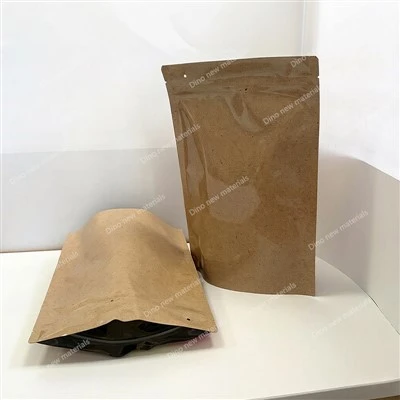
First, let’s get one thing straight: spout pouch sizing isn’t one-size-fits-all. Too small, and your customer is left reaching for a refill before they’re ready—hurting repeat purchases. Too big, and you’re overpaying for unused packaging, plus you run the risk of product spoilage if the pouch is opened but not finished. I learned this lesson early on with a small batch of artisanal apple cider we supplied a regional café chain: they ordered 32-ounce pouches, thinking it would cut down on per-unit costs, but 60% of the pouches were only half-consumed before going bad, leading to thousands in waste. That mistake turned into a rule I still share with every new client: size starts with two non-negotiables: your product type and your target audience.
Let’s start with product type, because that’s the biggest driver of sizing for most brands. Not all products are made to fit the same pouch, and different consistency, shelf life, and use case all shift what size makes sense. For example, thin, liquid products like cold-pressed juice, flavored water, or plant-based milks tend to work well with medium sizes—12 to 16 ounces, usually. Why? These products are consumed in 8 to 12 ounce portions for most people, so a 16-ounce pouch gives them a full serving with a little left over, but not so much that it goes bad before they can finish it. On the other end, thick, viscous products like hummus, nut butters, or BBQ sauce need different sizing because they’re not poured—they’re squeezed, scooped, or spread. For these, smaller pouches (4 to 8 ounces) are far more popular; a 12-ounce hummus pouch would be too heavy to squeeze comfortably, and customers don’t want to commit to a full serving that’s hard to manage in one go.
Then there’s perishable vs. non-perishable products. Shelf-stable items like dry trail mixes, protein powders, or flavored syrups can go a lot bigger, because spoilage isn’t a risk. We’ve supplied 64-ounce spout pouches for bulk honey and maple syrup to grocery co-ops, and those sell because they’re a cost-effective way for customers to stock up. But refrigerated products, like the apple cider I messed up, or fresh smoothies, max out at 16 ounces for our clients—any bigger, and the product’s shelf life shrinks too quickly after opening, leading to returns and negative reviews. I always tell clients to calculate their product’s post-opening shelf life first: if your product stays fresh for 3 to 5 days after opening, a 12- to 16-ounce pouch is safe. If it only lasts 1 to 2 days, stick to 8 ounces or smaller.
Next, target audience and use case—this is where you get to tailor sizing to how your customer will actually use your product, and it’s the difference between a pouch that feels intentional and one that feels like an afterthought. Let’s break down common customer groups: kids, athletes, and at-home consumers, all have different needs.
For kids’ products, think applesauce, fruit purees, or kid-friendly drinks: small sizes (4 to 6 ounces) are non-negotiable. Toddlers have tiny hands, and a 12-ounce pouch is too heavy for them to hold or squeeze without making a mess. I once worked with a kids’ snack brand that switched from 8-ounce to 5-ounce pouches, and their repeat purchase rate jumped 22% in three months; parents loved that the smaller size fit in diaper bags and lunch boxes without leaking, and kids could finish the whole thing in one sitting without wasting product.
Athletes and active consumers are another key group: they’re on the go, so their pouches need to be portable and high-volume enough to fuel a workout. For sports drinks, hydration mixes, or pre-workout gels, 10 to 12 ounces is the sweet spot—big enough to keep an athlete hydrated during a 60-minute run, but small enough to slip into a water bottle holder or gym bag. Some endurance brands even use 20-ounce pouches for long-distance runners, but only for pre-packaged hydration packs, not for individual sale; those work because the use case is a multi-hour event, not a quick pick-me-up.
At-home consumers are the most flexible, but that doesn’t mean sizing is random. For pantry staples like pasta sauce, salad dressings, or condiments, most people prefer 12 to 16 ounces—big enough to last a week of meals, but small enough that it doesn’t take up too much fridge or cabinet space. For baking ingredients like melted chocolate or maple syrup, 8 to 10 ounces is ideal, since most recipes only call for 4 to 6 ounces at a time.
Once you have a sense of product and audience, there are a few technical details that often get overlooked, but can make or break whether a pouch size works for your supply chain. First, fill volume vs. labeled volume. This is a big one I see brands mess up all the time. A 10-ounce pouch doesn’t mean you can fill it with 10 ounces of product; spout pouches need a headspace at the top to prevent leaking when they’re squeezed, especially for liquid products. For most of our pouches, we recommend a 10% headspace above the labeled volume. So if you want a 10-ounce finished product, you should fill it with 9 ounces; if you go to 10, the pouch will bulge too much, leak through the spout, or even burst during shipping. We have a free sizing guide that walks through this for every pouch we offer, but I always make it a point to share it with new clients, because it saves them from costly returns or damaged inventory.
Another technical detail: spout size. The size of the spout you choose ties directly to the pouch size, and it’s easy to pair the wrong spout with a pouch, which can cause frustration for customers. A tiny 4-ounce applesauce pouch doesn’t need a ½-inch wide spout—it’s messy for kids to squeeze too much product out at once. A large 32-ounce juice pouch, though, needs a wide ¾-inch spout, because a small spout would make it hard to pour or squeeze out the last of the product. We standardize spout sizes to match common pouch sizes for our clients, but if you’re customizing your packaging, always test the fit: pour a 12-ounce liquid through a spout paired with a 12-ounce pouch, and see if it flows easily without spilling.
Then there’s cost, which is a practical factor that sits at the intersection of size and profit margin. As a supplier, I can tell you that the per-unit cost of a spout pouch doesn’t scale linearly with size. A 4-ounce pouch might cost $0.20, a 16-ounce might cost $0.40, but a 32-ounce isn’t $0.80—it’s usually $0.55, because larger pouches use more material, but the production run is more efficient. That means if a bulk size works for your product, you can pass the savings on to customers while still boosting your margin. But don’t let cost alone drive your decision: if you sell a $5 16-ounce cold brew, and a 32-ounce would only cost $1 more to produce, but 50% of customers waste half the product because they can’t finish it, you’re better off sticking to the 16-ounce. We always run a quick cost-per-ounce analysis for clients to help them see the full picture: it’s not just the per-pouch cost, but how much product is wasted, how much inventory sits on shelves, and repeat purchase rate.
I also can’t skip real-world testing, because even the best calculations don’t always translate to actual customer use. I recommend every brand order a sample run of 500 to 1000 units of their top 2 size choices, and test them with a small group of your target audience. For a snack brand, send samples to local parents and ask them to take the pouches on day trips, pack them in lunch boxes, and note any leaks, messes, or how long they last. For a beverage brand, test the pouches in your fridge and at room temperature to see how they hold up, and ask friends or family to try opening and squeezing them to see if the size feels comfortable. One of our clients, a craft soda maker, tested 12 vs. 16-ounce pouches with 50 local college students, and found that 78% preferred the 12-ounce, saying the 16-ounce was too heavy for their backpacks. That saved them from ordering 10,000 of the wrong size and losing money on slow-moving inventory.
Common mistakes I see brands make when choosing spout pouch size, just to wrap this up: first, copying a competitor’s size without considering your own product. Just because your rival uses 20-ounce juice pouches doesn’t mean that works for your fresh, short-shelf-life juice; they might have a way to market bulk sizes, but yours doesn’t. Second, sizing too big to cut per-unit costs, without accounting for spoilage. That’s the apple cider mistake I made early on—don’t fall for it. Third, ignoring portability for on-the-go products. A product meant for hiking or traveling needs to fit in a pocket or bag, not take up half a carry-on.

At the end of the day, choosing the right spout pouch size is about balancing three things: your product’s needs, your customer’s habits, and your business’s bottom line. It’s not a decision you want to rush, because switching pouch sizes later can mean reworking branding, updating your supply chain, and losing existing customers who are used to a certain size. If you’re still unsure what size makes sense for your product, we’re here to help. We can walk through your product type, target audience, and goals, share data from past clients in your industry, and even arrange sample tests to make sure you pick a size that works. Don’t hesitate to reach out to discuss your needs.
Aluminized Bag References:
- Packaging Digest. (2022). “Spout Pouch Sizing Guide: Best Practices for Product Efficiency and Customer Satisfaction.”
- Journal of Food Packaging Technology. (2021). “The Impact of Packaging Size on Post-Opening Spoilage of Refrigerated Fresh Products.”
- National Association of Convenience Stores. (2023). “Consumer Preference for Portable Food and Beverage Packaging: Size and Use Case Analysis.”
- Flexible Packaging Association. (2022). “Cost Optimization in Spout Pouch Production: Size Scaling and Supply Chain Efficiency.”
Jiangsu Dino New Materials Technology Co., Ltd.
With abundant experience, we are one of the most professional spout pouch manufacturers and suppliers in China. We warmly welcome you to wholesale customized spout pouch made in China here from our factory. If you have any enquiry about free sample, please feel free to email us.
Address: South of Hangzhou Road and east of Hengshan North Road, Sihong Economic Development Zone, Sihong County, Suqian City, Jiangsu Province, China
E-mail: 19551836609@139.com
WebSite: https://www.jsdinuo.com/
