If you’re in the market for flatbed laser cutting machines, you’ve probably typed “how much does a flatbed laser cutting machine cost?” into a search bar at least once—trust me, I get it. When I started out in this business 12 years ago, I’d sit in on sales calls where prospects would hang up before I even finished explaining the different machine types, because they thought all flatbed lasers were the same: a big, loud box that cuts metal or plastic and costs a fortune. Back then, I didn’t blame them. The pricing landscape for this equipment is messy, with so many variables that a random Google search result can throw a $10,000 difference at you without any context. Over the years, I’ve worked with fabricators, sign makers, custom furniture shops, and even aerospace startups, and I’ve learned that the price tag on a flatbed laser cutting machine isn’t just a number—it’s a reflection of what it can do, how long it will last, and how much it will cost you to keep it running. Today, I want to break down those variables so you don’t have to guess. Flatbed Laser Cutting Machines
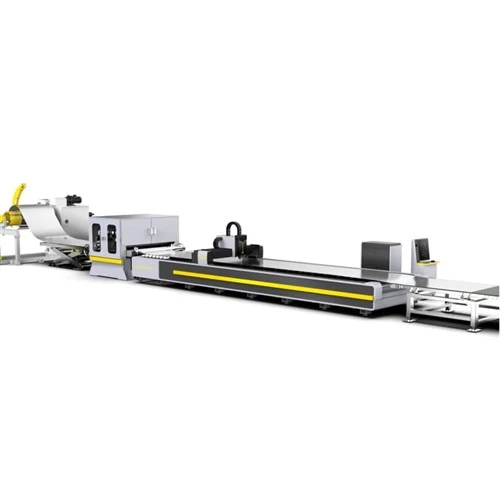
Let’s start with the basics: what actually is a flatbed laser cutting machine? It’s the workhorse of the metal fabrication and custom manufacturing world, right? It uses a high-powered laser beam, guided by mirrors and a computer, to cut precise, clean shapes into flat sheets of metal, wood, plastic, and even some composite materials. Unlike older cutting methods like plasma or oxy-fuel, it doesn’t require physical contact with the material, so it leaves sharp, smooth edges with minimal finishing. The flatbed part means the material sits on a stationary (or sometimes moving) bed, so you can load full 4x8ft sheets, cut them into parts, and unload them—no fiddling with rolls or narrow strips, which makes it perfect for large, complex parts. But here’s the thing: not all flatbed lasers are built the same, and that’s the first big reason pricing varies.
The single biggest factor that impacts cost is the laser source. Think of this as the heart of the machine. Most flatbed lasers use either fiber lasers or CO2 lasers, and their power levels can range anywhere from 1000 watts to 12,000 watts. Let’s get specific: a 1000-watt fiber laser, which is designed for thin materials like sheet metal up to ¼-inch thick, will usually cost between $25,000 and $40,000. That’s great for small sign shops or hobbyist operations that work with thin aluminum and steel, right? But if you’re cutting ½-inch steel for industrial parts or ¾-inch stainless steel for custom kitchen equipment, you need a higher power—say, a 4000-watt fiber laser. That jumps to $60,000 to $90,000. And if you’re cutting really thick material, like 1-inch aluminum for aerospace components, you’re looking at a 10,000-watt fiber laser, which can run you $150,000 to $250,000. CO2 lasers are a bit different because they work on non-metal materials too—wood, acrylic, leather, even some fabrics. A 150-watt CO2 flatbed laser, good for cutting thick acrylic or hardwood for furniture, will cost $15,000 to $30,000, while a 400-watt CO2 for industrial wood cutting is around $50,000 to $70,000. The key here is matching the laser source to your materials: buying a 10,000-watt machine for thin metal sign work is like buying a semi-truck to commute to the grocery store—way more than you need, and you’ll pay for power and maintenance you’ll never use.
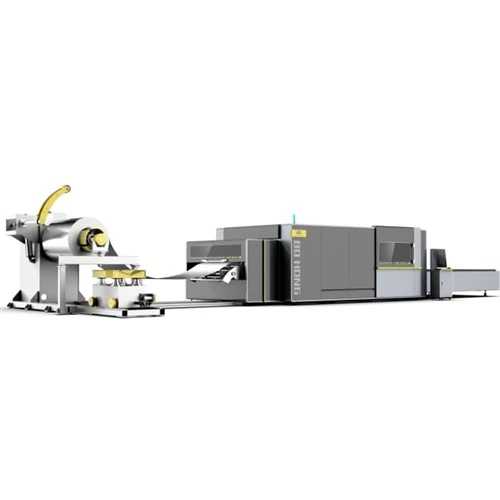
Next up is the bed size and automation features. Flatbed lasers come in standard bed sizes, but custom beds can add a lot to the price. A standard 4x8ft bed (the most common size for small to medium shops) is built into the base price of most mid-range machines. But if you need a 5x10ft bed for full-size vehicle parts or large architectural panels, that’s an extra $5,000 to $10,000. Even bigger, 6x12ft beds for shipbuilding or heavy fabrication, can add $15,000 to $25,000. Then there’s automation, which is a game-changer for busy shops. A basic machine requires you to manually load and unload sheets, which takes time and labor. Add an automatic sheet loader and unloader system, which can handle full stacks of material without stopping, and that’s $10,000 to $20,000 extra. Some shops even go for a full automation line, where the machine connects to a storage system that keeps track of raw materials and finished parts, eliminating manual inventory checks. Those can cost $50,000 to $100,000 on top of the base machine, but they pay for themselves in labor savings if you’re running the machine 12 hours a day. I had a customer last year who ran a small custom fabrication shop; he bought a basic 4x8ft machine without automation, but within six months he was working 10-hour days just loading sheets. He upgraded to an automatic loader, cut his labor time for each job by 40%, and made back the extra cost in three months. That’s the kind of trade-off you have to think about, not just the upfront price.
Build quality and brand also play a huge role in pricing, and this is where a lot of new buyers get burned. You can see cheap flatbed lasers online for $15,000 that sound too good to be true—and they usually are. Those are often made with cheap components: low-quality laser sources that burn out in 2 years instead of 10, flimsy beds that warp after a few hundred hours of use, and control systems that crash mid-job. I’ve had customers come to me after buying a cheap machine that needed $8,000 in repairs within the first year, and had to replace the laser source 18 months later. The mid-range machines, from reputable brands, cost $40,000 to $100,000, and they use industrial-grade components that are designed to last 10 to 15 years. They also come with 2 to 5-year warranties, 24/7 technical support, and training for your operators. The high-end machines, built for large industrial operations, cost $100,000 to $300,000, with precision linear guides that give you tighter cut tolerances, advanced nesting software that minimizes material waste, and even remote monitoring so you can fix issues before they shut down production. It’s like buying a used car versus a new truck—both get you where you need to go, but the new truck lasts longer, has fewer breakdowns, and will cost you less in the long run.
Then there are the hidden costs that nobody tells you about when you’re pricing a flatbed laser cutting machine. Let’s start with installation. Most mid-range machines require professional installation, which costs $2,000 to $5,000. You also need a dedicated power supply—flatbed lasers use a lot of electricity, and a standard 110-volt outlet won’t cut it (pun intended). You need a 220-volt or 480-volt circuit, depending on the machine size, and sometimes a dedicated power line with a voltage stabilizer to avoid damage to the laser source. That can add $3,000 to $7,000 in electrical work. Maintenance is another big one. A basic service contract, which includes regular tune-ups, laser alignment, and replacement of worn parts, costs $1,000 to $3,000 a year for mid-range machines. High-power industrial machines can cost $5,000 to $10,000 a year in maintenance, because the parts are more expensive and the laser source needs more frequent servicing. And don’t forget operator training. Even if you think you can figure it out yourself, flatbed lasers have advanced software that can take hours to learn. Most reputable suppliers offer training, which is usually included in the base price for mid-range machines, but some budget brands charge $2,000 to $5,000 for training, which is a hidden cost. I always tell my customers to add 10% to 15% of the base price to cover these hidden costs—you don’t want to get the machine delivered and realize you can’t plug it in or no one knows how to run it.
Now, let’s talk about who’s buying, and what their budget looks like. Small businesses and hobbyists might be looking at entry-level machines, but I always advise them to make sure the machine can grow with them. A $15,000 entry-level machine might be tempting, but if you’re planning to take on larger jobs or thicker materials in a year or two, you’ll have to replace it. Mid-sized businesses, with 5 to 10 employees, usually opt for mid-range machines, spending $50,000 to $80,000, because they need reliability and enough power to take on a variety of jobs. Large industrial operations, like aerospace or automotive suppliers, will invest in high-end machines, spending $150,000 to $300,000, because they need precision, speed, and automation to meet strict industry standards. I had a customer who runs a sign company—he started with a $28,000 150-watt CO2 laser for acrylic and thin aluminum. Within two years, he was getting jobs for custom metal storefronts, so he upgraded to a 3000-watt fiber laser with a 5x10ft bed, and now his annual revenue has tripled. He told me he regretted not getting a machine with a little more power earlier, because he would have saved himself the cost of selling his old machine and buying a new one.
One thing I always emphasize is that the cheapest price isn’t always the best value. I’ve seen customers buy a $20,000 machine, only to spend $15,000 on repairs in the first two years, compared to a $50,000 machine that required $5,000 in maintenance over the same period. The mid-range machine ended up being cheaper in the long run. Also, consider resale value. Industrial-grade flatbed lasers hold their value well, while cheap import machines lose 50% of their value within three years. If you plan to upgrade or sell your machine later, that’s an important factor.
If you’re still not sure what price point is right for you, the best thing to do is assess your current and future needs. Ask yourself: what materials will I be cutting? What’s the maximum thickness? What size sheets do I need to handle? Will I need automation down the line? How many hours a day will the machine run? Once you have those answers, you can narrow down your options. For example, if you’re a woodworker cutting ¼-inch to 1-inch hardwood for custom furniture, a 150-watt CO2 laser with a 4x8ft bed will be perfect, and you can expect to pay between $20,000 and $35,000. If you’re a metal fabricator cutting 1/8-inch to ½-inch steel for architectural parts, a 3000-watt fiber laser will be $60,000 to $80,000, and that’s a solid investment. If you’re an industrial shop cutting thick metal for heavy equipment, a 8000-watt fiber laser with automation will be $120,000 to $180,000, and it will pay for itself in increased productivity.
At the end of the day, a flatbed laser cutting machine is a big investment, but it’s one that can transform your business. It eliminates the need for costly tooling, reduces material waste, and lets you take on more complex jobs that you couldn’t do with older equipment. I’ve seen shops go from just a few employees to a full team of 20 after adding a flatbed laser, because they can take on higher-margin work. But you have to do your homework. Don’t just look at the base price—factor in laser power, bed size, automation, build quality, hidden costs, and your own business needs.
If you’re ready to stop guessing and get a quote that’s tailored to your business, I’d be happy to walk you through your options. Whether you’re a small shop just starting out or a large operation looking to upgrade your equipment, we can help you find a flatbed laser cutting machine that fits your budget and your needs. Reach out, and we can talk through your specific projects, material types, and production goals to give you a clear, accurate price.
Coil Fed Laser Cutting Production Lines References:
- Laser Institute of America. (2022). Industrial Laser Cutting Equipment Specifications and Cost Analysis.
- Fabricators & Manufacturers Association International. (2023). Flatbed Laser Cutting Machine Buyer’s Guide.
- Modern Machine Shop. (2024). Industrial Laser Technology Trends and Pricing Benchmarks.
- SME (Society of Manufacturing Engineers). (2022). Cost of Ownership for Precision Cutting Equipment.
- European Laser Association. (2023). Fiber vs. CO2 Laser Cutting: Performance and Pricing Comparisons.
Yongkang City Bohong Intelligent Equipment Co., Ltd.
As one of the most reliable flatbed laser cutting machines manufacturers and suppliers in China, we also support customized service. With abundant experience, we warmly welcome you to buy advanced flatbed laser cutting machines from our factory. If you have any enquiry about quotation, please feel free to email us.
Address: No. 176 Yinggui North Road, Chengxi New Area, Yongkang City, Zhejiang Province
E-mail: bohonglasertech@Outlook.com
WebSite: https://www.bohonglasertech.com/
