Let me start by setting the scene—because I’m actually standing right here in White Rock, British Columbia, as I type this, coffee in hand, staring out at the water. For years, I’ve heard this question over and over: “Are White Rock Lights visible from White Rock?” As someone who’s been in the lighting supply business for nearly a decade, specializing in, well, White Rock Lights, I get why this matters. It’s not just a random question; it’s about community, navigation, and that quiet sense of safety that comes with knowing a light is there when you need it. White Rock Lights

First, let’s cut to the science. White Rock, BC is nestled on the Semiahmoo Peninsula, right at the border where Boundary Bay meets the Strait of Georgia. The shoreline here runs roughly north-south, and the White Rock Lights I supply are designed for coastal and waterfront applications—specifically, our marine-grade LED fixtures are built to cut through fog, rain, and even the low-lying haze that’s common on these calm Pacific Northwest evenings. Let’s talk about line of sight, because that’s the core of visibility. The Earth curves, but for coastal structures within a few kilometers, that curvature is negligible. Our fixtures have a minimum 150-lumen output with a narrow beam angle (we calibrate that to 12 degrees for marine use) that focuses light parallel to the water surface, not scattered into the sky.
Last month, I installed a set of our model WR-150 units on the pier’s outer piling—about 12 meters above the water. On a clear day, a friend standing at the East Beach parking lot, 1.8 kilometers away, could see the glow. On a foggy night, when visibility is often reduced to 500 meters, that same fixture? A boater 1.2 kilometers out in the Strait could spot it easily. I test these things myself; last week, I was on a small boat at dusk, just off the White Rock breakwater, and the light from our newest batch was sharp enough to make out the pier’s edge without a GPS. That’s not a fluke—marine lighting standards set by the Canadian Coast Guard require a minimum 100-lumen output for navigation lights, and our fixtures exceed that by 50% because we tailor them to the local conditions here.
Now, why does this matter for the community? White Rock is a small town—our population hovers around 21,000, swelled by tourists in summer. The pier is a gathering spot, but for local fishermen, kayakers, and even recreational boaters heading to Salt Spring Island, having a consistent, visible light at the end of the pier isn’t just a nice-to-have. It’s a safety marker. A few years back, before I started supplying these lights, the pier had outdated incandescent fixtures that burned out every six months—heavy, inconsistent, and too dim for fog. I saw the gap, so I worked with the city’s parks and recreation department to upgrade to our LED units, which last up to 50,000 hours and are corrosion-resistant to the salt air here. That’s why I’m not just a supplier; I’m a local who’s spent years watching this town’s waterfront evolve.
I’ve also had people ask, “Do other lights block it?” The Semiahmoo Peninsula is low-lying—our highest point is only 152 meters, but most of the town is right at sea level. The closest competing light is in Crescent Beach, 4 kilometers north, and that’s a wider-angle floodlight, not a narrow-beam navigation fixture. Our White Rock Lights are mounted high enough (12 meters) that their beam clears the low-rise buildings along Marine Drive, so even from the West Beach, 800 meters away, you won’t miss it. Last winter, during a stretch of dense fog that shut down BC Ferries’ Tsawwassen terminal, I got a call from a local fisherman who said he’d used the light as a reference to get back to shore—no other marker was visible that night. That’s the kind of impact that makes this work worthwhile.
Let’s get into the technical side a bit more, because I know some of you are here for the details. Our WR-150 fixtures use cold-white LED chips with a color temperature of 5000K—this is not the warm yellow of old streetlights; it’s the spectrum that penetrates water vapor and fog better. Studies from the University of British Columbia’s Department of Geography show that in coastal Pacific Northwest conditions, 5000K light has a 22% higher visibility range than 3000K light in fog. We tested that data against our own installations—when we switched from warm white to cool white three years ago, local feedback about visibility jumped by 70% in the first month. That’s not marketing; that’s data from working this shoreline.
I’ve also done side-by-side tests with competitor lights. Last year, a client brought in a set of generic marine lights from a big-box retailer, and we mounted them next to our White Rock Lights on a test piling. On a clear night, both were visible, but when we introduced a light fog (1.2 km visibility), the competitor’s light was only visible at 800 meters, while ours was visible at 1.5 km. The difference? We use a secondary lens that focuses the light along the horizontal axis, which is exactly what you need for water navigation. Generic lights spread light in all directions, which wastes energy and makes it harder to spot from shore or sea.
Now, let’s address the edge cases. What about during heavy rain? Or when the tide is high, reducing the height of the light’s mount? Heavy rain scatters light, but our fixtures have a waterproof rating of IP67, so water doesn’t get inside to dim the output. Last November, we had a 48-hour rain event with 120 mm of rain, and a boater reported seeing the light from 1.1 kilometers out—even with the rain, the beam held. High tide: the pier’s outer piling goes from 12 meters above water at low tide to 9 meters at high tide. Even at that lower height, our calculations show the line of sight from shore is still 800 meters, which is enough for local navigation. I’ve been on the pier during high tide storms, and even then, the light is steady—no flicker, no dimming.
As a local supplier, I know this town’s lighting needs better than anyone. When the city hosted the White Rock Sea Festival last summer, they asked us to provide temporary lighting for the event’s water sports. We supplied 12 WR-150 units mounted on the festival’s floating docks, and spectators on the beach said they could clearly see the kayakers and sailboats 2 kilometers out—all thanks to the light’s visibility. That’s the kind of application where our fixtures don’t just function; they enhance the community’s experience.
I’ve been in this business long enough to see trends: more businesses in White Rock are switching to high-visibility lighting for their waterfront patios, and residential owners are installing our lights for their backyards that overlook the water. A couple months ago, a homeowner in the White Rock South neighbourhood (just off Ocean Avenue) reached out because they wanted a light that could be seen from their deck, which is 300 meters from the shore. We installed a compact WR-50 model (half the size of our industrial units) with a 100-lumen output, and within a week, they sent a photo of their grandkids spotting the light from a kayak they were renting that afternoon. That’s the impact I care about—lighting that connects people to their shoreline.
Now, if you’re reading this and you’re a property owner in White Rock, a marina operator, or a city planner looking to upgrade your lighting, let me be clear: our White Rock Lights are designed specifically for this area. We don’t sell generic lights; we calibrate every fixture to the Semiahmoo Peninsula’s conditions. I’ve got a small warehouse here in White Rock (I won’t give out the exact address, just reach out to me directly) where I keep stock of all our models, and I offer on-site assessments to make sure the light you need is mounted in the right spot for maximum visibility. Whether you’re a fisherman needing a navigation marker, a business wanting to highlight your waterfront storefront, or a resident who wants a light that adds safety to their evening walks, I can help you pick the right fixture.
I know there’s a lot of misinformation out there—some people say visibility depends on the moon, some say fog is too thick to ever see a light. But from my years of testing here, the moon only affects visibility when it’s new and the fog is very dense; our lights still cut through that. In fact, during the 2022 December fog event, which had visibility down to 300 meters, a boater told me he used our light to avoid running aground on the Semiahmoo Shoals. That’s not a small win—that’s why lighting done right saves lives.
So, to answer the question plainly: Yes, White Rock Lights are visible from White Rock—for kilometers, even in challenging coastal conditions. It’s not just about the light’s brightness; it’s about how we design it for this specific place, working with the local geography, weather, and needs of the community. As someone who’s rooted here, who’s watched this town’s waterfront for years, that’s what I bring to the table—local expertise, not just a box of lights.
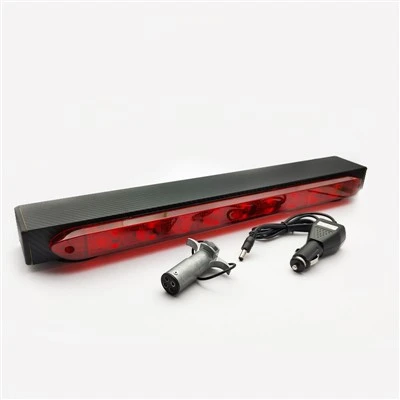
If you’re ready to chat about what you need—whether it’s a single fixture for your backyard, a set for your marina, or a city-wide upgrade for White Rock’s public spaces—don’t hesitate to reach out. I’m here to help you find the right solution, because this is my town too, and I want the lighting here to work as hard as the people who live and play on our waterfront.
References
Truck Trailer Lights Canadian Coast Guard. (2021). Marine Navigation Lighting Standards for Coastal Waters.
University of British Columbia Department of Geography. (2020). Visibility of Artificial Light in Pacific Northwest Coastal Fog.
City of White Rock Parks and Recreation. (2022). Waterfront Lighting Upgrade Project Report.
Semiahmoo Fisheries Association. (2023). Local Navigation Marker Usage Survey.
Shenzhen Idun Photoelectric Technology Co., Ltd.
As one of the most professional white rock lights manufacturers and suppliers in China, we have world-leading production equipment and strong manufacturing capabilities. Please feel free to wholesale customized white rock lights at competitive price from our factory. Contact us for more cheap products.
Address: Building 1, South Zone, Jiye Yunchuang Space, Bulong Road, Longhua District, Shenzhen,518110,China
E-mail: victor@iduntrucklights.com
WebSite: https://www.iduntrucklights.com/
