Hey there, if you’ve ever dabbled in plastic manufacturing, packaging, or even making those colorful household goods you use every day, you’ve probably heard of color masterbatches – that stuff that turns plain, boring plastic resin into something bright, bold, or totally custom. As a color masterbatch supplier, I get asked this question all the time: “What’s the price range for color masterbatches?” It’s not a one-and-done answer, honestly, so let me break this down like we’re chatting over coffee (no stuffy industry jargon here, promise). Color Masterbatches
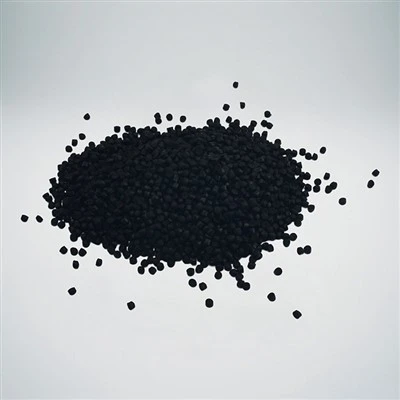
First, let’s keep it real: color masterbatches aren’t a box of cereal with a fixed $3.99 price tag. The range is all over the place, and it depends on a ton of factors you might not even think about. Let’s start with the basics: what even is a color masterbatch? For the uninitiated, it’s a concentrated mix of pigment, carrier resin, and additives that you melt and blend with your base plastic. Think of it like paint for plastic, but way more precise. Most suppliers (including mine) sell them by the pound or kilogram, and right now, the average price lands between $1.50 and $5 per kg. But wait, that’s just the middle – you can get way cheaper, or way pricier, depending on what you need.
Let’s start with the low end – we’re talking $0.50 to $1.50 per kg. That’s your basic, off-the-shelf color masterbatch. These are the ones most of us keep in stock because they’re made with common pigments (like titanium dioxide for white, carbon black for black) and standard carrier resins (usually polypropylene or polyethylene, which are super cheap and easy to work with). Who buys these? Small manufacturers making things like disposable food containers, plastic crates, or basic toys that don’t need fancy colors. I had a guy last month who runs a small packaging shop – he just needed bright red for his takeout clamshells, no weird tint or UV protection, so he grabbed our stock red that came in at $0.85 per kg. No frills, no customization, just reliable color that works. The only downside here? These are one-size-fits-all. If your plastic’s resin is a weird grade, this stuff might not blend as well, leading to splotchy color.
Now, the middle ground is where most of our customers fall – $1.50 to $3.50 per kg. This is custom color masterbatches, tailored to your exact needs. Let’s say you make premium water bottles, and you need a soft sky blue that matches your brand logo, not the neon blue off the shelf. Or you need masterbatches that don’t fade when your product sits outside in the sun (that’s UV stabilizer additives, by the way). This price range includes small-batch runs too – if you’re a startup brand testing 500 units of a new product, you don’t want to buy 1,000 kg of a color you might tweak later, so we charge a little extra for those smaller orders. Additives here are a big factor: if you need anti-static for electronic plastic parts, or a matting agent for matte finish packaging, that bumps the cost up a bit. I worked with a startup last quarter making sustainable bamboo-plastic cutlery – they needed a earthy green that didn’t clash with the bamboo texture, plus a bio-based carrier resin to keep their product eco-friendly. That landed them at $2.75 per kg, which they said was totally worth it because it made their cutlery stand out at farmers’ markets.
Then there’s the high end – $3.50 to $10+ per kg. This is the fancy stuff, and it’s not for everyone. Who pays this? Big brands with super specific requirements. Let’s say a luxury cosmetic company making sleek lipstick tubes – they need a metallic gold that’s totally uniform, no flecks that look cheap. Or a medical device manufacturer, where color masterbatches have to be FDA-approved, non-toxic, and sterile, so the pigments and additives have to meet strict regulatory standards. Another big one: specialty effects. Think pearlescent, chameleon, or glow-in-the-dark colors – those pigments are way more expensive than basic black or white. Last year, a car parts company came to us needing glow-in-the-dark plastic door handles for a new truck model. The glow pigment is a rare, high-quality material, and we had to test it to make sure it didn’t break down in the car’s extreme heat and cold. That masterbatch came out to $7.20 per kg, but they said it was a non-negotiable for their marketing. I’ve even seen custom masterbatches for aerospace parts that go for over $15 per kg, but that’s such a niche market it’s not something most small businesses will ever encounter.
Wait, let’s talk about a few hidden costs that people don’t always consider, because those can shift the price too. First, order size. If you’re buying 10,000 kg at once, we can give you a bulk discount – sometimes that cuts 20% off the per-kg price. But if you’re only buying 50 kg, that’s a small batch, so we have to charge more to cover our time mixing a small run. Then there’s carrier resin type. If you’re working with a less common resin, like PET for soda bottles, instead of standard PE, we might have to adjust the carrier to match, which adds a little cost. Also, color matching fees. If you send us a sample of your logo color, we spend hours testing pigments to get it perfect, and some suppliers (including ours) charge a one-time color matching fee – usually between $50 and $200, depending on how tricky the color is. That’s a cost you only pay once, though, so if you reorder the same color later, you don’t pay it again.
Let me also clear up a common myth: a higher price doesn’t always mean better color. I’ve had customers who try to skimp on the cheap masterbatch, only to get to production and end up with splotchy color, or pigment that leaches into food (which is a big no-no for packaging). Last year, a small snack company bought a $0.45 per kg masterbatch for their chip bags, and when they tested it, the yellow pigment stained the greaseproof liners. They ended up having to reorder our food-grade masterbatch at $1.80 per kg, which cost them more in the long run. That’s why it’s not just about the number – it’s about matching the masterbatch to your specific use case.
Now, as someone who’s been in the color masterbatch game for 10 years, I’ll tell you what most suppliers won’t: if you’re a small to mid-sized business, don’t pay for the high-end stuff unless you absolutely need it. If your product is disposable and doesn’t need UV protection or custom color, stick to the low-to-middle range – that’s more than enough. If you’re a brand with specific needs, the middle range is where you’ll find the best balance of cost and quality. The high end is only for big brands with strict requirements, so don’t let a sales rep talk you into $10 per kg if you just need a basic blue for your plastic cups.
Wait, let’s also mention region, because that plays a role too. If you’re in North America, prices might be a little higher than in Asia, where a lot of masterbatch is produced, because of shipping and import costs. But don’t just go for the cheapest option from overseas – make sure your masterbatch is tested to meet your local standards, like FDA in the US or REACH in Europe. I’ve seen customers save a few cents per kg on foreign masterbatch, only to have it rejected at customs because it didn’t meet regulatory limits.
So, to wrap this up: the price range for color masterbatches is roughly $0.50 to $10+ per kg, but that’s a super broad range. Here’s a quick cheat sheet to make it easy:
- Low ($0.50 – $1.50): Basic, off-the-shelf, for disposable, non-specialty products
- Mid ($1.50 – $3.50): Custom color, standard additives, for most mid-sized brands and manufacturers
- High ($3.50 – $10+): Specialty effects, regulatory compliance, for luxury, medical, or niche products
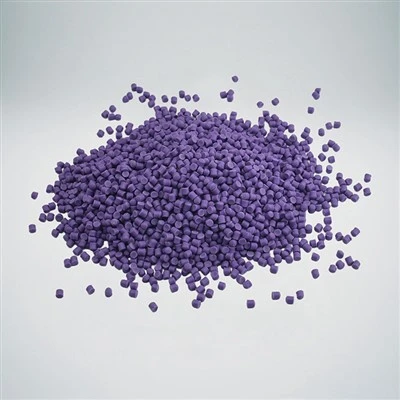
I get it, figuring out this stuff can be overwhelming, especially when you’re trying to stay on budget for your production runs. If you’re not sure what kind of masterbatch you need, or you want a custom quote, don’t hesitate to reach out. We can walk you through what factors will affect your price, help you find the right balance of cost and quality, and even give you a sample to test before you place a big order. No pushy sales pitches, just straight talk – that’s how we do things around here.
Communication Cable Compounds References
- "Color Masterbatch Market Trends 2024", Plastic Industry Association
- "Specification Guidelines for Color Masterbatches", American Society for Testing and Materials (ASTM)
- "Cost Analysis of Color Masterbatch Production", European Plastics Converters Association (EuPC)
Opta New Materials (Jiangsu) Co., Ltd.
As one of the most professional color masterbatches manufacturers and suppliers in China, we also support customized service. We warmly welcome you to buy bulk durable color masterbatches from our factory. If you have any enquiry about free sample, please feel free to email us.
Address: No.80, Jingang Avenue, Zhenjiang New Area, Zhenjiang City, Jiangsu Province, China.
E-mail: le.yin@optachem.com
WebSite: https://www.optanewmaterials.com/
