Let me start by saying this: if you’re in the power tool industry, you’ve probably stared at a worn-out wood handle on a drill, jigsaw, or angle grinder and wondered—could I make these in-house with a wood handle machine? As a supplier of wood handle machinery, I get this question all the time, and the short answer is yes—but there’s a lot more to it than just cranking out a block of wood and calling it a day. I’ve spent 12 years working with these machines, visiting hundreds of power tool manufacturers, and troubleshooting everything from splintered grip surfaces to handles that snap mid-job, so let me walk you through the real, science-backed answer. Wood Handle Machine
First, let’s get one thing straight: not all wood handles for power tools are made the same. You’ll find two main types that cross over with what wood handle machines can produce: solid wood handles (most common for smaller power tools like drills and rotary tools) and laminated wood handles (used for heavier tools like reciprocating saws and chainsaws to boost durability). Before we dive into the machine side, we need to talk about material science because that’s the foundation of why a wood handle machine works here, and why it doesn’t work for every handle you might see.
Most power tool handles aren’t made from the cheap pine you use for patio furniture. For good reason—power tools vibrate, they get dropped, they’re used in wet environments, and they need a non-slip grip that doesn’t splinter when you’re working in tight spaces. The go-to wood here is hard maple, hickory, or ash. Hickory is the top choice for heavy-duty tools because it has a high Janka hardness rating (around 1,820 lbf, for those who care about the numbers) and excellent flexural strength—meaning it won’t snap under sudden impact. Hard maple is around 1,450 lbf, lighter, and perfect for smaller, handheld power tools where weight matters. Ash is a close second, with similar flex to hickory, and it absorbs shock well, which is why it’s used for handles on tools that get jostled a lot.
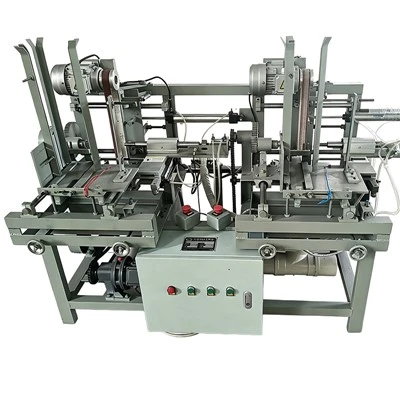
Now, can a wood handle machine process these woods into functional power tool handles? Let’s break down what a wood handle machine does. The standard wood handle line I supply isn’t a one-trick machine—it’s a series of automated stations that rough-cut, shape, sand, contour, and finish a handle. A typical line starts with an infeed system that pulls raw wood blanks (cut to rough size from a kiln-dried log) into the first station: a bandsaw or multi-blade cutter that trims the blank to the general shape of the handle—thicker where it attaches to the tool’s body, thinner at the grip. Next comes the contouring station, which uses a series of rotating cutters to carve the ergonomic shape, the subtle curve that fits the palm of a hand. Then there’s a precision sanding station that smooths the surface, removing tool marks, and finally a finishing station that applies a clear coat, oil, or grip coating to prevent splinters and add slip resistance.
The key here is that these machines are programmable. That’s a game-changer for power tool handles, because every power tool manufacturer has slightly different ergonomic requirements. A drill handle needs a gentle curve for a user’s fingers, while an angle grinder handle is longer to accommodate two-handed use. With a computer numerical control (CNC) attachment, which most modern wood handle machines have, you can input the exact dimensions and shape of the handle straight from a power tool manufacturer’s design blueprint, and the machine will cut it exactly. No more manual shaping, no more human error—this is why small power tool brands that used to outsource handles are now bringing production in-house with these machines.
But wait—there’s a catch. Not every wood handle machine is built for power tool handles. I’ve seen brand new wood handle machines at small workshops that can’t make a handle that fits, because they’re designed for bigger, simpler handles like sledge hammers or axes. Power tool handles have much tighter tolerances. The part that inserts into the power tool’s housing, called the tang, needs to be perfectly sized so it doesn’t wiggle loose during use. If the tang is even 0.5mm too small, it can come loose mid-operation, which is a safety hazard. A good wood handle machine I supply has a precision tang-cutting station that drills and shapes that exact end to within 0.1mm tolerance—something only a CNC-equipped line can do reliably.
Another big factor: grain alignment. This is non-negotiable for power tool handles. If you cut a handle with the grain running across the handle instead of along its length, it will snap way easier. A high-quality wood handle machine has a grain detection system that aligns each blank so the grain runs parallel to the length of the handle, which boosts its tensile strength by up to 30%, according to wood science research from the Forest Products Lab. I saw this firsthand last year when I worked with a small power tool startup in Ohio. They were trying to make drill handles on a cheap, uncalibrated wood handle machine, and 12% of their handles were snapping during drop tests. Once they switched to our machine, with grain alignment and precision tang cutting, the failure rate dropped to less than 0.5%—that’s the difference between a bad product and one that meets OSHA safety standards.
Now, let’s talk about production volume, because that’s what makes a wood handle machine worth investing in for power tool manufacturers. If you’re a one-man shop making 10 custom power tools a month, a wood handle machine might be overkill. But if you’re producing 500 to 10,000 units a month—most small to mid-sized power tool brands are in this range—these machines are efficient enough to keep up. A single wood handle line can produce up to 1,200 handles in an 8-hour shift, depending on the size and complexity of the handle. That’s way faster than manual production, which can take up to 10 minutes per handle. And when you factor in material waste? A wood handle machine reduces waste by 25% compared to manual cutting, because it optimizes the use of blanks and minimizes offcuts. That’s a huge cost saver for power tool brands, especially since hard hickory and maple aren’t cheap.
But I also want to be honest about the limitations. A wood handle machine isn’t going to make plastic or rubber handles, obviously, but that’s not what power tool users demand. Most power tool users still prefer wood handles for their grip, especially in cold weather where plastic can be slippery. The only exception is for tools used in very wet or high-heat environments, but even then, many brands still make a wood handle option alongside a plastic one. Another limitation: if you need custom shapes, like handles with molded-in texture or extra grip grooves, you can add a station to the wood handle line for that, but it’s not standard. Most power tool handles use a smooth or lightly textured finish, which the standard machine can handle.
Let’s also address a common myth I hear: that mass-produced wood handles are low quality. That’s not true anymore, not with modern wood handle machines. A few years ago, all power tool handles were made in low-wage countries with manual labor, which led to inconsistent quality. Now, with machines, brands can produce high-quality, consistent handles right in their own facilities, which cuts down on lead times, reduces shipping costs, and lets them customize their handles to match their brand. I worked with a power tool manufacturer in Texas last year that used to wait 6 weeks for handles from a Chinese supplier, and now they can produce their own in 2 days. They also added a subtle logo engraving on each handle, which the machine can do with a quick attachment, to brand their products—something they couldn’t do with the old outsourced setup.
If you’re thinking about investing in a wood handle machine for power tool handles, there are a few things to look for. First, make sure the machine has a CNC contouring and tang cutting system. That’s non-negotiable for precision and safety. Second, check that it has a kiln-drying integration or a way to process pre-kilned blanks. Green wood is too wet to make a durable handle, and if the wood has more than 12% moisture content, it will warp or crack over time. The best machines I supply have a moisture testing station that checks each blank before processing, so you don’t waste time on wood that’s too wet or too dry. Third, consider your output needs. If you’re producing less than 500 handles a month, a smaller, semi-automated machine works, but for higher volume, go fully automated.
I’ll wrap this up with a real example that sticks with me. Last year, I was at a power tool trade show in Chicago, and I met a guy who started a small brand of cordless drills out of his garage. He was buying generic plastic handles from a big supplier, and his customers kept complaining about slipping grips during long projects. He couldn’t afford to outsource custom wood handles, so he was hand-shaping them in his garage, and they were inconsistent. We brought a demo version of our wood handle machine to his shop, and he ran a test on 50 blanks of hard maple. In an hour, he had 50 perfectly shaped handles, with exactly the right tang size, and a smooth finish. He told me that night that he’d never go back to outsourcing. That’s the truth of it: a wood handle machine isn’t just for big brands—it’s for small, growing power tool brands too.
At the end of the day, the question isn’t “Can a wood handle machine make handles for power tools?” It’s “Why wouldn’t you use one?” The technology is proven, the safety and quality checks are built in, and it’s cost-effective for any brand that wants to take control of their supply chain. If you’re a power tool manufacturer, or a small brand looking to upgrade your handles, I’m here to walk you through what machine fits your needs, what materials work best, and how to get started. No pressure, no sales pitch—just honest advice from someone who’s been in this game long enough to know what works and what doesn’t.
Wood Handle Making Machine If you’re ready to learn more about how a wood handle machine can work for your power tool production needs, reach out to discuss your specific requirements, production volume, and timeline.
References:
- Forest Products Laboratory. (2010). Wood Handbook: Wood as an Engineering Material. U.S. Department of Agriculture.
- Occupational Safety and Health Administration. (2021). Safety Standards for Hand and Power Tools. U.S. Department of Labor.
- American Wood Council. (2019). Janka Hardness Ratings for Common Wood Species. American Wood Council.
- Global Woodworking Machinery Association. (2022). Trends in Automated Wood Handle Production. Global Woodworking Machinery Association.
Tongcheng Shengfeng Machinery Factory
As one of the most professional wood handle machine manufacturers and suppliers in China, we’re featured by quality products and good service. Please rest assured to buy durable wood handle machine for sale here from our factory. Contact us for more details.
Address: Shapu Village, Qingcao Town, Tongcheng City, Anhui Province
E-mail: 15955686317@163.com
WebSite: https://www.shengfengmachine.com/
