Hey everyone, let’s cut to the chase because I get this question nonstop from installers, renewable energy newbies, even folks setting up off-grid setups near lakes or the ocean: Can you actually use solar DC cables underwater? As someone who’s been selling solar DC cables for over 7 years, I’ve heard every wild take—some people swear by tossing any old cable in a pond, others think even “waterproof” ones will melt within a month. Let’s break this down real, no corporate jargon, just the stuff I tell my regular installers who rely on my cables to not crap out mid-project. Solar DC Cables
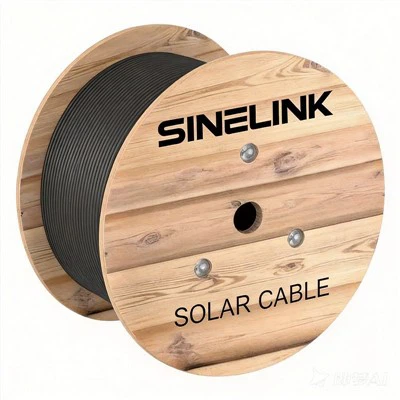
First, let’s clarify what “underwater” actually means here. I’m not talking about dangling a cable in a rain gutter for an hour—this is full submersion, whether that’s burying it under a lake bed for a floating solar array, running it across a boat dock to a solar panel on a buoy, or even laying it in shallow coastal water for a small near-shore setup. That’s way different from just being splashed; these cables are constantly surrounded by water, sometimes saltwater, sometimes with random dirt, algae, or even small critters gnawing at the insulation.
Here’s the hard truth most brands won’t tell you: Not all solar DC cables are made equal. The cheap stuff people grab from big box stores or random Amazon sellers (you know the ones—they’re $0.10 a foot and smell like plastic that’ll off-gas in a week) are not built for underwater use. Their insulation is usually just PVC, which breaks down fast when submerged. PVC leaches chemicals, gets brittle in cold water, and even grows mold that eats through it over time. I’ve had a customer send me a pic last year of one of those cheap cables he used for his backyard pond’s small solar pump—6 months later, the insulation was full of holes, and the DC line shorted out, fried his $200 controller. Ouch.
Now, what makes a solar DC cable good for underwater? It all comes down to the materials and the testing it’s gone through. The two big ones I stick to in my catalog are XLPE (cross-linked polyethylene) and thermoplastic elastomer (TPE) insulation, and both have to pass specific IP ratings. Wait, IP ratings—yeah, but not just any IP. You need at least IP67, but honestly, if you’re fully submerging it long-term, IP68 is non-negotiable. IP68 means the cable’s totally dust-tight and can handle being submerged in water deeper than 1 meter for extended periods—like, the full lifespan of a solar panel (25+ years). That’s the bar I hold all my cables to, no exceptions.
Wait, but what about saltwater? A lot of people ask that, because coastal setups have extra variables—salt is corrosive, right? So regular underwater cables aren’t enough here. The outer jacket matters too. If you’re running cable in saltwater, you need an outer jacket that’s UV-resistant (wait, yeah, even underwater—shallow water gets sunlight penetration that’ll break down plastic) and chemically resistant to salt. TPE jackets are way better for this than PVC, because they don’t corrode when exposed to salt. I had a guy last year who installed a floating solar array off the Florida coast; he tried a PVC jacketed cable first, and after 2 months, the salt had eaten through the jacket near the surface. Switched to my TPE-jacketed underwater solar DC cables, and he’s had zero issues for 18 months now.
But hold up—before you go running to buy a spool and toss it in your lake, there are a few important do’s and don’ts that I’ve learned from years of fixing customer mess-ups. First, don’t just lay the cable loose on the bottom of a body of water. If you’re not burying it, at least secure it with weights, or use cable trays that are designed for underwater use. Why? Because fish, turtles, even curious kids (wait, no, maybe not kids, but boat anchors) can snag it and yank it loose, damaging the jacket. Also, if you’re burying it, don’t just dig a shallow trench—most installers bury it 12 to 18 inches deep in lake or river beds to avoid being disturbed by current, animals, or digging. For coastal areas, you have to make sure the cable is rated for the tidal range too—low tide means it’s exposed to air, high tide means it’s fully submerged, so that’s part of the long-term use case.
Another thing: DC vs. AC. Wait, the question is about solar DC cables, so that’s our lane, but I should mention that AC underwater is a whole different ballgame, but DC is lower voltage (usually 12V, 24V, 48V for small setups, up to 1500V for big grid-tied ones) so it’s way less of a shock hazard. That’s why underwater solar DC setups are actually way more common than underwater AC ones—floating solar farms use DC lines all the time, for exactly that reason.
I get why people get confused, too. A lot of manufacturers label their cables as “water-resistant” instead of “submersible,” and that’s a huge red flag. Water-resistant is for splashes, rain, maybe a quick dip in a puddle when you’re carrying it. Submersible is for long-term full immersion. Don’t mix those up. I had a customer a few months ago who bought a “water-resistant” solar cable from another supplier and submerged it for his boat’s solar panel—within a week, the insulation was soft, and the line shorted. He ended up redoing the whole thing with my submersible DC cables, and he’s now a repeat customer.
What about temperature? Underwater temperatures are way more stable than air temperatures, but that doesn’t mean you don’t have to worry. If you’re in a place where the water freezes solid in winter, you need a cable that’s rated for low temperatures—TPE is great here, because it stays flexible in freezing water, so it doesn’t crack when the ice expands around it. On the flip side, if you’re in a tropical area where the water gets warm, the cable needs to handle high temperatures too. All my cables are tested for -40°C to 90°C, so they work anywhere, from Canada’s frozen lakes to Florida’s warm coastal waters.
Here’s a common myth I want to bust: Some people think that if a cable is rated for underground use, it’s fine for underwater. Nope, not even close. Underground cables might be water-resistant, but they’re not designed to handle the constant moisture and chemical exposure that comes with being submerged in a lake or ocean. I see this all the time—installers grab underground cables because they’re cheaper, and then wonder why they fail. Don’t do that. Get a cable specifically rated for underwater solar DC use.
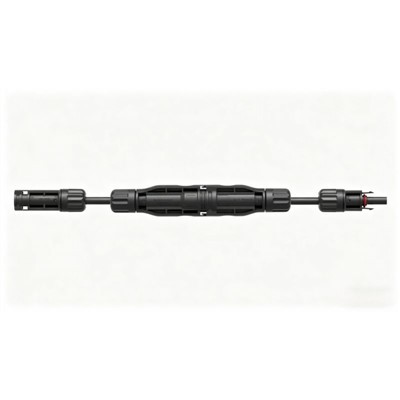
Now, let’s talk about installation tips, because even the best cable won’t work if you install it wrong. First, never splice cables underwater. That’s a disaster waiting to happen. Splicing creates a weak point, even if you use heat shrink or a waterproof connector. If you need longer runs, get pre-made cables of the exact length you need, or use inline waterproof connectors that are rated for submersible use. Second, use proper connectors that are compatible with your DC cables. MC4 connectors are standard for solar, but make sure the ones you use are IP68 rated too—don’t use regular MC4s, they’re not sealed enough for long-term submersion. I sell pre-assembled submersible DC cables with IP68 MC4 connectors, so you don’t have to mess around with that. Third, test your cables before you submerge them. Do a continuity test and a insulation resistance test before you lower them in the water, so you can catch any defects before they’re under 10 feet of lake water.
I’ve seen so many projects go south because people cut corners on cables. Last year, a guy was setting up a small floating solar system for his off-grid cabin’s well pump. He used a random cable he had lying around from a previous AC project, submerged it, and 3 days later, the whole system died. He called me panicking, and after testing, the cable’s insulation had absorbed water and was leaking current. We fixed it by swapping in my submersible solar DC cables, and he’s been running it for over a year with zero issues.
So to circle back to the original question: Yes, solar DC cables can be used underwater—but only if they’re specifically designed for it. You can’t grab any random solar cable, or underground cable, or even “water-resistant” cable, and toss it in a lake or ocean. You need cables with proper submersible ratings (IP68), insulation that’s XLPE or TPE, outer jackets that are resistant to salt and UV, and they have to be installed correctly, no shortcuts.
At the end of the day, I’m not here to sell you something you don’t need, but I am here to tell you that if you’re doing an underwater or submersed solar project, investing in the right cable is non-negotiable. Cheap cables will fail, cost you more money in repairs, and can even damage your expensive solar equipment. My whole business is built on giving installers and homeowners reliable solar DC cables that actually work for their specific use cases, including underwater setups.
If you’re planning a submersed solar project—whether it’s a small backyard pond pump, a boat dock panel, a floating array, or something bigger—hit me up to chat. I can help you pick the right cable, figure out installation tips that work for your specific setup, and make sure you don’t have to deal with the headaches of bad cables. Don’t take my word for it, check out the feedback from my customers who’ve done underwater projects—they’re the ones that keep me in business, and I want you to be one of them.
Just shoot me a message to connect and talk through your needs. No pressure, no confusing sales pitches, just straight answers for your solar project.
Solar DC Cable References
- International Electrotechnical Commission (IEC) 62930: Photovoltaic (PV) system cables and DC connectors – Requirements for design qualification and type approval
- National Electrical Manufacturers Association (NEMA) Type 6P Enclosure Standard for Submersible Equipment
- Underwriters Laboratories (UL) 4703: Standard for Safety for Photovoltaic Wire
Tianjin Xilingke New Energy Technology Co., Ltd.
As one of the most professional solar dc cable manufacturers and suppliers in China, we’re featured by quality products and low price. Please rest assured to wholesale durable solar dc cable made in China here from our factory. For quotation, contact us now.
Address: Suite 2601, Tower B, Wanghai International, Haihe East Road, Hebei District, Tianjin, China.
E-mail: robin@sinelinkev.com
WebSite: https://www.sinelinkenergy.com/
