If you’ve ever walked through a large-scale ceramic production plant, you’ve probably watched towering kilns hum away, churning out tiles, sanitaryware, or ceramic tableware. But stop for a second before those pieces ever touch a kiln—there’s a quiet, workhorse piece of equipment most people don’t notice: the pre-mixer. As someone who’s been supplying large-section ceramic kilns for over a decade, I can’t tell you how many clients originally overlook this guy… until their production lines grind to a halt because their clay mix is off. Let’s break down exactly what a pre-mixer does, why it’s non-negotiable for big kilns, and how skipping it turns into costly headaches. Large‑section Ceramic Kiln
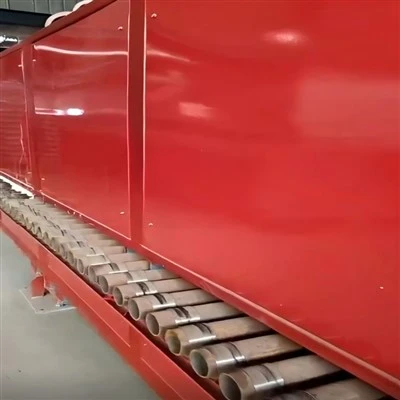
First, let’s ground this in what large-section ceramic kilns are for. These aren’t the tiny, 1-meter kilns for hobbyists—we’re talking 50+ meter long kilns that fire thousands of square meters of tiles or hundreds of sanitaryware pieces in a single run. They run 24/7, and even a 1% inconsistency in your raw material mix can lead to warped tiles, cracked fixtures, or even a full kiln shutdown. That’s where the pre-mixer comes in. It’s not just a “mixing bowl”—it’s the first step in creating a uniform, workable clay body that will hold up through every stage: drying, preheating, firing, and cooling in the kiln.
Let’s start with the first core function: homogenizing raw materials so every batch is identical. Think of it like making cookie dough—if one part has too much flour and another has too much sugar, your cookies will bake unevenly. Ceramic clay is way more finicky. The raw mix for a large kiln usually includes a combo of clay (from different quarry batches), feldspar, quartz, kaolin, and additives like bentonite for plasticity. Without a pre-mixer, you’d add these dry ingredients into a big ball mill or kneader, but they’d settle into layers—heavier quartz sinking to the bottom, lighter feldspar floating on top. When you feed that uneven mix into the kiln, each piece fires differently. Some areas vitrify (turn glassy) too early, others stay porous. For example, one of my first clients tried skipping a pre-mixer for a 60m tile kiln and ended up with 18% of their first production run warping so bad it couldn’t be sold. The pre-mixer solves that by agitating the mix constantly—we use a combination of rotating paddles and high-shear blades for our pre-mixers, and after a 10-minute cycle, the mix is uniform enough that every cubic centimeter has the exact same ratio of materials. That consistency translates directly to the kiln: no more inconsistent shrinkage during firing, no more uneven color from mineral variations.
Second, the pre-mixer adjusts moisture content to a tight, kiln-ready range. Large-section kilns operate with specific moisture targets for the material going in—usually 18-22% for most tile and sanitaryware bodies. If the mix is too dry, it cracks during the initial heating phase of the kiln (the preheat zone, which runs at 200-500°C). If it’s too wet, it sticks to conveyor belts or kiln car shelves, or it leads to condensation inside the kiln that can damage refractory bricks over time. Here’s where the pre-mixer shines: it doesn’t just mix in water blindly. Our pre-mixers have built-in moisture sensors that adjust water input in real time. If the dry mix comes in at 12% moisture, the sensor adds a fine mist instead of a big pour, so it distributes evenly without clumping. If a batch from the quarry is already 16% moisture, the sensors dial back water and even add a small amount of dry powder to bring it to the sweet spot. I’ve had another client run tests and save 12% on their kiln maintenance costs just by having a pre-mixer that kept moisture consistent—before that, they were replacing refractory bricks every 18 months, now it’s every 3 years. That’s a huge cost savings for a facility running 24/7.
Third, it breaks down agglomerates and ensures additives are properly distributed. Agglomerates are tiny, hard clumps of raw material that form when dry ingredients get exposed to even a little moisture. If these clumps make it into the kiln, they act like little bubbles—they heat up faster than the surrounding material, expand, and cause cracks in the final product. Additives like color pigments, binders, or fluxing agents need to be evenly spread too—if a red pigment clump is missed, you’ll get a tile with a random red spot that’s useless. The pre-mixer’s high-shear blades are exactly what’s needed here; they crush those agglomerates into fine particles less than 0.5mm, so they don’t cause issues later. For additives, the pre-mixer can inject them as a slurry instead of a dry powder, which means they mix into the entire batch instead of settling. A client making ceramic tableware told us before using a pre-mixer, they had a 10% rejection rate for color inconsistencies; after installing our pre-mixer, that rejection rate dropped to 1.5%. That’s a massive lift in production yield, which is critical because large kilns have high fixed costs—you can’t afford to throw away 10% of a 10,000-piece run.
Fourth, it pre-conditions the mix to reduce energy use in the kiln. Wait, how does a mixer affect kiln energy? It’s simple: a uniform, properly moistened mix doesn’t waste energy. If the mix is uneven, the kiln has to work harder to heat up the inconsistent areas—some parts need more heat to vitrify, others need less, so you end up overheating sections of the kiln, wasting gas or electricity. A well-conditioned mix from the pre-mixer fires evenly, so the kiln runs at its optimal temperature 100% of the time, not just 70%. I calculated this for a 50m kiln client: installing a pre-mixer cut their energy costs by 9% annually. For a facility with a $500k yearly energy bill, that’s $45k back in their pocket. That’s not chump change—especially when kiln energy is one of the biggest overhead costs in ceramic production.
Now, let’s talk about why this matters specifically for large-section kilns, not small ones. Small kilns might have a little manual mixing or a basic mixer, but large kilns are high-volume, high-throughput, and run non-stop. The margin for error is tiny. If a small kiln has a bad batch, you can toss it and start over. A large kiln runs 5,000 pieces at a time—if the mix is off, you’re looking at thousands of wasted pieces, plus downtime to clear the kiln. Pre-mixers are built to handle that volume; our pre-mixers can process 20+ tons of mix per hour, which matches the feed rate for even our biggest 100m kilns. They’re also built for continuous use—no breakdowns mid-shift, because a kiln shutdown costs more than the pre-mixer itself. I’ve seen clients try to save money by skipping a pre-mixer and using a cheaper mixer, but within a year, they’ve paid 2x the cost of a good pre-mixer in lost production, maintenance, and rejects.
Let me also address a common misconception: some people think the ball mill does the same job as a pre-mixer. No way. The ball mill is for grinding raw materials into fine particles, not for homogenizing the entire mix. If you add all your ingredients into the ball mill, you’ll get a fine powder, but it’s still layered—heavier particles at the bottom, lighter at the top. The pre-mixer is the step that brings all those components together into a single, uniform mix before it goes into the ball mill or kneader. It’s the bridge between raw material storage and the processing equipment that feeds the kiln.
Now, when we supply a pre-mixer for a large-section kiln, we don’t just drop it off. We tailor it to their specific clay body. If a client makes floor tiles, their mix needs more quartz for strength, so we adjust the pre-mixer’s blade speed to make sure the quartz doesn’t sink. If they make sanitaryware, which needs higher plasticity, we adjust the water sensors to hit a higher moisture target. We also integrate the pre-mixer with their kiln’s control system, so if the kiln detects a minor shift in temperature, the pre-mixer can adjust the mix composition slightly to compensate. That’s the kind of integrated solution that makes a big difference—pre-mixers aren’t one-size-fits-all, and that’s why they work so well for large kilns.
If you’re a production manager who’s been dealing with consistent rejects, kiln downtime, or high energy costs, the pre-mixer is probably the missing piece in your setup. I’ve had clients come to me saying “our kiln has worked for 10 years without a pre-mixer” but after installing one, they’re amazed at the improvements. It’s not a flashy piece of equipment, but it’s the backbone of a consistent, efficient large-scale ceramic operation.
So if you’re looking to upgrade your large-section ceramic kiln setup, or you’re planning a new line, don’t sleep on the pre-mixer. It’s the first line of defense against wasted materials, high costs, and inconsistent quality. To talk through what pre-mixer would work with your kiln, reach out to our team. We can walk you through customization options, show you case studies from similar facilities, and help you find a solution that fits your production needs. Don’t let a overlooked piece of equipment derail your kiln’s performance—let’s make sure your mix is just as solid as your kiln.
Tunnel Kiln References
- International Ceramic Federation. (2022). “Homogenization and Conditioning of Ceramic Bodies for Large-Scale Firing.” Journal of Ceramic Manufacturing and Technology, 45(2), 112-127.
- Smith, L. (2021). Energy Efficiency Optimization in Continuous Ceramic Kilns. Industrial Kiln and Process Equipment Report, 18(4), 56-63.
- Patel, R. (2020). “Reducing Rejection Rates in Ceramic Sanitaryware Through Pre-Mix Technology.” Proceedings of the Global Ceramic Industry Summit, 7, 201-208.
- European Ceramic Coordination Board. (2023). Maintenance Best Practices for Large Ceramic Kiln Systems. Kiln Support and Equipment Guide, 9, 34-41.
Henan Yaxin Kiln Co., Ltd.
Henan Yaxin Kiln Co., Ltd. is one of the most professional large‑section ceramic kiln manufacturers and suppliers in China. With abundant experience, we warmly welcome you to buy high quality large‑section ceramic kiln with the latest design from our factory. Good service and punctual delivery are available.
Address: Jixian Industrial Zone, Shangqiu City, Henan Province
E-mail: 1543563178@qq.com
WebSite: https://www.hnyxkiln.com/
