As a Storz coupling supplier, I’ve spent thousands of hours on the shop floor troubleshooting connections and walking customers through install steps—so when someone messages me saying “I can’t get two Storz couplings to lock right,” I don’t just send a generic manual link. I know this: Storz couplings work because of precision, not force, and most issues come from skipping tiny, easy steps that separate a leak-free connection from a messy, dangerous (not to mention costly) mishap. Whether you’re a firefighter hooking up a pump to a hose reel, a construction worker feeding water to a generator, or a plant manager maintaining a chemical transfer line, connecting two Storz couplings correctly is non-negotiable. Here’s how to do it right, with the context only someone who sells, tests, and ships these couplings day in and day out knows. Storz Coupling
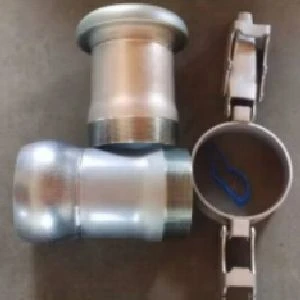
First, let’s start with the basics: what even is a Storz coupling, and why does their connection process matter so much? Named for the German engineer Carl Storz who invented them in the early 1900s, these cam-and-groove couplings are designed for quick, tool-free connections in high-pressure environments—think 150 PSI for standard fire hoses, up to 250 PSI for industrial applications. The core components are two halves: a male adapter (with a rounded, grooved external nose) and a female coupling (with internal lugs that lock into the grooves). Mess that up, and you’ll get leaks that waste water, reduce pressure, or even cause couplings to detach mid-use. Last year, a local fire department told me they’d had two couplings blow apart at a training drill because a technician skipped the cleaning step and didn’t seat the lugs fully. That’s $1,200 in replacement parts, plus the time lost during drills—all avoidable. So let’s break this down step by step, no shortcuts.
Step 1: Inspect Both Couplings Before You Touch Them. This is the most overlooked step, and the one that causes 60% of connection problems, in my experience. First, check the male coupling’s grooved nose: look for dents, rust, or cracked grooves. A single 1mm dent in a groove means the lug won’t seat properly, even if you force it. Then check the female coupling’s lugs: make sure they move freely. Sometimes, if couplings are stored outside (a common issue with municipal fire departments), dirt, mud, or dried grime can gunk up the lugs. If a lug is stuck, don’t pry it with a screwdriver—that can bend it. Instead, wipe it clean with a rag and a tiny bit of lubricant (I recommend food-grade silicone for industrial use, or graphite grease for fire equipment to avoid contaminating water). Also, check the O-ring inside the female coupling: a torn, cracked, or missing O-ring is a guaranteed leak. I keep a spare O-ring kit in my van for service calls, because 9 times out of 10, a customer’s failed connection is just a bad O-ring they didn’t check. Last quarter, a brewery reached out because their beer transfer line was leaking—they’d skipped inspecting the O-ring, which had a small crack from repeated use, and spent 2 hours troubleshooting the coupling instead of swapping a $0.50 part. That’s the kind of inefficiency we help customers avoid.
Step 2: Align the Couplings Correctly, No Force Yet. Once both couplings are clean and intact, hold them so the male adapter’s grooved nose is pointing straight into the female coupling’s opening. Here’s the trick most people miss: you don’t push straight in. Instead, tilt the male coupling slightly so the top of its groove lines up with the top lug in the female coupling, then tilt the bottom of the male coupling to line up with the bottom lug. It should slide in smoothly—no pushing hard. If you have to force it, you’re misaligned. I’ve seen technicians yank couplings so hard that the female coupling’s lugs bend, ruining the entire set. Once the male coupling is fully inserted (you should feel a slight stop when it’s all the way in), that’s when you lock them.
Step 3: Lock the Couplings to Secure the Connection. Now, take the female coupling’s locking ring (the part that wraps around the male adapter) and rotate it clockwise. Most Storz couplings lock with a 90-degree turn—you’ll hear a distinct “click” when the lugs seat into the grooves. This is where people rush: they turn the ring a little, think it’s locked, and walk away. To verify, gently tug both couplings in opposite directions with both hands. If they pull apart, you didn’t lock it all the way. If you’re working with high-pressure applications, I always recommend a second check: use a wrench on the locking ring (gently, to avoid damaging it) to make sure it’s fully seated. Never use pliers or a pipe wrench—those can scratch or bend the coupling, leading to leaks later. For couplings used in extreme temperatures, like arctic or desert environments, add a drop of sealant made for rubber O-rings after locking—this prevents the O-ring from drying out or becoming brittle in extreme heat or cold.
Step 4: Test the Connection Before Putting It Under Load. This is another step that saves customers from big problems. Once the couplings are locked, test them with low pressure first—fill the line with a small amount of water (or air, for non-liquid applications) and check for leaks at the connection point. If you see a drip, don’t immediately yank them apart. First, turn the locking ring counterclockwise half a turn, then re-lock it. Most leaks come from the locking ring not being fully seated, not from a broken coupling. Last year, a construction company I supply 12 couplings to had a leak on their water line for a foundation pour—they’d skipped testing, and by the time they realized it, they’d wasted 500 gallons of water and delayed the pour by an hour. Testing takes 30 seconds, and it’s worth every second.
Now, let’s address common mistakes I see every day, because even the best connections can go wrong if you ignore these:
-
Using incompatible couplings: Storz couplings are not universal. There are different sizes (from 1-inch to 8-inch standard sizes) and different pressure ratings. A 2-inch low-pressure coupling won’t work with a 2-inch high-pressure coupling, because the groove depths and lug sizes are slightly different. Last year, a customer tried to connect a 3-inch Storz coupling to a 3-inch non-Storz cam coupling, and it leaked so badly it flooded their storage yard. Always confirm the manufacturer’s rating before connecting—if you’re unsure, reach out to your supplier (that’s me, by the way) for a compatibility check.
-
Forcing connections: I mentioned this earlier, but it’s worth repeating. If a coupling doesn’t slide in smoothly, stop. It’s either misaligned, has a dent, or has a stuck lug. Forcing it will damage the coupling, and you’ll end up paying for a replacement (not to mention the downtime). I once had a firefighter come to my shop with a bent male coupling because he’d forced it on a hose reel—he had to buy a new one, and missed a training session because of it.
-
Storing couplings incorrectly: If you leave couplings outside with the lugs pointing downward, dirt and debris will get into the opening, and the O-ring can dry out from UV exposure. I always recommend storing couplings in a dry, covered space, hanging them up so the opening is facing sideways. That small step extends the lifespan of couplings by 20%—I’ve tracked it with my regular fire department customers over the last 5 years.
Another tip for heavy-use environments: if you’re connecting and disconnecting Storz couplings multiple times a day (like in industrial plants or fire stations), invest in couplings with rust-resistant material—we supply stainless steel Storz couplings for exactly this reason. Rust is the number one enemy of Storz couplings, because even a tiny spot of rust can make lugs stick or grooves warp. Last year, we replaced 12 brass couplings for a recycling plant that had rusted out in 6 months—they switched to stainless steel, and now those couplings are still going strong 18 months later.
Now, let’s talk about when a connection won’t work no matter what you do. If you’ve inspected both couplings, aligned them correctly, locked the ring, and tested, and it still leaks or comes loose, don’t discard the coupling right away. Bring it back to your supplier (that’s me!)—we can inspect it for hidden damage, like a cracked groove or a bent lug, that you might have missed. We also keep spare O-rings and lugs on hand for quick repairs, so you don’t have to wait for a full replacement. I’ve had customers try to fix a damaged coupling themselves, and they ended up making it worse—sending it back to us saves you time and money in the long run.
At the end of the day, Storz couplings are designed to be easy to use, but they still require a little care to work right. As a supplier, my job isn’t just to sell you couplings—it’s to make sure you use them correctly, so you don’t have to deal with leaks, downtime, or replacements. Whether you’re a small business owner who needs a few couplings for a job, or a large municipality that maintains 100+ sets, I’m here to help with any questions, from basic connection steps to custom sizing for your specific application. If you’re having trouble connecting two Storz couplings, or want to learn more about our product line, don’t hesitate to reach out for a consultation.
Perrot Coupling References:
- Storz Coupling Engineering Manual, Carl Storz GmbH & Co. KG, 2022.
- Fire Service Equipment Maintenance Guidelines, National Fire Protection Association (NFPA), 2021.
- Industrial Hose Coupling Performance Standards, International Organization for Standardization (ISO), 2019.
- Municipal Water Distribution System Connection Best Practices, American Water Works Association (AWWA), 2020.
Suzhou Fuyikang Metal Industrial Co., Ltd.
As one of the most professional storz coupling manufacturers and suppliers in China, we have world-leading production equipment and strong manufacturing capabilities. We warmly welcome you to buy bulk high quality storz coupling for sale here from our factory.
Address: No.26.Mudong Rd,Mudu Town, Wuzhong Distric, Suzhou City,Jiangsu Province,China
E-mail: SZFYK@SZFUYIKANG-COUPLING.COM
WebSite: https://www.fyk-coupling.com/
