Hey everyone, let’s cut to the chase—you’ve probably heard of bocce ball, right? That super fun lawn game where you roll big balls as close to a small target (called a pallino) as possible, usually on sand, gravel, or even smooth grass. But if you’re here, you might’ve stumbled on plastic bocce balls and wondered what makes ’em different from the wooden or resin ones you see at the park or local rec center. As a long-time supplier of these bad boys, I’ve fielded this question a hundred times, so let’s break it down straight, no fancy jargon. Plastic Bocce Ball

First off, what is a plastic bocce ball, exactly? It’s exactly what it sounds like: a bocce ball made primarily from durable, food-grade plastic (wait, yeah, food-grade—we’ll get to why that matters later) instead of traditional materials like hardwood, solid resin, or even stone. But don’t knock it for being “just plastic” right away. These aren’t those cheap, flimsy dollar-store balls that crack after one backyard cookout. The good ones—like the ones we supply—are injected-molded with a high-density polyethylene (HDPE) or polycarbonate blend that’s built to take a beating. Let’s get real: bocce ball gets dropped, rolled over rough pavement, left out in the rain, even stepped on by your golden retriever who thinks it’s a tennis ball. Plastic holds up way better than wood, which can warp if it gets wet, or resin, which chips if you accidentally hit a rock too hard.
Now, let’s talk about how they’re made, because that’s part of why they’re different. Most plastic bocce balls are produced with an injection molding process: molten plastic is injected into a precision-machined mold that gives the ball its round shape, weight, and any markings (like numbers for tournament play, or custom logos for corporate events). Some higher-end models have a solid inner core, too—usually a denser plastic or even a sand fill— to match the official weight requirements for competitive play. Oh, right, there are official standards for bocce balls! The International Bocce Federation (yes, that’s a real thing) says regulation balls need to be between 100mm and 110mm in diameter, and weigh between 920g and 1200g. A lot of our plastic models hit that mark, so they’re not just for backyard fun—they work for casual rec leagues, too.
Wait, let’s clear up a common mix-up: not all plastic bocce balls are the same. You’ve got two main types, depending on what you’re using them for. The first is casual-use plastic balls—think the ones you buy for family barbecues, kids’ birthday parties, or just messing around with friends. These are usually lighter, cheaper, and made of basic HDPE. They’re super versatile: you can play them on grass, concrete, even a dirt patch in your backyard, and they won’t break if your cousin kicks one by accident. The second type is tournament-grade plastic bocce balls, which are a step up. These have a balanced, dense core, a matte or textured surface for better grip, and are calibrated to be totally round (no lopsidedness here, because that would totally mess up your roll). We supply both, so no matter if you’re planning a kids’ camp activity or a local bocce league, we’ve got you covered.
So why would you choose plastic over other materials? Let’s run through the pros, because that’s what really matters. First, durability. Like I said, wood rots, resin chips, stone is heavy and can scratch your patio. Plastic? It’s water-resistant, UV-resistant (so it won’t fade if you leave it out all summer), and impact-resistant. Last year, we had a customer who used his plastic set for a beach tournament in Florida—saltwater, sun, sand, none of it fazed the balls. He still uses ’em three years later, no cracks, no warping. Second, portability. Traditional bocce sets are heavy—a full wooden set can weigh 10+ pounds, which is a pain to haul to the park or a campsite. Plastic sets are way lighter, so you can toss ’em in a backpack, a cooler bag, even a tote, and go. That’s a big win for people who travel a lot or host events where you need easy setup.
Third, value. Let’s be real: a high-quality resin bocce set can run $100+, and stone sets are even more. Our plastic sets are way more affordable, but don’t let the price tag fool you—we only use BPA-free, food-safe plastic, so if you’re hosting a picnic, the balls won’t leach any weird chemicals if they accidentally touch your burger buns (we’ve had that question before, no joke). Another pro? Customization. Plastic is way easier to print, engrave, or mold with custom designs, numbers, or even brand logos. A lot of our clients buy plastic sets for corporate team-building events, wedding favors, or youth sports teams, and they love that they can mark each ball with a team name or logo. Wood and resin can be customized too, but it’s way more expensive, especially for bulk orders.
Wait, but let’s be honest—plastic isn’t for everyone, so we should talk about the downsides, too, to keep it real. If you’re a serious bocce player who competes in top-tier tournaments, some purists still swear by solid wood or stone balls. They say plastic balls have a slightly different roll—maybe a little less grip on smooth, polished courts, or less predictable bounce if you’re doing a precision shot. But for casual play, rec leagues, or events, that difference is totally negligible. Also, super cheap plastic balls (the ones you see at dollar stores or big-box retailers) can be lopsided, so their rolls are uneven. That’s why we only source from reputable manufacturers that do quality checks for roundness and weight, so you don’t get stuck with a set that’s just a bunch of misshapen plastic orbs.
Let’s throw in a little fun context, too. Bocce has been around for thousands of years—dating back to ancient Rome, where soldiers played a version of it with stones. Over time, it’s evolved: today, it’s played in over 50 countries, and it’s even a Paralympic sport! Plastic bocce balls became popular in the 1970s, when people wanted a more low-maintenance alternative to heavy stone sets. They blew up in the 2000s with the rise of backyard games and corporate team-building, and now they’re the top-selling type of bocce ball globally, in large part because of how versatile they are.
Now, let’s talk about what makes a good plastic bocce ball, in case you’re shopping around. First, check the material: it should be high-density polyethylene or polycarbonate, not thin, flimsy plastic that bends when you squeeze it. Second, weight and size: if you’re using it for casual play, anything between 800g and 1000g works, but if you’re playing rec league, aim for regulation weight (920g+). Third, finish: a matte finish is better than glossy, because it’s easier to grip when your hands are sweaty from the sun. Fourth, balance: hold the ball in your hand and spin it—if it wiggles or feels lopsided, pass. Our suppliers do 100% quality checks on every set, so you won’t get a wonky ball from us.
What are some common uses for plastic bocce balls, besides casual backyard play? Let’s see: youth sports programs—kids love ’em because they’re lighter and safer than hard stone, so less chance of a ouch if a ball rolls into a foot. Beach events: saltwater doesn’t affect plastic, and the lightweight sets are easy to carry to the sand. Corporate events: team-building days, trade show activations, client gifts—custom plastic sets are cheap to print and easy to ship. Senior centers: many communities run bocce leagues for older adults, and plastic balls are gentler on hands than hard wood or stone, which is a big deal for folks with arthritis. We’ve had clients use our sets for all of these, and more, so we know they work for any scenario.
Wait, I should mention a thing about pallino balls, too—most pallino balls are smaller, lighter than the regular bocce balls, and our plastic pallinos match the regular balls, so they don’t feel off. That’s important, because if the pallino is a different material, it can roll differently, throwing off your game. All our sets include matching plastic pallinos, so you don’t have to mix and match.
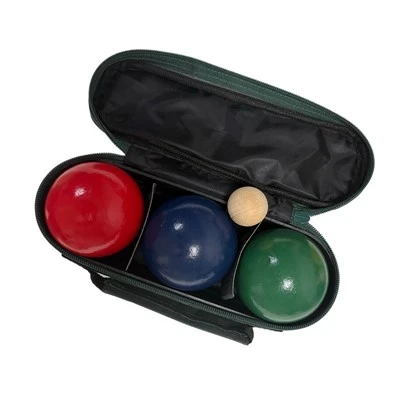
Let’s wrap this up for a second: at the end of the day, a plastic bocce ball is a durable, versatile, affordable alternative to traditional bocce ball materials, made for everything from casual backyard hangs to organized leagues. If you’re in the market for a set, whether you’re buying one for your family, ordering in bulk for an event, or restocking for a rec league, we’ve got you covered. We don’t do cheap, flimsy sets—all our plastic bocce balls are tested for durability, regulation play (if that’s what you need), and safety, so you can trust them to last.
Measuring Devices If you’re looking to get pricing, ask about custom branding, or just want to pick our brains about what set is right for you, hit us up. We work with everyone from small families planning a summer party to large corporations hosting 500-person team-building events, so no order is too big or too small.
References
- International Bocce Federation. (2022). Official Rules & Equipment Specifications. Federation Internationale de Bocce Sport.
- Outdoor Games Association. (2021). 2021 Market Report: Recreational Lawn Games. Outdoor Industry Association.
- National Recreation and Park Association. (2020). Youth Game Equipment Safety Guidelines. NRPA.
- Plastic Industry Association. (2019). High-Density Polyethylene Applications for Recreational Products. American Chemistry Council.
- World Bocce. (2023). History & Evolution of Bocce Ball. World Bocce Confederation.
Hebei Honde Industrial Trade Imp. & Exp. Co., Ltd.
As one of the most experienced plastic bocce ball manufacturers and suppliers in China, we have world-leading production equipment and strong manufacturing capabilities. Please feel free to wholesale customized plastic bocce ball made in China here from our factory.
Address: Room 1904, Yintai International Building, Guang’an Street, Chang’an District, Shijiazhuang, Hebei Province
E-mail: activeballs@hbhonde.com
WebSite: https://www.hbactiveballs.com/
