As a stone working table supplier with over a decade of hands-on experience supporting slate fabricators, I’ve lost count of how many times I’ve heard this question from teams walking through our showroom or calling our support line: “What is the best stone working table for slate work?” It’s not a trivial question—slate is a unique material, and choosing the wrong work table can turn a day of precision cutting into a disaster of chipped edges, warped panels, or even safety hazards. I’ve seen fabricers waste $1,000+ slate slabs because their existing table couldn’t handle the material’s properties, and I’ve also watched small shops boost their productivity by 40% after switching to a table purpose-built for slate. This isn’t a one-size-fits-all answer, but after working with slate day in and day out, I can break down what makes a table the right fit, based on real-world use cases, material science, and feedback from hundreds of fabricators. Stone Working Table
First, let’s get to know slate, because the best work tables start with understanding the material they’re built for. Slate is a metamorphic rock, formed when clay and volcanic ash are compressed over millions of years. Its key properties are what make it so popular for countertops, wall cladding, and decorative tiles, but also what make it tricky to work with. It’s extremely dense—often 2.7 to 2.9 grams per cubic centimeter, heavier than granite or marble—so a single 3cm thick slate slab can weigh 80 to 100 pounds per square foot. That means any work table you use needs to support that weight without sagging or flexing, because even a tiny amount of flex can cause a slab to crack mid-cut. Slate is also highly fissile: it splits along thin, flat layers, which is great for its natural appearance, but terrible if pressure is applied unevenly. Chipping, delamination, and edge breakage are common if a table’s surface isn’t flat and uniform. Finally, slate is porous? No, wait—low-porosity, actually. It’s less porous than marble, which means it doesn’t stain as easily, but it’s also brittle along its cleavage planes, so sharp impacts or uneven support can cause catastrophic breaks. That’s why a standard work table—built for granite or marble, which are more forgiving—almost never works for slate.
Let’s start with the foundation of any good slate work table: the tabletop. I’ve seen fabricers use plywood, steel plates, and even thick marble tops for slate work, and all have failed in specific ways. Plywood, even marine-grade, doesn’t have the structural rigidity to support a 200-pound slate slab without flexing; over time, it warps, creating high and low spots that lead to edge chipping. Plain steel tops are smooth and heavy, but they can scratch the back of slate slabs during cutting, and they don’t provide enough grip to hold thin slate panels in place during routing. Marble tops are too soft—they scratch easily, and the uneven surface of a scratched marble top will transfer to the slate’s edge as you cut. The sweet spot for a slate work tabletop is a reinforced, industrial-grade cast iron top, or a laminated steel top with a precision-ground surface. Cast iron is dense, rigid, and has a coefficient of friction that’s just right: it’s grippy enough to hold slate slabs in place during horizontal cuts, but smooth enough that you don’t drag the slab and cause scratches. I recommend cast iron for most slate fabricators because it can handle repeated use, heavy loads, and the heat from cutting blades without warping. Look for a cast iron top that’s at least 1.5 inches thick, and has a precision-ground finish (not just machined) to ensure a flat surface. That flatness is non-negotiable: a 0.01 inch dip in the tabletop can create a stress point in a slate slab that will crack during a 45-degree bevel cut.
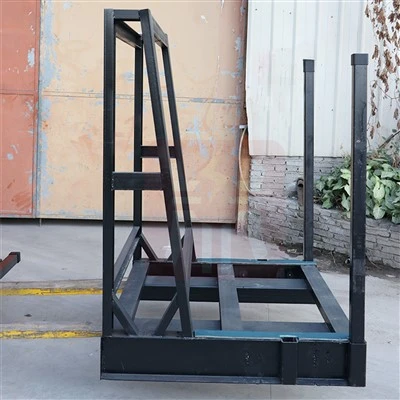
Next, the table’s support structure, or the base. A tabletop is only as good as its base, and this is where many budget work tables fall short. For slate, the base needs to be heavy enough to prevent the table from moving when you’re pushing a 50-pound saw blade through a slab, and structurally rigid enough to distribute that 80-100 pounds per square foot evenly. I’ve worked with small fabricators who tried using a standard steel workbench base for slate, and the entire table would shift during cuts, leading to uneven edges. The ideal base for a slate work table is a heavy-duty steel frame with cross-bracing, and a total base weight of at least 500 pounds. This prevents “table flex” during heavy operations. Also, look for bases that are height-adjustable—slate work varies, and a fixed-height table that’s too high or too low can lead to operator fatigue, which in turn leads to mistakes. Hydraulic height adjustment is a nice feature for busy shops, as it lets multiple workers use the same table for different tasks without straining. Another key feature of the base is integrated slab supports, called “slate ledges” or “end stops.” These are adjustable, heavy-duty stops that run along the length of the table, and they’re critical for supporting overhanging slabs. When you cut a slab that extends beyond the table’s surface, those stops prevent the slab from sagging, which would cause a crack at the overhang point. I’ve seen this save countless slabs: a fabricator was cutting a 10-foot slate countertop, and without proper end stops, the 2-foot overhang would have cracked before the cut was done. With adjustable end stops, they finished the cut flawlessly.
Then there are the worktable accessories that make the biggest difference for slate work, because even a great tabletop and base won’t help if you’re missing the right add-ons. First, a vacuum clamping system. Slate’s smooth, low-porosity surface means it’s hard to clamp with traditional toggle clamps, which can leave marks or cause uneven pressure that leads to chipping. A vacuum clamp system uses air suction to hold the slate slab firmly to the tabletop, with uniform pressure across the entire surface. I recommend a system that has multiple vacuum zones, so you can adjust the suction depending on the slab size—you don’t want to waste suction on a small slab, but you need full suction for a large 10-foot panel. Another essential accessory is a slate-specific cutting guide. Standard guides work for granite, but slate’s cleavage planes require a guide that’s aligned parallel to the rock’s natural grain. A good guide attaches to the table’s cast iron top (using the consistent precision holes in the cast iron, which are a key feature I recommend looking for) and lets you adjust the angle of the cut to follow the slate’s grain, reducing delamination. Finally, I can’t stress enough the importance of table protection for the slate. A lot of fabricators don’t realize that slate’s edges can scratch even a cast iron tabletop if you’re dragging slabs across it. A thin, durable rubber mat—1/4 inch thick, with a high-temperature rating to handle heat from blade cuts—goes on top of the cast iron table, and it acts as a buffer. It protects the table, and it also prevents the slate slab from sliding during setup. We’ve sold these mats to hundreds of customers, and it’s one of the most cost-effective upgrades they make.
Now, let’s talk about common mistakes to avoid when choosing a slate work table. The biggest mistake is skimping on tabletop thickness. I’ve had customers come to me after buying a “heavy-duty” table for granite that only has a 1-inch steel top, and it flexes 0.03 inches under a 200-pound slate slab. That’s enough to create a stress crack. Another mistake is ignoring the table’s flatness. Many budget tables advertise “precision machined” tops, but that only means the edges are cut straight, not that the entire surface is flat. I always recommend asking for a flatness test certificate—reputable suppliers will have this, because the flatness of the table is the single most important factor for slate work. A third mistake is skipping integrated slab supports. Some tables sell “add-on” end stops that are flimsy plastic, but for slate, you need heavy-duty steel end stops that can hold 200 pounds without bending. Finally, don’t overlook the table’s weight capacity. The maximum slab weight for your table should be at least 125% of the heaviest slab you work with, so if you handle 150-pound slabs, your table needs to support at least 187 pounds, minimum.
Let’s ground this in real examples from our customers, because that’s where this advice matters. Last year, a small countertop shop in rural Ohio reached out to us. They were working with slate, and they were losing an average of one slab a week to edge chipping and cracks. They had a $1,200 steel work table they bought for granite, and it had a 1-inch plain steel top, no vacuum system, and flimsy end stops. We recommended our heavy-duty slate-specific work table: 2-inch cast iron top, cross-braced steel base, adjustable hydraulic height, integrated vacuum clamping with two zones, and heavy-duty steel end stops. They upgraded, and within a month, their slab loss dropped to less than one a month. Not only that, but their productivity increased because they didn’t have to stop to replace cracked slabs, and their cut edges were so clean that they reduced their finishing time by 20%. Another customer is a large tile fabricator in Florida, working with thin slate tiles (3mm thick) for wall cladding. They needed a table that could handle thin, flexible slate without breaking, so we recommended a table with a cast iron top and a vacuum mat, which held the thin tiles flat during routing, eliminating breakage. They used to lose 15% of their thin slate tiles during processing, and now it’s less than 2%.
Now, what if your shop is on a tight budget? I know that not every fabricator can drop $3,000 on a work table upfront. There are good mid-range options, and there are upgrades you can make to a standard work table to make it work for slate. For mid-range, look for a table with a 1.5-inch laminated steel top, a steel base with cross-bracing, and a manual vacuum system (instead of hydraulic) to keep costs down. The key is to prioritize the top thickness and base rigidity. If you already have a work table, you can upgrade it with a 2-inch rubber table mat, adjustable steel end stops, and a small portable vacuum system, which will turn a standard granite table into a functional slate table for a fraction of the cost. The biggest tip here is to test your existing table: place a 150-pound slate slab on it, and use a dial indicator to check the flatness across the surface. If there’s more than 0.01 inch of flex, an upgrade is worth it.
At the end of the day, the best stone working table for slate work is one that’s built for slate, not adapted from a table built for another material. It’s a table that’s rigid enough to support the heavy weight of slate slabs, flat enough to prevent stress cracks, and has accessories that address slate’s unique brittleness and fissile nature. For our team, we don’t build “general-purpose” work tables—we build slate-specific tables because we’ve seen the difference they make for fabricators. We’ve designed each of our slate work tables with the exact features I’ve outlined: 2-inch cast iron tops with certified flatness, cross-braced steel bases with 500-pound weight capacity, adjustable hydraulic height, integrated vacuum clamping, and heavy-duty steel end stops.
If you’re tired of losing slate slabs to preventable cracks, or if you’re looking to boost your shop’s productivity and reduce waste, we’re here to help. We work with fabricators of all sizes, from small custom shops to large commercial tile yards, and we can help you find the right slate work table for your specific needs, budget, and workflow. Reach out to our team to discuss your requirements, and we’ll provide a detailed breakdown of how our tables can fit your process.
Stone Working Table References
- Stone Fabricators Alliance. (2022). Material Properties of Natural Stone: Slate vs. Granite for Precision Cutting. Quarterly Fabricator Technical Bulletin.
- National Tile Contractors Association. (2021). Best Practices for Slate Processing: Work Table Design and Ergonomics. NTCA Technical Report Series.
- Cast Iron Fabrication Association. (2020). Rigidity and Flatness Standards for Industrial Work Tables: Critical Applications for Natural Stone. CIFA Engineering Guidelines.
- Slate Industry Association of North America. (2022). Processing Slate: Reducing Material Waste Through Work Table Selection. SIANA Practical Fabrication Guide.
Xiamen Speedone Industry Co., Ltd.
Xiamen Speedone Industry Co., Ltd. is one of the most experienced stone working table manufacturers and suppliers in China, also supports custom service, OEM&ODM service and private label service. Please feel free to wholesale the best stone working table made in China here from our factory. Welcome to contact us for catalog and price list.
Address: No.1130, Jimei North Avenue, Torch High-tech Zone, Xiamen, Fujian
E-mail: henry@cnspeedone.com
WebSite: https://www.speedonemachines.com/
