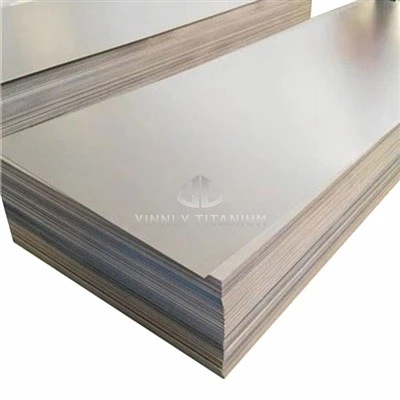
If you’ve ever stopped to think about the quiet, high-stakes engineering that goes into a modern car, you might not immediately land on titanium plates. For most drivers, titanium is the stuff of fighter jets, golf clubs, and high-end jewelry—something that feels far removed from the daily grind of commuting or road trips. But over the last two decades, I’ve watched titanium plates transform from a niche aerospace material into a workhorse in automotive manufacturing, and as someone who’s spent 12 years supplying these plates to automakers and race teams alike, I’ve seen firsthand how their unique properties solve problems that steel and aluminum just can’t touch. Titanium Plate

Let’s start with the basics: why titanium? Unlike steel, which is prone to corrosion and adds unnecessary weight, titanium strikes a perfect balance. Its strength-to-weight ratio is 2x that of steel, meaning a titanium plate can carry the same load as a steel one while weighing almost half as much. It’s also 30% stronger than aluminum, so it doesn’t deform under high stress, and it resists rust even when exposed to salt, road grime, and extreme temperature swings—all things that turn steel exhaust systems or suspension parts into maintenance headaches. That combination isn’t just a gimmick; it’s reshaping how cars are designed, both for consumer vehicles and the elite world of motorsports.
One of the most widespread uses of titanium plates in automotive right now is in exhaust systems, and it’s a change that’s been driven by two key pressures: fuel efficiency and emissions standards. For years, automakers relied on stainless steel for exhaust components, but stainless steel’s weight adds up: a single mid-sized car’s exhaust can weigh 25 to 30 pounds, and for SUVs or trucks, that number jumps even higher. Every extra pound of weight reduces fuel economy, and with global regulations pushing for 54.5 mpg for light vehicles by 2025, automakers are hunting for every possible weight saving. A titanium exhaust plate, for example, used to line the main muffler or the header sections near the engine, cuts that exhaust weight by 40% or more. That might not sound like much, but a 10-pound weight reduction in a car’s exhaust translates to roughly a 2% improvement in overall fuel efficiency, and over millions of vehicles, that adds up to billions of gallons of fuel saved annually.
It’s not just fuel—titanium’s heat resistance makes it ideal for exhausts, too. Modern engines run much hotter than they did 30 years ago, thanks to turbocharging and direct injection, and stainless steel can warp or crack under the constant 1,500-degree heat of exhaust gases. Titanium plates can withstand temperatures up to 1,800 degrees, and unlike steel, it doesn’t expand and contract unevenly over repeated heat cycles, which means fewer cracks and longer component life. Last year, a major European automaker switched to titanium plate exhaust liners for its line of high-performance hatchbacks, and their service data showed a 70% reduction in exhaust-related warranty claims over three years. That’s a big win for both the manufacturer and the driver, who no longer has to pay $1,000+ to replace a rusted exhaust at 60,000 miles.
Another application that’s gaining traction is structural components for electric vehicles (EVs), and this is where titanium plates are starting to prove their value beyond just performance. EVs face a unique set of engineering challenges: their heavy battery packs, which can weigh 1,000 pounds or more, put extreme stress on the vehicle’s chassis, and every extra pound of chassis weight cuts into range. The average EV today has a range of 250 to 300 miles, and engineers are under pressure to add lightweight parts wherever possible without sacrificing safety. Titanium plates, used as reinforcements in the chassis’s battery cradle or as crash barriers along the sides of the car, offer a solution. A 2022 study from a U.S. automotive engineering firm found that replacing steel structural plates with titanium in an EV’s battery housing reduced the cradle’s weight by 35% while improving crash resistance by 12%—a double win that preserves range without compromising driver safety.
What’s more, titanium’s corrosion resistance is a huge benefit for EVs, especially in regions where roads are salted in winter. Traditional steel chassis components can rust over time, which weakens their structural integrity and creates safety risks, but titanium doesn’t corrode, even when exposed to road salt and moisture. For EV owners in cold climates, that means a longer-lasting chassis, which translates to a longer vehicle lifespan—something that’s critical as EV prices remain high and owners want their cars to hold value. I’ve had several EV startup companies come to me in the last two years, asking for titanium plates for their battery enclosures, and that number is only going up as EV production ramps global.
Of course, no conversation about titanium and automotive would be complete without motorsports, the proving ground for new automotive technologies. For as long as I’ve been in the plate supply business, race teams have been the first to adopt new materials, and titanium plates are now a staple in Formula 1, NASCAR, and endurance racing. In Formula 1, where every 100 grams of weight saved can make the difference between winning and losing, titanium plates are used for everything from suspension parts to gearbox casings to the firewall that separates the engine from the driver’s cockpit. A single F1 team might order 50+ custom titanium plate parts per race car, each machined to precise tolerances, and the material’s ability to handle 200+ mph speeds and the extreme G-forces of cornering is unmatched.
I worked with a NASCAR team in 2021 that switched from steel to titanium plate for their rear end housing, the component that connects the transmission to the rear wheels. Before the switch, the steel housing would crack after about 150 laps on a superspeedway, forcing the team to make costly mid-race repairs. The titanium plate housing, by contrast, lasted the entire 500-lap race, saving the team over $10,000 in repair costs and keeping their driver on the track longer. That’s the kind of real-world performance that makes titanium plates worth the higher upfront cost—for race teams, where a single win can earn millions in sponsorship revenue, the investment pays for itself in a single season.
Wait, but there’s a catch here, and I’d be remiss not to mention it: titanium isn’t cheap. Right now, a titanium plate costs about 3 to 4 times more than a comparable steel plate, and for mass-market consumer cars, that price point has been a barrier to widespread adoption. For small sedans, the extra cost of a titanium exhaust might add $500 to $1,000 to the vehicle’s price, which most buyers aren’t willing to pay. But that’s starting to change as titanium production scales up. Ten years ago, a single titanium plate for a car would take weeks to produce, but advances in manufacturing—including 3D printing and continuous rolling processes—have cut lead times by 75% and reduced material waste by half. Prices have dropped by nearly 40% in the last five years, and they’re projected to fall another 20% by 2030 as more automakers invest in titanium components.
That’s why I’m so bullish on the next five years for titanium in automotive. As consumers become more focused on fuel efficiency and EV range, and as automakers face stricter emissions and safety regulations, titanium plates are no longer a luxury. They’re a practical, cost-effective solution for a wide range of automotive applications. I’ve had regular car manufacturers reach out to me in the last year, not just high-end performance brands, but mainstream companies building compact SUVs and electric hatchbacks, asking about ways to incorporate titanium plates into their designs. It’s not just about performance—it’s about value: longer-lasting parts, lower maintenance costs, and better fuel economy for everyday drivers.
For anyone in automotive, whether you’re an engineer designing a new model or a fleet manager looking to reduce maintenance costs, titanium plates deserve a closer look. They solve problems that traditional materials can’t, and as production scales, their price point is becoming more accessible than ever.
If you’re interested in exploring how titanium plates can improve your automotive components, or if you have questions about custom plate sizes, quantities, or applications, reach out to our team. We work with automakers, race teams, and parts suppliers across the globe, and we can help you find the right titanium plate solution for your needs. We’re here to provide technical guidance, competitive pricing, and reliable delivery, no matter the size of your project. We’re ready to collaborate with you to bring the benefits of titanium to your next automotive design.
Titanium Cap References
- Automotive lightweighting trends report, International Energy Agency, 2022
- Titanium applications in automotive engineering, SAE International Technical Paper, 2021
- Corrosion resistance of titanium for automotive components, Journal of Automotive Engineering, 2020
- Electric vehicle structural component optimization, U.S. Department of Energy, 2022
- Motorsports materials performance study, Formula One Engineering Association, 2021
Baoji Yinnly Titanium Co., Ltd.
Baoji Yinnly Titanium Co., Ltd. is one of the most professional titanium plate manufacturers and suppliers in China, featured by quality products and good service. Please rest assured to buy bulk titanium plate in stock here and get quotation from our factory. Customized orders are welcome.
Address: Unit 902, Building 1, Creative Building, No. 195, Gaoxin Avenue, High-tech Zone, Baoji City, Shaanxi Province
E-mail: anna@yinnlyti.com
WebSite: https://www.yinnlyti.com/
