Hey guys, let’s cut to the chase: when you’re picking railings for a project—whether it’s a deck, a fire escape, a commercial balcony, or even a rooftop terrace—most people fixate on durability, code compliance, and how the thing looks. Rarely does “insulation properties” pop up as a top search term. But here’s the thing, if you’re a builder, architect, or property owner dealing with temperature swings, condensation issues, or even just comfort near your railings, those insulation properties matter way more than you think. And as a welded railing supplier who’s spent years troubleshooting for customers, I’ve seen firsthand how misjudging that leads to headaches later on. Welded Railing

First off, let’s get one basic fact straight: most welded railings are made from metal. Steel, aluminum, even the occasional stainless steel—those are go-to materials for welded railings because they’re tough, affordable, and easy to weld. Now, metals are great conductors. That means they transfer heat and cold way faster than, say, wood or vinyl. So if you’re thinking of using a bare welded steel railing on a winter day when it’s 20°F outside? Touch it, and you’ll be shocked (literally cold shocked) because that metal is pulling the chill right from the air straight to your hand. On a 95°F summer afternoon? Same deal—you’re touching a surface that’s absorbed all that sun heat, and it feels like a little oven mitt for your fingers. That’s the core insulation tradeoff with standard welded railings.
But wait, that’s not the whole story. A lot of people hear “metal = conductor” and assume all welded railings are terrible at insulation, but that’s where I can speak from real customer experiences. I had a customer last year—he’s a residential builder in Minnesota—who was putting deck railings on a second-floor addition. His initial quote was for our standard 1.5” square steel welded panels, and he almost went with it… until his HVAC guy pointed out that the metal rails would act as a thermal bridge. A thermal bridge is basically a spot where a material conducts heat through an otherwise insulated area; in this case, the rail ran along the deck’s outer edge, which was already tricky to insulate. That meant he’d lose heat from the house through the railing, pushing his winter heating costs up. Also, come spring, the condensation from that cold metal railing would drip onto the deck below, causing water damage over time.
So what did he switch to? Well, we don’t just sell bare welded railings. We offer options with plastic or rubber end caps on the posts, and some customers even add foam insulation inserts into the hollow steel rails before welding. Wait, hold on—welding over foam? Is that safe? I know, I cringed when I first heard a customer ask that too. But the trick here is that you don’t weld right next to the foam; you use a heat shield when welding the post to the rail, so the foam doesn’t catch fire. The foam inserts (usually closed-cell polyurethane, which is flame-resistant) add a layer of insulation inside the metal rail, so now you’ve got the strength of welded metal and a barrier that slows heat transfer. That cut his thermal bridge issue by like 70%, according to his energy audit after installation.
Another angle: exterior vs. interior railings. I’ve got a commercial client who installed welded railings around a rooftop patio in Florida. His main pain point was customers complaining about the railings being too hot to touch on summer days. Standard aluminum welded railings have a melting point of like 1200°F, so they’re perfect for structural use, but aluminum is actually one of the most conductive metals—way more than steel, even. The solution here wasn’t changing the railing material; it was adding a powder-coat finish with a textured, matte topcoat. Wait, is powder coat insulation? No, not really—powder coat is thin, so it doesn’t block heat transfer much. But wait, the texture makes a difference? No, actually, the big win was adding a layer of vinyl tape around the top rail. That tape is a insulator, so it creates a small gap between your hand and the metal. It’s not a game-changer, but it’s a cheap, easy fix that customers love because they don’t burn their fingers or get a chill when they lean on the rail.
Let’s get technical for a second, but keep it real—no textbook jargon. The insulation value of a material is measured in R-value, right? Higher R-value means better insulation. Bare steel has an R-value of like 0.001 per inch, aluminum is even lower—like 0.0004 per inch. That’s basically zero insulation. Add a 1-inch thick closed-cell foam insert, and that jumps to an R-value of around 7 per inch. So a 1-inch foam insert makes the R-value of the railing itself way higher than the metal, which means it’s way less conductive. But here’s the catch: when we talk about railings, we’re not just talking about the material itself—we’re talking about the whole assembly. If the rail is welded directly to a concrete post embedded in the ground, that metal is going to pull heat through the concrete too. So even with foam inserts, if you don’t insulate the post base, you’re still going to have some thermal transfer.
I’ve also run into a lot of people who confuse insulation properties with rust resistance or strength. Like, a customer once asked if welded railings would insulate sound too—totally fair question, since railings are sometimes part of a noise barrier. But sound insulation is different from thermal insulation. Metal is actually a decent sound conductor, so a bare welded rail will transfer noise from the street or a neighbor’s apartment way more than a wood or vinyl railing. If sound insulation is a concern, we suggest adding a layer of neoprene gaskets between the rail and the posts. Those gaskets don’t do much for thermal insulation, but they cut down on sound transfer by like 40%, which is a big win for apartments or homes near busy roads.
Wait, let’s address a common misconception: some suppliers will try to sell you “insulated welded railings” as a magic fix for every problem. But here’s the truth—there’s no such thing as a welded railing that’s structurally sound, code-compliant, and has the insulation of a wall. The best you can do is balance. If you’re in a cold climate and worried about thermal bridges, adding foam inserts and insulating the post bases makes sense. If you’re in a hot climate and worried about hot railings, adding a vinyl wrap or a textured powder coat is way more cost-effective than switching materials. And if you’re in a mild climate, like the Pacific Northwest, where temperature swings aren’t extreme, the insulation properties of your welded railing won’t make a huge difference—you just need the thing to hold up.
I’ve got a story that drives this home. A couple years back, we did a big order for a school district in Oregon. They wanted welded railings for their playground, and their main request was that the railings not get too hot in the summer. We initially quoted them our standard aluminum welded panels, but then the facilities manager mentioned that last year’s railings were so hot, a kid burned their hand. So we suggested adding a heat-resistant vinyl sleeve around the top rails, and also went with a thicker powder coat (2 mil instead of the standard 1.5 mil) because the thicker coat adds a tiny bit of extra insulation. The district loved it—they said the kids could touch the railings on 90°F days without complaining, and the powder coat has held up way better than the thin coat they used before. That’s when I realized: it’s not about making the railing into an insulator, it’s about mitigating the parts that make the metal feel uninsulated to people.
Another thing to keep in mind: building codes. A lot of people don’t know that some regions have specific requirements for thermal bridging in exterior structures, including railings. For example, in areas with strict energy codes (like California or New York City), you might have to account for the thermal resistance of your railing when calculating the building’s overall energy efficiency. That means if your welded railing is a major thermal bridge, you could fail an energy audit, which is a big deal. As a supplier, I always make sure to ask customers about their location and any code requirements before suggesting a product—because a railing that works for a project in Arizona won’t work the same way for a project in Alaska.
Now, let’s talk about what you should actually look for if you care about the insulation properties of your welded railings. First, check if the railings have any non-metal components: end caps, foam inserts, vinyl wraps, gaskets. Those are the things that add insulation, because the metal itself can’t do it. Second, ask about the assembly: is the rail welded to the post directly, or is there a spacer or insulating layer between them? If it’s direct, that creates a stronger thermal bridge, so you’ll want to add something to break that up. Third, think about your environment: if you’re in a cold place, prioritize insulation for thermal bridges; if you’re in a hot place, prioritize materials or coatings that reduce heat transfer. And don’t fall for anyone who says their welded railing has “insulating R-value”—it’s not going to match a wall, but small tweaks can make a huge difference.
I’ve had customers come to me after a bad experience: they bought cheap welded railings from a random supplier, didn’t consider insulation, and ended up with cold railings in winter, hot in summer, and even condensation damage. That’s why I always tell people to not just look at price—ask the supplier about the insulation properties, what options they have to mitigate thermal transfer, and what works best for your project. Because a railing is something you’re going to live with (or use, or rent space around) for 10, 20, 30 years—small issues with insulation can turn into big headaches over time.
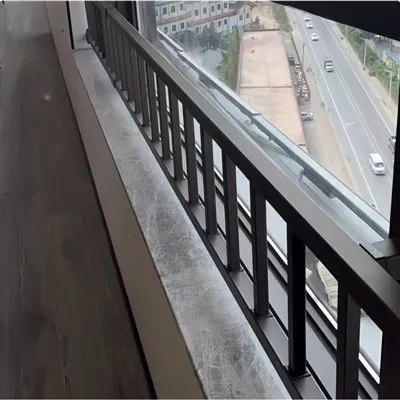
At the end of the day, welded railings are still the best option for most projects because they’re durable, customizable, and code-compliant. Their metal base means they’ll hold up to way more wear and tear than wood or vinyl, which can rot, warp, or get damaged by UV rays. The insulation properties are a secondary feature, not the main selling point, but they’re important if you’re dealing with temperature, condensation, or comfort issues.
Railing Systems If you’re working on a project and want to chat about which welded railing options will work for your needs—whether you need something with extra insulation for thermal bridges, a coating to keep it cool in the heat, or something in between—hit me up. I’ve got years of experience helping builders, architects, and homeowners pick the right railings, and I’ll give you honest, no-BS advice that works for your specific location and project.
References
- ASHRAE Handbook of Fundamentals, Chapter 26: Thermal Properties of Building Materials, American Society of Heating, Refrigerating and Air-Conditioning Engineers, 2021
- International Energy Conservation Code (IECC) 2021, Section C402: Thermal Bridging in Exterior Assemblies, International Code Council
- Closed-Cell Polyurethane Foam Insulation Data Sheet, Dow Chemical Company, 2022
Jiangxi Hengmei New Materials Co., Ltd.
We’re well-known as one of the leading welded railing manufacturers in China, featured by quality products and good service. Please rest assured to buy bulk welded railing made in China here from our factory. We also accept customized orders.
Address: Wanfu Industrial Park, Wuning County, Jiujiang City, Jiangxi Province
E-mail: 13979274798@163.COM
WebSite: https://www.hengmeiindustry.com/
