If you’ve ever ordered custom aluminum labels for your products – whether for industrial equipment, consumer electronics, retail branding, or warning signage – you’ve probably asked a simple question that feels more complicated than it sounds: “How long will it take to get my labels once I place an order?” As a supplier who’s spent the last 12 years working exclusively with aluminum labels, I can tell you the answer isn’t one-size-fits-all. It depends on a handful of factors, and skipping even one detail can throw your timeline off by days (or even weeks) if you’re not careful. Let me break this down like I do for every client who calls me panicking because they need labels for a trade show next week – no fancy jargon, just the real process we follow every day. Aluminum Label
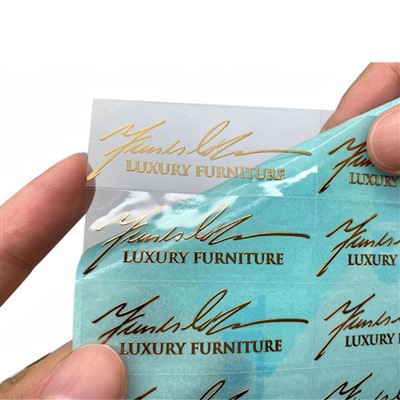
First, let’s start with the basics: why aluminum labels aren’t printed overnight. Unlike paper stickers you can grab from a local office supply store, aluminum labels are durable, weather-resistant, and designed to last for years – even decades – in harsh environments. That means they go through a manufacturing process that’s way more involved than just slapping ink on a sheet. The core material is flat aluminum, usually 0.01 inches to 0.06 inches thick, depending on your use case (thin for small tags, thick for industrial equipment that gets dropped or exposed to saltwater). Then comes the design, pre-press checks, fabrication, finishing, and final quality control. Each step adds time, and if there are delays along the way, your lead time stretches.
Let’s walk through the lead time step by step, starting from the moment we get your initial request. The first phase is design and approval, which is often the most variable part of the timeline. If you come to me with a ready-to-go design – a logo, text, and exact dimensions that you’ve already tested, maybe even a sample of a similar label you liked – that part takes 1 to 2 business days. We’ll adjust it to fit the aluminum material, make sure the resolution is high enough (aluminum labels can’t use low-res graphics that will look blurry once etched or printed), and confirm any special elements like raised text, barcodes, or adhesive backing.
But if you’re starting from scratch? That can add 3 to 7 extra days. I’ve had clients who had a great idea for a brand label but no file ready – they just knew they wanted their logo in black, with the company name below, and a scratch-resistant finish. Our design team will draft 2 to 3 mockups, send them over, get feedback, make revisions, and repeat until everyone’s happy. I always tell clients to have their design locked before we move to production because back-and-forth here is the number one reason timelines blow out. Last year, a food equipment manufacturer came to me with 5 different revisions in the design phase; they got their labels in 14 days instead of the standard 7, just from that extra feedback loop.
Once the design is approved, we move to the fabrication phase, which is where the lead time really takes shape. Aluminum labels are made using one of three main methods, and each has its own production speed. Let’s go through them, because this is where most clients don’t realize their choice directly impacts how long they wait.
The fastest method is offset printing with a protective laminate. This is what we use for labels with solid colors, simple graphics, and text. We print the design directly onto the aluminum sheet, then apply a clear laminate to protect the ink from scratches, UV rays, and moisture. For small orders (under 500 labels), this takes 2 to 3 business days. For medium orders (500 to 5,000), it’s 3 to 4 days. The catch here: it’s not ideal for outdoor use or heavy-duty applications – the laminate will hold up, but it can scratch if exposed to rough handling, and printed text can fade over 3 to 5 years.
The second method is laser etching, which is our most popular option for industrial and outdoor labels. Laser etching uses a high-powered laser to burn the design into the aluminum surface, no ink needed. That means it’s scratch-proof, fade-proof, and works even in extreme temperatures or saltwater environments – perfect for boat equipment, machinery, or outdoor signage. Production speed here depends on how many labels you need and how complex the design is. For small, simple labels (think 1 inch x 1 inch tags with just a barcode and a part number), we can turn around 500 units in 3 to 4 days. For larger, more complex labels (like 4 inch x 6 inch industrial equipment labels with multiple lines of text, warning symbols, and serial numbers), that jumps to 5 to 7 days. Last quarter, a wind turbine manufacturer ordered 2,000 large laser-etched labels; their lead time was 8 days total, from approved design to shipped, because each label had a unique serial number that our machine had to program individually.
The third method, and the slowest but most durable, is anodized aluminum with screen printing. Anodizing is a process where we apply a protective oxide layer to the aluminum, which makes it even harder than regular metal, then print the design onto that layer. This is the go-to for labels that need to last 10+ years in harsh conditions, like marine equipment or aerospace parts. The anodizing process itself takes 2 to 3 days, then screen printing adds another 2 to 3 days, plus a curing step to make sure the ink bonds properly. For small orders, that’s 7 to 10 days; for large orders (over 5,000), it can be 10 to 14 days. I remember a client in the oil and gas industry who needed 10,000 labels for pipeline valves that had to resist chemicals and freezing temperatures – their lead time was 12 days, and they told me later the labels are still readable after 4 years of use, which is way longer than any printed label would last.
Now, add finishing touches and customizations, because those can add extra time too. Most labels need adhesive backing – if you want permanent acrylic adhesive, that’s a 1-day add-on. If you need a removable adhesive, it can take 2 extra days because we have to apply it using a different process to make sure it peels off cleanly without damaging surfaces. We also do custom shapes: cutting aluminum labels into circles, ovals, or irregular shapes instead of rectangles. For simple shapes, that takes 1 extra day. For complex shapes with small cutouts, like a logo-shaped label, that can add 2 to 3 days, because our cutting machines have to adjust to avoid mistakes.
Then there’s shipping, which ties back to your location. If you’re local, within a 50-mile radius, we can deliver in 1 to 2 days, and sometimes even same-day if you’re in a pinch. For clients in the rest of the country, standard ground shipping adds 2 to 3 days, expedited adds 1 to 2 days, and international shipping adds 5 to 10 days, depending on your country and customs processing. I’ve had clients in Canada who ordered 500 labels and got them in 7 days total – 2 days design approval, 3 days production, 2 days shipping – which was way faster than they expected.
Wait, but what about rush orders? A lot of clients call me in a panic, saying they need labels in 3 days or less for a trade show or a product launch. Can we do that? Sometimes, but it depends on the order size and design complexity. If you have a small order (under 100 labels), a ready design, and a simple process like offset printing, we can usually squeeze you in for a 24 to 48 hour rush. But if you need 1,000+ labels, a laser-etched design with unique serial numbers, or a custom shape, rush orders are hard – we can maybe get it to 5 days, but no faster. Last year, a startup called me 2 days before they were set to launch their new portable speaker, and they needed 200 brand labels. We had a design already on file (they’d ordered a sample before), so we knocked out production in 1 day, had them shipped overnight, and they got their labels just in time. That’s a perfect example of how the details work in your favor when everything lines up.
Now, let’s talk about common delays that throw off lead times, because even if you do everything right, there’s always something that can go wrong. First is material shortages. We use 5052 aluminum for most of our orders, which is the most durable and flexible for labels. Every once in a while, our supplier has a backlog, and we have to wait a couple extra days for raw sheets. That’s rare, but it happens – last fall, there was a 1-week delay because of a shipping issue at the aluminum mill, which pushed all our orders back. Second is quality control checks. We inspect every label before it ships, and if we find a mistake – a blurry barcode, a misaligned logo, a scratch on the anodized layer – we have to re-run that batch, which adds 1 to 2 days. I’d rather take an extra day than send a client labels that don’t work for their application, so that step’s non-negotiable. Third is miscommunication in design. A lot of clients send a low-res logo, and by the time we try to fix it, that’s 2 extra days. That’s why I always tell clients: send a vector file, not a JPEG or PNG, so the design is crisp every time.
So putting all this together, what’s the average lead time? For standard orders – approved design, 500 to 2,000 laser-etched labels, rectangle shape, standard adhesive – it’s 7 to 10 business days. For small, simple orders, it’s 5 to 7 days. For large, complex orders (over 5,000 labels, custom shapes, anodized finish), it’s 12 to 18 business days. Rush orders (under 100 labels, ready design) can be as fast as 2 to 3 days, but that’s only if you plan ahead enough to call and ask for that timeline upfront.
I get that this sounds like a lot of variables, but that’s because aluminum labels aren’t a commodity – they’re a custom product, and your lead time should reflect that. If you’re just testing a new design, go small first; that way, your lead time is shorter, and you can adjust before you place a big order. If you’re ordering for a permanent application, like equipment that will last 10 years, it’s worth waiting the extra 3 to 5 days for anodized laser-etched labels, instead of going with a cheaper printed label that will fade in a year.
At the end of the day, I’ve worked with every kind of client – from small startups needing 100 brand labels to aerospace companies needing 50,000 part tags – and the most important thing is to be clear about your timeline when you reach out. If you tell me you need labels for a trade show in 5 days, I’ll be honest with you about what’s possible, instead of promising something I can’t deliver. The last thing I want is a client scrambling because I gave them a timeline that was too optimistic.
If you’re ready to get a quote, or just have more questions about lead times for your specific order, feel free to reach out to talk through your needs. We can go over your design, application, and order size, and give you a exact, realistic timeline that works for you. Don’t guess – let’s talk through the details so you know exactly when your aluminum labels will arrive.
Zinc Label References
- Aluminum Association. (2022). Technical Guidelines for Aluminum Label and Tag Manufacturing.
- International Organization for Standardization (ISO). (2019). ISO 10011: Guidelines for Auditing Management Systems – Durability Requirements for Metal Labels in Outdoor Applications.
- U.S. Small Business Administration (SBA). (2021). Custom Manufacturing Lead Times for Small Batch Industrial Products.
- National Association of Printing Ink Manufacturers (NAPIM). (2020). Lead Time Variability for Metal Label Finishing Processes.
Guizhou Mingguan Sign Nameplate Products Co., Ltd.
We’re well-known as one of the leading aluminum label manufacturers and suppliers in China. With abundant experience, we warmly welcome you to wholesale bulk customized aluminum label at low price from our factory. For quotation and free sample, contact us now.
Address: Xinpu New District, Zunyi City, Guizhou Province of China
E-mail: zhangyixuanmglabel@126.com
WebSite: https://www.mingguan-label.com/
