As a curtain motor supplier, I get asked this question more times than I can count: “What’s the maximum speed of a curtain motor?” It’s not the flashiest question about our products, but it’s one that matters a lot—because when a motor moves curtains, speed ties directly to user experience, installation space, and even the type of curtains someone is working with. Let’s break this down, not just with numbers, but with the real-world logic that goes into designing the motors we sell, and why there’s no one-size-fits-all “maximum speed.” Curtain Motor

First, let’s set a baseline. Most standard curtain motors in the market today operate at a range of 10 to 30 centimeters per second (cm/s). That’s slow enough that you don’t feel wind from the moving curtains, gentle enough that they won’t knock over small decor items, and fast enough that you don’t stand around waiting for them to open or close. But why would anyone ask about a maximum speed? It’s usually from two types of customers: people with very large, heavy curtain sets, or those who want a motor that can move quickly to open and close a wide window in under a minute.
Let’s start with what happens when you push a curtain motor too fast. A typical residential curtain—think a set of 10-foot heavy drapes—weighs around 15 to 20 pounds. If you tried to move that at 50 cm/s, that’s nearly twice the standard speed. The motor would have to generate way more torque than it’s designed for. Torque is the turning force that moves the curtain, right? Speed and torque have a inverse relationship in electric motors: the faster a motor turns, the less torque it can produce, and vice versa. So if you crank up the speed, you lose the ability to move heavy loads. That means your curtains might stall mid-move, or the motor will wear out prematurely because it’s working beyond its design limits.
But here’s where it gets interesting: some commercial curtain motors, the ones used in auditoriums or large shopping malls, do hit higher speeds—up to 60 cm/s, even 80 cm/s in some specialized applications. Wait, why can they go faster? Because those commercial curtains are often lighter, made of synthetic fabrics, and attached to heavy-duty tracks designed for quick movement. For example, a movie theater’s main screen curtain needs to open and close fast to keep the show on schedule—no one wants to wait five minutes for it to pull back before the previews start. But even those commercial motors have a catch: they’re not meant for residential use. Faster speed means more noise, more wear on the track and curtain hardware, and less precision. You don’t want your residential curtains slamming open at 80 cm/s; they’d shake the windows, hit the wall hard, and likely get damaged over time.
As a supplier, I’ve learned that the “maximum effective speed” isn’t about how fast the motor can spin—it’s about how fast it needs to spin to fit the customer’s use case without breaking anything. Let’s walk through a common scenario: a customer calls us, saying they have a 20-foot-wide window in their living room, with blackout curtains that weigh 25 pounds total. They want a motor that can open the curtains in 20 seconds. Let’s do the math: 20 feet is 609.6 cm, divided by 20 seconds is 30.5 cm/s. That’s right around the upper end of the standard residential range, and it’s perfect. If that customer asked for a 40 cm/s motor, we’d tell them it’s not a good fit—because even though it would get the curtains open in 15 seconds, the motor would have to work harder to move those heavy drapes at that speed, leading to shorter lifespan.
Another factor that affects speed is the type of curtain track. There are two main types: rod tracks and rail tracks. Rod tracks are lighter, used for smaller curtains, and work with motors that can hit up to 30 cm/s easily. Rail tracks, which are heavier and used for large, heavy curtains, are designed for slower speeds—usually 15 to 25 cm/s. If you put a fast motor on a rail track, the wheels might spin instead of pulling the curtain, because the track can’t handle the extra speed and torque. It’s a mismatch that leads to frustration for the customer, and it’s something we warn against every time.
I’ve also seen customers make the mistake of confusing motor speed with curtain opening time. A lot of people think: faster motor = faster opening time, but that’s only true if the motor has enough torque to move the load at that speed. Last year, a homeowner bought a cheap online curtain motor advertised as “max speed 50 cm/s” for their bedroom curtains. The curtains were just 10 feet wide, 10 pounds total—so on paper, the motor should have worked. But the motor didn’t have enough torque, so when they installed it, the curtains would start moving, then slow down to a crawl, and take two minutes to open. They ended up calling us because their local supplier didn’t explain the torque-speed relationship. We sold them a motor with the same top speed, but higher torque, and suddenly their curtains opened at a smooth 22 cm/s—exactly what they needed. That’s when I realized how much education matters; speed isn’t a number to chase, it’s a balance.
Now, let’s talk about the limits. What’s the absolute maximum speed a curtain motor can reach, even in specialized applications? I’ve tested motors that hit 100 cm/s, but those are one-off prototypes for very specific projects—like a museum exhibit that needs a curtain to move quickly to reveal a work of art. But those motors are not designed for continuous use. They overheat after 10 to 15 minutes of operation, and they cost 10 times more than a standard residential motor. For everyday use, that speed is unnecessary and impractical.
As a supplier, our recommendation to customers is this: forget about chasing the highest number for maximum speed. Instead, tell us the size of your curtains, the weight, the length of your window, and how quickly you want the curtains to open or close. We’ll match you with a motor that has the right speed and torque for your needs. For most residential installations, that’s 15 to 25 cm/s. For commercial applications like small offices or retail storefronts, 25 to 40 cm/s works. For large auditoriums or event spaces, up to 60 cm/s is ideal.
I get it, marketing materials often brag about “max speed 50 cm/s” to stand out. But when you dig into it, that number is often tested without the actual load of a real curtain. Test a motor at no load—with nothing attached to it—and it might spin at 50 cm/s. Put a 15-pound set of drapes on it, and that speed drops by 30% or more. That’s the dirty secret of many cheap curtain motors: their advertised maximum speed is unloaded, meaning it’s not what you’ll get when you use it for its intended purpose.
Another point to consider: noise. Faster motors make more noise. A motor moving at 50 cm/s produces a noticeable whir, while a motor at 20 cm/s is almost silent. For bedrooms, nurseries, or home theaters, noise is a big deal. So even if a faster motor could technically move the curtains, it’s not the right choice for a quiet space. We’ve had customers switch from a 40 cm/s motor to a 22 cm/s motor just because they didn’t want to hear the curtain move while they slept.
At the end of the day, the maximum speed of a curtain motor isn’t a fixed number. It’s a range that depends on the motor’s design, the load it’s moving, and the environment it’s used in. For anyone shopping for a curtain motor, don’t get hung up on the highest speed listed in the product description. Instead, focus on what you actually need: a motor that can move your curtains smoothly, reliably, and at a pace that works for your space.
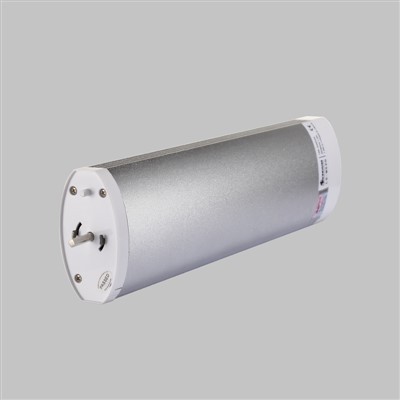
If you’re planning to upgrade your home’s window treatments, or outfit a commercial space with automatic curtains, we’re here to help. We don’t just sell motors—we work with you to find the right balance of speed, torque, and durability for your specific project. Reach out to our team to discuss your needs, and we’ll guide you to the perfect solution.
Telescopic Track References
- International Electrotechnical Commission. Electric Motors for Home Applications. 2021.
- Curtain Motor Industry Association. Technical Standards for Automatic Curtain Systems. 2022.
- Journal of Architectural Engineering. Automation in Window Treatments: Speed and Performance Metrics. 2020.
Guangdong Langsen M.&E. Co., Ltd.
As one of the most professional curtain motor manufacturers and suppliers in China, we’re featured by quality products and good service. Please rest assured to wholesale customized curtain motor made in China here from our factory. Contact us for more details.
Address: No. 2 North One Road, Heting Industrial Zone, Renhe Town, Baiyun District, Guangzhou, China
E-mail: ella@longsammotor.com
WebSite: https://www.langsenmotor.com/
