Hey there! I’m a supplier of Wood Plastic Composite (WPC) machines. Over the years, I’ve been deeply involved in this industry, learning about every aspect of WPC production, especially product quality inspection. In this blog, I’ll share with you several common quality – inspection methods for products made by WPC machines. Wood Plastic Composite Machine
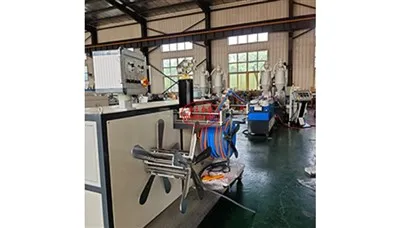
First off, let’s understand what WPC is. It’s a composite material made from wood flour, plastic, and various additives. WPC has lots of advantages like durability, low maintenance, and resistance to insects and rot. But to make sure the end – products meet the quality requirements, thorough inspection is a must.
Visual Inspection
Visual inspection is the most straightforward method. You don’t need any fancy equipment for this one. Just use your eyes! When you look at a WPC product, the first thing to check is the surface finish. It should be smooth, without obvious scratches, dents, or bumps. Look out for any discoloration as well. Uneven color can indicate issues with the mixing of raw materials or problems during the extrusion process.
For example, if there are dark streaks on the surface, it might mean that the plastic and wood flour were not mixed evenly. Or if the color is too different from the sample, the pigment ratio could be off. Also, check the edges of the product. They should be straight and well – defined, not chipped or jagged.
Another important thing in visual inspection is to check for any visible voids or air bubbles. These can weaken the product’s structure. Usually, they are caused by improper degassing during the extrusion of the WPC material. If you find lots of large voids, it’s a red flag that the manufacturing process might have some issues.
Dimensional Inspection
Ensuring the correct dimensions of WPC products is crucial, especially for construction and architectural applications. You’ll need measuring tools like calipers, rulers, and micrometers for this inspection.
Start by measuring the length, width, and thickness of the product. These measurements should match the design specifications. Even a small deviation can cause problems during installation. For instance, if the width of a deck board is slightly larger than it should be, it might not fit properly in the pre – cut grooves of the support structure.
Also, check the straightness of the product. A WPC board should be as straight as possible. You can do this by placing the board on a flat surface and looking for any gaps between the board and the surface. Any significant curvature or warping can make the product unusable in some cases.
Density Testing
Density is an important property of WPC products. A correct density ensures the right balance of strength, durability, and weight. To test the density, you first need to measure the mass of the product using a scale. Then, measure its volume. For regular – shaped products, you can calculate the volume using simple geometric formulas.
Once you have the mass and volume, you can calculate the density using the formula: density = mass/volume. Compare the calculated density with the standard density for this type of WPC product. If the density is too low, the product may be too porous and lack strength. On the other hand, if it’s too high, it might be more brittle or use too much raw material, which can increase costs.
Mechanical Property Testing
The mechanical properties of WPC products are critical for their performance in real – world applications. There are several tests you can conduct to evaluate these properties.
Bending Strength Test
The bending strength test assesses how much load a WPC product can withstand before it starts to deform or break when bent. To perform this test, you place the product on two supports and apply a load at the center. The load is gradually increased until the product shows signs of failure.
The result of this test is important, especially for decks or flooring. A high bending strength means the product can support more weight without breaking, which is essential for safety.
Impact Resistance Test
Impact resistance determines how well a WPC product can handle sudden impacts. There are different methods to perform this test. One common way is to use a pendulum impact tester. The pendulum is released, and it hits the product. The amount of energy absorbed by the product during the impact is measured.
Good impact resistance is crucial for outdoor products like fence posts or garden furniture. These products may be exposed to accidental impacts from things like tools, balls, or branches.
Chemical Resistance Testing
WPC products are often used in various environments, some of which may expose them to chemicals. Chemical resistance testing helps ensure the product can withstand exposure to these chemicals without significant deterioration.
You can perform immersion tests by soaking the product in a specific chemical solution for a certain period. Then, check for any changes in appearance, such as swelling, color change, or surface degradation. Also, test the mechanical properties again after the immersion to see if the chemical has affected the strength of the product.
Moisture Resistance Testing
Moisture is one of the biggest enemies of WPC products. If they absorb too much moisture, they can swell, warp, and even start to rot. To test moisture resistance, you can use the weight – gain method.
First, measure the initial weight of the product. Then, place it in a high – humidity environment or immerse it in water for a set time. After that, dry the product and measure its weight again. Calculate the weight gain percentage. A lower weight gain indicates better moisture resistance.
Joining and Assembly Inspection
For WPC products that need to be joined or assembled, it’s important to check the quality of the joints. The joints should be strong and stable. Check for proper alignment and tightness.
For example, if the product uses tongue – and – groove joints, make sure the tongues fit snugly into the grooves without any gaps. A loose joint can cause the product to come apart easily, reducing its overall strength and functionality.
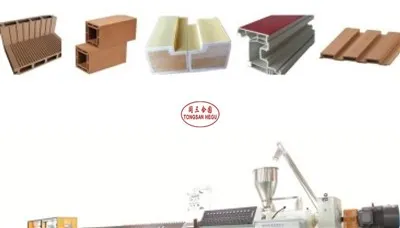
If you’re like many businesses out there looking for top – notch WPC products or a reliable WPC machine to make them, I’m here to help. Quality inspection is just one part of our commitment to excellence. We’ve got the experience and the know – how to ensure that all our products and the products made by our machines meet the highest standards.
Wood Plastic Composite Machine If you’re interested in learning more about our WPC machines, or if you have any questions about the quality – inspection methods we’ve talked about, just reach out. Whether you’re a small – scale workshop or a big manufacturing company, we can provide solutions tailored to your needs. Let’s have a chat about how we can work together to produce outstanding WPC products.
References
- "Wood – Plastic Composites: Materials, Manufacturing, and Applications" by Jana, S. C., & Saiwari, P.
- "Handbook of Wood Chemistry and Wood Composites" edited by R. Rowell, J. Han, and X. Yan.
Qingdao Tongsanhegu Plastic Machinery Manufacturing Co., Ltd.
With abundant experience, we are one of the most reliable wood plastic composite machine manufacturers and suppliers in China. We warmly welcome you to buy durable wood plastic composite machine for sale here from our factory. Quality products and reasonable price are available.
Address: West of Xixinzhi Village, Sanlihe District Jiaozhou, Qingdao City, Shandong Province, China
E-mail: info@tongsanhegu.com
WebSite: https://www.tongsanhegumachine.com/
