Hey everyone, thanks for stopping by our blog – as your go-to PET preform mold supplier, we get this question all the time: can a PET preform mold actually hold up in a high-temperature environment? It’s a super valid one, especially if you’re dealing with tight production schedules, specialized applications, or unexpected process spikes that push your equipment past standard operating temps. Let’s break this down straight, no corporate fluff, just the real stuff we deal with on the shop floor every day. PET Preform Mold
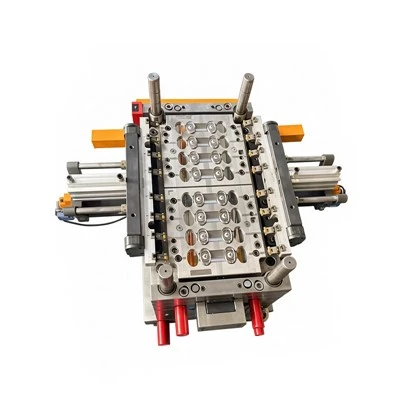
First, let’s define what “high-temperature” even means here, because that term gets thrown around way too loosely in manufacturing. For your average PET preform production, standard mold temps sit around 150°F to 200°F (65°C to 95°C) – that’s for cooling the preform just enough to hold its shape after injection, right? When we talk high-temp for these molds, we’re looking at anything above that: like 250°F (120°C) and up, usually from extended production runs, faulty cooling systems, or processes that need extra heat to get PET to fill complex cavities.
Now, the short answer is: it depends, but a lot more than you think. A lot of mold guys will tell you “PET molds can’t handle anything over 212°F (boiling water temp)” but that’s just not true. We’ve had customers reach out last year because their injection molder’s cooling line sprung a leak, so the mold was running 275°F for 3 straight days – no breakdown, no major warping, just a little extra wear on the ejector pins that we replaced during routine maintenance. But that’s not a green light to crank your mold to 300°F every shift, either. Let’s get into the actual science of why temp matters here, because it’s not just heat – it’s how the heat interacts with the mold material.
Most PET preform molds we build are made from P20 tool steel, right? It’s the workhorse for low-to-mid volume production, cheap, easy to machine, holds up well to standard temps. P20’s melting point is around 2,750°F, so the heat we’re dealing with isn’t close to melting it. But the problem is thermal expansion. When steel heats up, it expands – a lot more than you might realize. For every 18°F increase in temp, P20 expands about 0.001 inches per foot. Let’s do the math: if your mold is 2 feet wide and runs 50°F over its standard temp, that’s a 0.011 inch expansion. That might not sound like much, but for a PET preform mold, we’re talking tolerances down to 0.0001 inches. If your cavity walls expand unevenly, you’ll get preforms that are off-spec – thin spots, inconsistent wall thickness, maybe even flash where molten PET squeezes between the mold halves. We’ve seen customers try to run P20 molds at 280°F and get 10% scrap rates because of expansion before they dialed it back.
Then there’s the other material we use for high-volume molds: S7 tool steel. It’s a shock-resistant steel, a little pricier than P20, but it has a lower thermal expansion rate – almost 10% less than P20. That’s a game-changer for high-temp environments. We built a set of S7 molds last quarter for a customer that makes preforms for heat-resistant water bottles – their injection process actually runs the mold at 265°F on purpose, because it cuts cycle time by 15% and the preforms hold up better to hot filling. Those molds have been running 12 hours a day, 6 days a week for 8 months, no issues with expansion or cracking. The key here is that S7 is designed to handle sustained higher temps without warping, which makes it non-negotiable for any high-temp mold application.
Wait, but what about the mold’s coatings? A lot of guys add a Teflon or ceramic coating to PET molds to reduce friction and prevent PET from sticking. Teflon’s maximum continuous operating temp is around 500°F, so that’s fine for temps up to 350°F, right? But here’s the catch: adhesion. When steel heats up a lot, it expands faster than the coating, so the coating can crack or peel over time. We had a customer last year who tried to run a Teflon-coated P20 mold at 300°F – after 2 weeks, the coating was bubbling off, and preforms were sticking so bad they were breaking ejector pins. If you’re running high temps, skip the Teflon and go for a nitrided coating instead. Nitriding infuses nitrogen into the steel’s surface, makes it way harder, and it bonds directly to the mold material – no peeling, even at 400°F. We recommend nitriding for any mold that runs over 220°F, it’s a cheap upgrade that saves you so much headache down the line.
Now, let’s talk about the flip side: what happens if you run a PET preform mold at too high a temp, and how to tell if it’s the right fit for your line. First, the signs of a mold that’s being overheated: scrap rates spiking, ejector pins bending or breaking, mold halves feeling “wobbly” (not perfectly flat when closed), or preforms that don’t release cleanly from the cavity. If you’re seeing any of those, check your cooling lines – maybe they’re clogged, or you’re using water that’s too warm. If it’s not a cooling issue, then you need to look at your mold material. P20 is fine for short bursts of high temp, like if your machine has a 20 minute startup glitch where the cooling system doesn’t kick in right. But if you’re running sustained high temps (over 250°F for 8+ hours a day), S7 is non-negotiable. We also build custom molds with beryllium copper inserts for cavities that need super fast cooling, but wait – beryllium copper’s max temp is around 400°F, so that’s another option for really high-heat applications, though it’s more expensive.
Wait, let’s get real with a common scenario we hear all the time: “I need to run my mold at 275°F to get preforms that don’t have sink marks.” Sink marks are those dents on the bottom of preforms, right? They happen when the molten PET cools too fast and pulls away from the mold walls. Running the mold hotter actually slows down the cooling rate, so the PET can distribute evenly, reducing sink marks. But if you’re trying to fix sink marks with heat instead of adjusting your injection pressure or cooling time, you’re just asking for mold wear. We always tell customers: tweak your process first, use mold temp as a last resort. But if you absolutely need to run high temps, we can spec the mold accordingly – no problem.
Another point: maintenance. High temps speed up mold wear, plain and simple. The expansion and contraction every time you cycle the mold (heating up to 275°F, then cooling back down to 180°F) causes fatigue in the steel. So if you’re running a mold in a high-temp environment, you need to do more frequent inspections. We recommend every 2 weeks, instead of every 2 months, checking for micro-cracks in the cavity walls, wear on the ejector pins, and making sure the alignment pins are tight. We also offer a high-temp mold maintenance package for our regular customers – it’s a little extra, but it saves you from having to replace a mold after a year instead of 5.
Now, let’s address a myth we see all over online forums: “PET molds can’t handle temps above the boiling point of water.” That’s so outdated it’s not even funny. Back in the day, most molds were made from low-grade steel, no nitriding, no S7, so they couldn’t handle sustained heat. But today’s tooling is way better. We have customers running molds at 320°F for 100% high-temperature PET preforms, and those molds are still going strong after 2 years. The key is the material and the design – you can’t take a standard P20 mold off the shelf and stick it in a high-temp line, but you can build one from scratch to handle it.
So, what does all this mean for you? If you’re looking to run a PET preform mold in a high-temperature environment, first figure out your exact temp range (sustained vs. short bursts), your production volume, and the type of preform you’re making (hot-fill, standard, etc.). Then talk to a supplier that actually builds these molds, not just sells them – we’re on the shop floor every day, testing materials, troubleshooting issues, so we know what works.
We’ve helped tons of customers fix their high-temp mold problems: one customer was running 280°F with a P20 mold, getting 12% scrap, we switched them to S7 and nitrided the cavities, scrap dropped to 1.5% and their mold lasted twice as long. Another customer needed a mold for 350°F for medical-grade preforms – we beryllium copper inserts, custom cooling channels, and it’s running perfectly after 18 months.
If you’re currently dealing with a mold that’s not holding up in high temps, or you’re thinking about upgrading your process to run hotter preforms, hit us up. We don’t do generic quotes here – we’ll ask you about your production speed, the preform specs, what temps you’re dealing with, and build a mold that fits your needs, no unnecessary upsells, no jargon, just straight talk. We know how frustrating it is when a mold breaks down mid-run, so we build ours to last, even in tough environments.
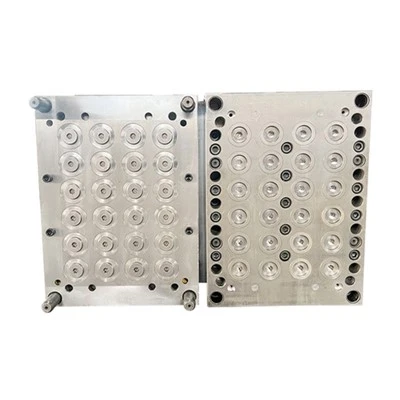
At the end of the day, a PET preform mold can absolutely work in a high-temperature environment – it’s just a matter of using the right material, coating, and design. Don’t let old myths or bad experiences from cheap tooling scare you off. If you’re ready to stop dealing with mold issues and start producing consistent preforms in high temps, reach out to us to chat through your requirements. We’re here to help, no sales pitches, just real advice from guys who build these molds every single day.
Cap Mold References:
- Tool Steel Technical Data Handbook. ASM International, 2019.
- PET Packaging Manufacturing Process Guidelines. Society of Plastics Engineers, 2021.
- High-Temperature Mold Design for Injection Molding. Manufacturing Engineering Magazine, Vol. 168, No. 3, 2022.
Taizhou Koni Mould Co., Ltd.
As one of the most professional pet preform mold manufacturers and suppliers in China, we also support customized service. Please feel free to wholesale high quality pet preform mold made in China here from our factory. For pricelist, contact us now.
Address: No. 97 Jinju Road, Chengjiang Subdistrict, Huangyan District, Taizhou City, Zhejiang Province
E-mail: kn@kenimould.com
WebSite: https://www.kenimouid.com/
