Hey guys, if you’ve ever watched a CNC robot spin into action mid-job and wondered how it cuts through aluminum one minute and softens wood the next without messing up, you’re not alone. As a CNC robot supplier, I get asked this question all the time—from small shop owners just scaling up to factory managers looking to level out production. It’s not just about the machine itself; it’s how we tweak every little variable to match the material you’re working with, and that’s where most people miss the mark. Let’s break this down like we talk to a client who’s trying to wrap their head around what they’re actually getting when they invest in a CNC robot. CNC Robot
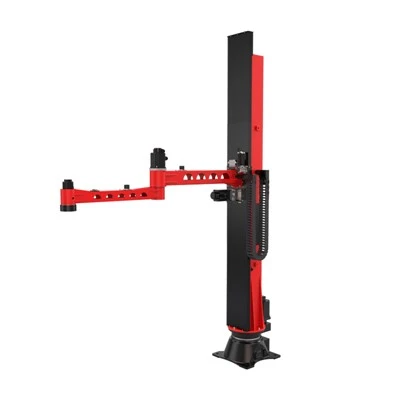
First off, let’s start with the basics that most folks gloss over: not all CNC robots are built the same. The ones we supply, for example, come with interchangeable tool heads and adjustable spindle speeds that aren’t just “nice to have” features—they’re non-negotiable for switching between materials. You can’t use the same fast, sharp bit for cutting through 3-inch thick steel that you use for carving basswood, and you can’t crank the spindle speed up for aluminum when you’re milling foam (trust me, we’ve seen that mistake firsthand when a new client tried it and melted a bit to the machine’s colloid).
Let’s go through the most common materials our clients work with, and how our CNC robots handle each one like a pro, no matter the job. Starting with soft materials first: foam, wood, acrylic, even rubber. For these, the biggest thing is speed and feed rate. Feed rate is how fast the tool moves across the material, right? For soft stuff, we crank that feed rate way up—sometimes as high as 300 inches per minute—because you don’t have to fight through dense material. The spindle speed here is usually between 10,000 and 20,000 RPM, which is fast enough to make clean cuts without burning the wood. Wait, speaking of burning wood: that’s another trick. If a client is working with oak or pine, we might add a little coolant to the tool path, not to cool the machine, but to clear away sawdust and keep the edge from turning brown. For acrylic, we go even faster on feed rate and make sure the bit is a single-flute design—single flutes don’t leave behind those ragged edges that force you to sand later, which saves so much time on finishing.
Next up, materials that are a step up in density: aluminum, brass, copper. These are the ones that test a CNC robot’s accuracy because they don’t give much. When machining aluminum, for example, the spindle speed is lower—usually 6,000 to 10,000 RPM—because spinning a bit too fast will make the aluminum stick to the tool, creating that gunk we call “built-up edge” (BUE for short, we use that term in the shop). We also use a different type of bit here: a solid carbide end mill, not the high-speed steel ones you might use for wood. Solid carbide is way harder, so it doesn’t dull as fast when cutting through aluminum’s hardness. The feed rate here is slower than soft materials, around 50 to 150 inches per minute, because you want the tool to bite into the material without skidding. Another thing we adjust is the depth of each cut: for aluminum, we do shallow passes instead of deep ones. Deep passes put too much pressure on the spindle, which can throw off the machine’s alignment and cause bad cuts. We tell clients this all the time—“small bites, not big ones” is our go-to motto for metal.
Then we get to the heavy hitters: steel, titanium, composites like carbon fiber. These are the materials that most small shops shy away from, but our CNC robots can handle them with the right tweaks. For steel, the spindle speed is even lower—2,000 to 5,000 RPM—because steel is super dense and generates a ton of heat. Too much heat and the bit will soften, which ruins the cut and wastes time replacing tools. We use coolant here, not just a little mist, but a flood coolant system that bathes the tool and the cut area. That’s a must for steel; we’ve had clients skip that and end up with a bent tool that cost them hundreds to replace, plus a ruined workpiece. Titanium is even trickier because it’s not just dense, it’s gummy. You have to adjust the feed rate to be just right—too slow and the tool gets gummed up, too fast and it snaps. We usually recommend 30 to 80 inches per minute for titanium, paired with a ceramic-coated bit that resists heat and friction. For carbon fiber composites, it’s a different issue: the fibers can fray if the feed rate is wrong, so we use a router bit with a sharp, pointed tip to slice through the fibers cleanly, and a moderate spindle speed to prevent the material from delaminating (that’s when the layers of carbon fiber separate, and no one wants that on their aerospace parts).
Wait, I should mention something that’s not just tooling and speed: how the CNC robot’s control system is programmed. A lot of people think it’s just plugging in a design and hitting go, but no—our team works with every client to adjust the G-code (that’s the programming language for CNC machines) based on their material. For example, if a client is making a sign out of acrylic, we’ll add a “lead in” line to the G-code: that’s a short, gentle path before the tool starts cutting, so it doesn’t dig into the acrylic and leave a divot. For steel, we add pecking cycles—where the tool retracts a little every few cuts to clear out chips and let coolant reach the area. That stuff makes a huge difference; without those little adjustments, even the best CNC robot will mess up a job.
I know some of you are thinking, “What about different grades of the same material? Like soft pine vs. hardwood, or 6061 aluminum vs. 7075 aluminum?” Yeah, that’s another layer. 7075 aluminum is way harder than 6061, so we adjust the spindle speed and feed rate even lower for 7075. Hardwoods like mahogany are denser than basswood, so we slow the feed rate a tiny bit and use a bit with more flutes (3 or 4 instead of 2) to remove more material per cut without bogging down. It’s not a one-size-fits-all, which is why we don’t sell off-the-shelf machines and say “this works for everything”—we work with each client to set up their CNC robot for the specific materials they use most.
Let me throw in a real quick example from last month, just to make this concrete. We had a client who makes custom kayak parts, and they were switching between cutting polyurethane foam (for prototypes) and 6061 aluminum (for the mold frames). Before they got our CNC robot, they had a cheap machine that would either melt the foam bits or dull the aluminum bits in an hour. We swapped their tool heads between jobs—high-speed spiral bits for foam, solid carbide end mills for aluminum—and adjusted the spindle speed, feed rate, and coolant settings. Now they can switch between the two materials in 15 minutes, no downtime, and their tool life is up 300%. That’s the kind of result we’re here for, right?
Now, let’s address the most common mistake we see: people buying a CNC robot without thinking about their future material needs. A lot of small shops start with wood, then move to aluminum, then want to try carbon fiber, and their old machine can’t handle it. That’s why when we consult with potential clients, we ask what materials they’re planning to work with now and in the next 2 years. If you’re only doing wood, a basic machine works, but if you think you might move to metal or composites down the line, you need a CNC robot with a heavier spindle, better control system, and compatible tooling. We build our machines to grow with you, not just for what you need today.
Another thing that ties into all of this: tool maintenance. Even the best CNC robot can’t work well with dull bits. For soft materials, a dull bit leaves ragged cuts and can cause burn marks. For hard materials, a dull bit snaps easily, which is a safety hazard and a waste of money. We give every client we work with a guide to maintaining their bits—how to sharpen them, how to store them, how to check for wear before a job. It’s a small step, but it makes a huge difference in how well the robot handles different materials.
I know this is a lot of info, so let’s wrap it up simply: a CNC robot doesn’t just “know” what material it’s cutting—it learns, based on the settings we program, the tooling we use, and the control system’s ability to adjust on the fly. As a supplier, we don’t just sell machines; we make sure our clients have all the tools, knowledge, and support to get clean, accurate cuts no matter if they’re carving a wooden sign or milling a steel part.
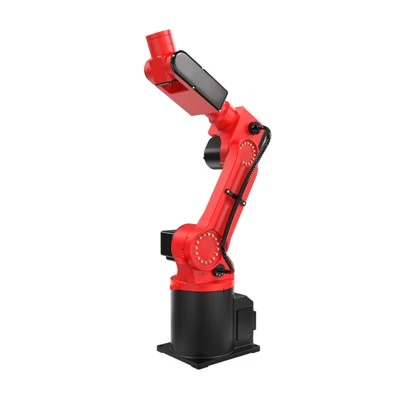
If you’re in the market for a CNC robot and want to make sure it can handle all the materials you throw at it, we’re here to help. Whether you’re a small shop just starting out or a big factory looking to expand, we can walk you through the best setup for your needs. Just reach out to our team to start a conversation about your projects, and we’ll make sure you get a machine that works as hard as you do.
Welding Robot References
- "CNC Machining Fundamentals" by S.M. Gorling, Industrial Press Inc., 2021
- "Tool Selection for CNC Operations" by Walter Tools, 2022
- "Material-Specific CNC Cutting Parameters" by the American Society of Mechanical Engineers (ASME), 2020
- "Carbon Fiber Composite Machining Best Practices" by Modern Machine Shop, 2021
- "Coolant Systems in CNC Machining" by the Society of Manufacturing Engineers (SME), 2022
Robotic Technology (GD) Co., Ltd.
Robotic Technology (GD) Co., Ltd. is one of the most experienced cnc robot manufacturers and suppliers in China, also supports custom service and one year warranty. Please feel free to wholesale CE approved cnc robot for sale here from our factory. Contact us for quotation.
Address: Room 102, No. 30,Hengfeng 2nd Road,Daguo, Changping Town, Dongguan City,Guangdong,China
E-mail: admin@iroboticplus.com
WebSite: https://www.rb-tic.com/
