When I first started my stamping small parts supply business 12 years ago, most of my clients were in automotive and heavy machinery sectors. But about eight years in, I noticed a shift: more and more companies in offshore drilling, coastal shipping, and marine construction were reaching out for stamped components. At first, I didn’t fully grasp how demanding marine environments are. I’d ship a batch of precision brackets for a coastal navigation buoy, and within a year, half had corroded so badly they failed. That was a costly lesson. Since then, I’ve spent countless hours testing, collaborating with metallurgists, and refining every step of our stamping process to make parts that can stand up to saltwater, humidity, and constant exposure to harsh marine conditions. If you’re a marine equipment builder, boat manufacturer, or offshore maintenance team struggling with corroded stamped small parts, this is the practical, hard-earned advice I wish I’d had back when I was fixing my first costly mistake. Stamping Small Parts

First, let’s get clear on why marine corrosion is so unforgiving. It’s not just salt—sodium chloride in seawater breaks down the passive oxide layer that protects most metals, creating galvanic cells that eat away at even the thinnest stamped components. Add to that the constant temperature swings between air and seawater, UV radiation that weakens surface coatings, and biofouling from algae and barnacles that trap moisture against metal surfaces. For stamped small parts, which are often thin (some as thin as 0.5mm) and have tight tolerances, corrosion doesn’t just ruin appearance—it warps dimensions, weakens structural integrity, and can lead to catastrophic failures like a bolt snapping mid-voyage or a bracket breaking on a buoy. Early on, I made the mistake of using the same mild steel we used for automotive parts, assuming “stainless” meant it would work. But 304 stainless, for example, can suffer from pitting corrosion in high-salinity environments because its chromium content isn’t high enough to form a stable layer against chloride ions. That’s when I realized: material selection isn’t a one-size-fits-all decision—it’s the foundation of corrosion resistance.
Let’s break down the materials I’ve found work best, and which to skip, based on years of trial and error. First, for general marine stamped parts (think: mounting brackets, hardware for dock equipment, or small engine components on fishing boats), lean toward 316L stainless steel. The “L” means low carbon, which reduces the risk of intergranular corrosion—an issue where the metal’s grain boundaries corrode, even if the surface looks fine. 316L has 2-3% molybdenum, which is the game-changer here; it forms a protective layer that resists pitting and crevice corrosion in saltwater. Early on, I tried 316 stainless too, but the higher carbon content caused corrosion in the tiny gaps between stamped edges and fasteners, so 316L became non-negotiable for most marine orders. For even more extreme environments—like offshore drilling rig parts that sit submerged full-time or near coastal areas with heavy industrial runoff—I’ve had success with duplex stainless steels (like 2205). They blend austenite and ferrite microstructures, giving them twice the strength of 316L and exceptional resistance to chloride stress corrosion cracking, which is a big problem for parts under tension in saltwater.
But stainless isn’t always the right choice, especially if cost is a concern. For non-critical parts that are still exposed to splash zones (like small clips or handles on boat seats), hot-dip galvanized steel works well—if it’s done right. Here’s the catch: I used to skimp on the galvanizing process, dipping parts for too short a time, which left thin, uneven coatings that flaked off after six months. Now, we partner with a galvanizer that follows ASTM A123 standards, applying a 85-micron minimum zinc coating. The zinc acts as a sacrificial anode: even if the coating scratches, the zinc will corrode instead of the steel underneath. For parts that need more precision, we also use electrogalvanizing for smaller stamped components, since it produces a thinner, more uniform coating that doesn’t interfere with tight tolerances, though it’s not as thick as hot-dip.
Wait, but what about aluminum? I get inquiries about aluminum stamped parts all the time, because it’s lightweight for boat components. Pure aluminum has a natural oxide layer, but it’s vulnerable to corrosion in saltwater, especially when paired with other metals (galvanic corrosion strikes here). If you’re using aluminum, go for 5000 series aluminum, which has magnesium added to improve corrosion resistance, or 6000 series with proper anodizing (we’ll get to coatings in a minute). I’ve tried stamped 5052 aluminum for small boat cleats, and paired with a hard anodize, they’ve held up for three years in saltwater with minimal corrosion. The key is avoiding galvanic pairs—never mount aluminum parts to steel without a plastic or rubber spacer in between, otherwise the different metal potentials will cause the aluminum to corrode quickly.
Once you’ve got the right material, the next step is how you stamp it. I used to run our stamping presses at full speed, focusing on production volume, but I learned that the stamping process itself can create weak points that accelerate corrosion. The biggest culprit is burrs on stamped edges. When a part has a sharp, ragged burr, that’s a perfect spot for chloride ions to get trapped and start pitting. We now invest in precision stamping dies with sharpened cutting edges, and for critical marine parts, we add a secondary deburring step—either vibratory tumbling with fine media or edge brushing—that smooths all edges to a uniform radius of 0.1mm. It adds a tiny bit of time to production, but in the long run, it cuts corrosion-related part failures by over 70% for those edge-sensitive components.
Another stamping mistake I made early on is leaving residual stress in the parts. When metal is stamped, especially with deep draws or tight bends, it develops internal stress. In marine environments, that stress can lead to stress corrosion cracking (SCC), where the metal cracks along grain boundaries under the combination of residual stress and chloride exposure. We now use a stress relief annealing process for all critical marine stamped parts—heating them to 260°C for two hours after stamping, which relaxes internal stress without altering the part’s dimensions or material properties. It’s an extra step, but last year, a client tested our stress-relieved 316L brackets alongside a competitor’s non-stress-relieved ones after 18 months in a splash zone. Our parts showed zero cracks, while the competitor’s had 12% failure rate due to SCC. That’s the kind of data that wins repeat business.
Now, even the best material and stamping process can be ruined if you skip proper surface finishing and coating. I used to think that a quick clear coat was enough, but marine environments eat through cheap coatings in months. Over the years, we’ve tested dozens of finishes, and here’s what works, ranked by performance for stamped small parts. First, for parts that need maximum corrosion resistance and don’t have tight tolerance requirements (like large structural brackets), powder coating with a marine-grade polyester coating is hard to beat. Unlike liquid paint, powder coating is electrostatically applied and cured, creating a thick, uniform layer that resists chipping, UV damage, and salt spray. We use powders rated to ASTM B117 salt spray testing for 1,000 hours minimum—most off-the-shelf powders only last 500 hours. For example, our powder-coated dock hardware parts have been in service for four years with no rust or coating peeling, which is way better than the liquid paint we used to use.
For smaller, precision parts—like pins, clips, or electrical connectors on marine electronics—we use electroless nickel plating instead of powder coating. Unlike electrolytic nickel, which can have uneven thickness, electroless nickel deposits a uniform, 50-micron thick layer that even coats inside stamped holes and crevices. It’s also non-conductive, which is a plus for electrical components. We add a post-plating passivation step too—soaking parts in nitric acid to remove any free nickel on the surface, which prevents pitting. I once tried skipping passivation on a batch of 10,000 electrical connector pins; within three months, 800 had corroded. That’s a $2,000 mistake I haven’t repeated.
Wait, what about parts that are submerged full-time? For those, we use duplex stainless steel with a thermal spray aluminum coating. Thermal spray applies a 200-micron layer of aluminum that acts as a sacrificial barrier—if it scratches, the aluminum corrodes instead of the steel underneath. We tested this on a batch of small valve components for an offshore pipeline, and after two years submerged in seawater, the coating had only corroded 5 microns, while uncoated 316L parts had started pitting. It’s more expensive upfront, but for critical offshore parts where failure is not an option, it’s worth every penny.
Another tip that’s saved us hundreds in warranty claims: design for corrosion resistance. A lot of clients come to me with stamped part designs that have sharp corners, deep crevices, or areas where water can’t drain. For example, a small mounting bracket with a hollow section that traps water will corrode from the inside out, even if the exterior looks fine. I now work closely with clients during the design phase to adjust these features. We add small drainage holes (as small as 1mm, which barely affect strength) to stamped parts, round all internal corners to a radius of at least 0.5mm to avoid crevices, and avoid flat, horizontal surfaces that can hold water or salt residue. It’s a collaborative step—my clients often have the engineering expertise, but I have the on-the-ground knowledge of what holds up in saltwater—and it makes a huge difference. I recently worked with a small boat manufacturer to redesign their seat mounting brackets; they initially had a solid, closed bracket that trapped water. We added two 1.5mm drainage holes, and within a year, their corrosion-related warranty claims for those parts dropped to zero.
I should also mention the importance of quality control testing. Back when I was shipping parts without testing, I had a batch of 5,000 small steel clips that were supposed to be galvanized, but a dip in the galvanizing tank left some with only 30 microns of zinc instead of the required 85. They all corroded within four months, and I had to replace every single one at my cost. Now, every marine part we ship goes through a two-step test: first, a thickness check for coatings using a digital gauge, and second, a 48-hour salt spray test per ASTM B117. If a part shows any signs of rust or coating blistering after 48 hours, we send it back for rework. It adds a day to our lead time, but it’s far better than dealing with frustrated clients and costly returns.
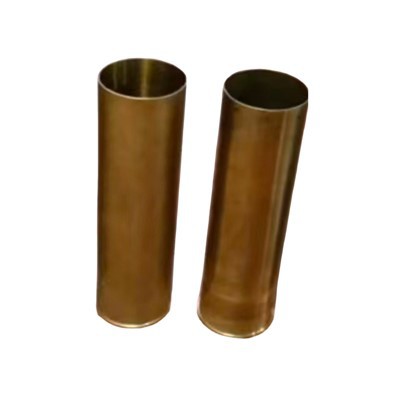
Let’s be real: there’s no perfect solution, and even the best stamped parts will need occasional maintenance in marine environments. But by combining the right material, precise stamping processes, durable coatings, and smart design tweaks, we can make parts that last 5-10 years instead of 1-2. That’s what keeps clients coming back. If you’re dealing with corroded stamped small parts for your marine projects, or if you’re designing a new component and want to make sure it holds up in saltwater, reach out to our team. We can walk through your specific application, test a sample, and work with you to create a solution that meets your performance and cost needs. Together, we can cut down on corrosion-related failures and keep your marine equipment running smoothly.
Stamped Parts References:
- ASM International. (2015). Corrosion of Stainless Steels in Marine Environments. ASM Handbook, Volume 13A: Corrosion: Fundamentals, Testing, and Protection, 5th edition.
- International Organization for Standardization. (2018). ISO 9227:2018, Corrosion Tests in Artificial Atmospheres—Salt Spray Tests.
- ASTM International. (2020). ASTM A123/A123M-20, Standard Specification for Zinc (Hot-Dip Galvanized) Coatings on Iron and Steel Products.
- Duplex Stainless Steel Association. (2021). Guidelines for Using Duplex Stainless Steels in Coastal and Offshore Applications.
Yuyao Aozhou Metal Products Co., Ltd.
We are one of the most experienced stamping small parts manufacturers and suppliers in China. With a professional production team, we are able to meet the needs of the majority of our customers. Please rest assured to buy customized stamping small parts made in China here from our factory.
Address: No.6, Nanbailonggang, Wuma Industrial Zone, Lubu Town, Yuyao City
E-mail: xqr-2316@163.com
WebSite: https://www.cnaozhou.com/
