Hey everyone, it’s [Your Name] here, straight from the Robot Parts supplier side. You probably don’t think about it that much, but every robot you see—whether it’s a factory arm welding car parts, a delivery bot dropping off your package, or even a robot vacuum zooming around your living room—only works as long as its parts hold up. Today, we’re diving into something I get asked all the time: What’s the actual lifespan of robot parts? Spoiler: It’s not one-size-fits-all, and as someone who’s been selling these parts for over a decade, I’ve seen way too many folks guess wrong and end up with a broken robot on their hands. Let’s break this down like we’re chatting over coffee, no stuffy jargon, promise. Robot Parts
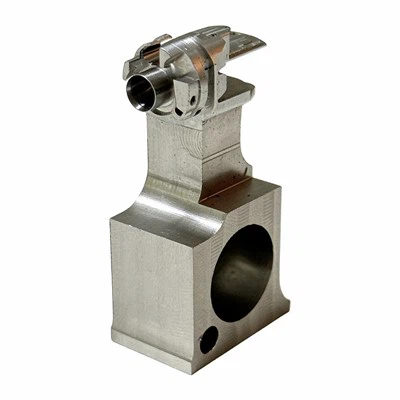
First off, let’s get one thing straight: Robot parts don’t die of old age like humans. They fail because of stress, wear, and how they’re used. Think about it—if you run a robot 24/7 in a car factory, that’s way different than a delivery bot that only works 8 hours a day, or a research robot in a lab that’s only used on weekdays. I’ve had customers who run their industrial robot arms 3 shifts a day come back to buy new gearboxes after 3 years, and others who use the same type of arm for light assembly in a small workshop, and they’re still going strong after 7. That’s the big secret right there: usage is everything.
Let’s start with the most common parts people ask about, because those are the ones that break first. First up: motors. Almost every robot has a motor—from the tiny ones in your Roomba to the big servo motors in industrial arms. What’s their lifespan? Most standard brushless DC motors, which are the workhorses of modern robots, last between 20,000 and 50,000 hours. Wait, that sounds like a lot, but let’s do the math. If you run a motor 8 hours a day, 5 days a week, that’s roughly 2,000 hours a year. So that’s 10 to 25 years, right? But if you run it 24/7, that’s 8,760 hours a year, so only 2 to 5 years. Oh, and here’s a pro tip I always tell customers: regular lubrication checks can add another 5,000 to 10,000 hours. I’ve seen folks skip that, and their motors burn out way sooner than they need to.
Next, gearboxes. These are the parts that multiply the motor’s torque so the robot can lift heavy stuff—super important for industrial robots. Gearbox lifespan is a bit trickier because it depends on load. A harmonic drive gearbox, which is common in small to medium robots, lasts around 15,000 to 30,000 hours under rated load. If you overload it by trying to lift something way heavier than it’s rated for? That can drop its lifespan by half, easy. And planetary gearboxes, which are used in bigger arms, usually last 30,000 to 60,000 hours when used correctly. I had a customer last year who tried to use a planetary gearbox meant for a 50kg load to lift 100kg—broke in 6 months. Total rookie move, and it cost him way more than if he’d bought the right part in the first place.
Then there’s bearings. Bearings are everywhere—every moving part in a robot has bearings, basically. Their lifespan is super dependent on contamination. If you’re in a dusty factory where metal shavings get into the bearings, that’s way worse than a clean lab. Most plain bearings last 5,000 to 10,000 hours in dirty environments, but up to 30,000 hours in clean, controlled spaces. Rolling element bearings (the ball bearings and roller types) are a bit tougher—they get 20,000 to 40,000 hours in decent conditions, less if they’re not properly sealed. I always sell sealed bearings to industrial customers because it’s a small extra cost that saves a ton of money in repairs later.
Now, what about the electronic parts? People forget that robots aren’t just metal and moving parts—circuit boards, sensors, controllers matter too. Sensor lifespan is all about what kind. Proximity sensors, which detect objects, usually last 50,000 to 100,000 hours, as long as they’re not exposed to extreme heat or cold. Camera sensors, which are used in vision systems, are a bit shorter—around 30,000 to 70,000 hours, because their imaging chips degrade over time with constant light exposure. Circuit boards and controllers? These are the ones that can fail suddenly, not gradually. Most modern controller electronics have a lifespan of 50,000 to 80,000 hours, but if they’re near a machine that vibrates nonstop or gets wet, they might die in half that time. I’ve had customers with outdoor delivery robots that had water get into their controllers—they burned out in a year, whereas indoor ones of the same model are still going strong after 10.
Wait, let’s talk about some of the “wear and tear” parts that people don’t think about until they break. Belts and cables, for example. A timing belt in a small robot usually lasts 10,000 to 20,000 hours, but if it’s misaligned, it can slip and break in a few hundred hours. Cables—especially the ones that move with the robot arm—are a big one. Those are called “flex cables,” and their lifespan is measured in bend cycles, not hours. Most good flex cables can handle 10 million to 20 million bends before the wires inside fray and break. If a robot arm moves 10 times a minute, that’s about 525,600 bends a year—so 20 to 40 years? But if it moves 100 times a minute, that’s 5 million bends a year, so only 2 to 4 years. That’s a critical point—always check the bend cycle rating on your cables, not just the length.
Now, here’s a question I get all the time: Can you extend the lifespan of robot parts? Short answer: Yes, if you do regular maintenance and use the right parts. Let’s list some quick, easy tips I give all my customers. First, don’t overload your parts. That’s the #1 cause of early failure. If a gearbox says it can handle 20kg, don’t put 25kg on it. Second, do regular cleaning. Dust, dirt, and moisture are the enemies of almost every robot part. Wipe down motors, check bearings for gunk, keep controllers dry. Third, lubricate moving parts on schedule. I know it’s a hassle, but a $10 tube of grease can add 10,000 hours to a gearbox. Fourth, replace parts before they fail if you can. A lot of companies wait until a part breaks, which means downtime—downtime for a factory robot can cost thousands of dollars an hour. Proactive replacements are way cheaper in the long run.
I also want to bust a common myth here. Some people think cheap parts are the same as good parts. Let me tell you from experience: Cheaping out on robot parts will cost you way more. I’ve had customers who bought a $50 motor from a no-name brand instead of a $100 one from a reputable supplier, and that cheap motor burned out in 6 months, so they had to buy two anyway. The good parts might cost more upfront, but they last longer, and you don’t have the downtime. That’s why I always push my customers to get quality parts—we’re a supplier, but we don’t sell junk. We stand behind our parts because we know how important reliability is.
Wait, let’s put this all in perspective with some real examples. Last year, I had a customer who ran a small packaging line with 4 robotic pick-and-place arms. He was using cheap gearboxes from a random online supplier, and every 18 months, one would break, costing him a full day of downtime and $800 in replacement parts. He switched to the gearboxes we supply, and 18 months later, all 4 are still running strong—no breakdowns. He told me the extra $200 per gearbox was worth it, because he didn’t have to deal with lost production. That’s the kind of story I hear all the time, and it’s why I do what I do.
Another example: A customer who had a fleet of delivery robots. Their old cables were breaking every 6 months because they were using standard cables instead of flex-rated ones. We switched them to our industrial flex cables, and those cables have lasted 2 years now, no issues. They saved a ton on replacement costs and didn’t have to re-route their robots every few months. That’s the difference between picking the right part and guessing.
Now, let’s talk about when parts should be replaced, even if they still work. Most robot parts have a recommended service life that’s way before they fail. For example, even if a motor is still running at 40,000 hours, if it’s reached its 50,000 hour mark, it’s a good idea to replace it soon, because it’s more likely to fail unexpectedly. Unexpected failures are the worst because they catch you off guard. Planned replacements let you schedule downtime during off-hours, which saves you money.
So, to wrap this up: The lifespan of robot parts isn’t a number you can pull out of thin air. It depends on how you use the robot, the environment it’s in, the quality of the parts, and how well you maintain them. Motors last 20k-50k hours, gearboxes 15k-60k hours, bearings 5k-40k hours, electronics 30k-100k hours, and flex parts are measured in bend cycles. The biggest mistakes people make are overloading parts, skipping maintenance, and buying cheap stuff.

If you’re in the market for robot parts—whether you’re replacing a broken one, upgrading your robot fleet, or just want to make sure your parts last as long as possible—we’re here to help. We don’t just sell parts; we’ve been in the game long enough to tell you what actually works, and what will just end up costing you more in the long run. Reach out to our team to chat about your needs, and we can help you pick the right parts that fit your budget and your usage. No pressure, just honest advice.
CNC Machining Service References:
- Robotics Industries Association. (2022). "Robot Component Lifespan Best Practices". RIA Technical Report.
- International Organization for Standardization. (2021). "ISO 10218-2: Robots and robotic devices – Safety requirements for industrial robots – Part 2: Robot systems and integration". ISO.
- Robotics and Automation Magazine. (2023). "Wear Mechanisms in Robot Motion Components". IEEE Xplore.
- National Institute of Standards and Technology. (2022). "Lifetime Prediction for Industrial Robot Actuators". NIST Technical Note.
- Journal of Mechanical Design. (2021). "Effect of Operating Conditions on Robot Gearbox Lifespan". ASME Digital Collection.
Shenzhen Jingcheng Dingyi Forming Technology Co., Ltd.
Shenzhen Jingcheng Dingyi Forming Technology Co., Ltd. is one of the most professional robot parts manufacturers and suppliers in China, also supports customized service with low price. Please feel free to buy bulk cheap robot parts from our factory. For quotation, contact us now.
Address: 1st Floor, Building 3, Huafeng Zhenbao Industrial Park, No.137 Shihuan Road, ShiYan Town, Bao’An District, ShenZhen, PRC
E-mail: 13071475061@163.com
WebSite: https://www.jctop-cnc.com/
