If you’ve ever walked past a modern skyscraper with floors that look like seamless sheets of glass, or stepped into a sunlit home where the windows stay frost-free all winter, you’ve experienced the work of insulating glass (IG) accessories beyond the double-paned glass itself. As a supplier dedicated to these often-overlooked components, I’ve spent years talking to glaziers, architects, and building owners who tell me that the success of an IG unit hinges not just on the glass panes, but on the small, specialized parts that hold it all together. Too often, these parts are seen as afterthoughts—until they fail. Today, I want to break down the functions of these “other” IG accessories, why they matter far more than you might think, and how getting the right ones makes all the difference. Other Insulating Glass Accessories

Let’s start with the part that most people never see, but which is responsible for keeping moisture out of the air gap between the two glass panes: the desiccant. Wait, you might say, isn’t that part of the seal? No—while the primary seal keeps outside air out, the desiccant is the silent guard that eliminates any moisture that’s trapped inside the unit during manufacturing. When IG units are assembled, a small amount of ambient air gets sealed between the panes; if that air has any water vapor in it, the second the temperature drops, that vapor turns into condensation or frost. Not only does that make the window look foggy, but over time, the moisture can also eat away at the edge seals, leading to air leaks and energy loss. Desiccants are porous materials—most commonly molecular sieves, which can trap water vapor up to 20% of their own weight without breaking down. Their function isn’t just to absorb initial moisture from assembly, but also to adsorb any moisture that seeps through the primary seal over the life of the window. That’s why choosing the right desiccant size and type is critical: too little, and it gets saturated in a few years; too much, and it takes up space that could weaken the edge seal, creating a whole new set of problems.
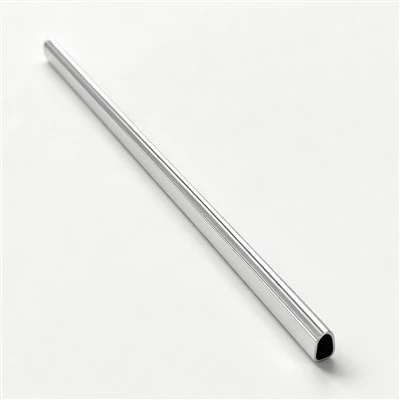
Next, consider the spacers. For anyone not in the IG industry, spacers are the thin, rigid strips that run along the perimeter between the two glass panes, creating the uniform air gap that makes the unit insulating. But their function goes way beyond just holding the panes apart. First, they act as a structural frame, distributing pressure evenly across the glass to prevent warping, especially in large-format IG units used in commercial buildings. Second, they house the desiccant I mentioned earlier—most spacers have a hollow core where the desiccant is loaded, so it’s protected but can still interact with the air inside the gap. Modern spacers aren’t just aluminum, either. Stainless steel and even composite spacers are growing in popularity, because aluminum is prone to thermal bridging—meaning it conducts heat and cold, which can create cold spots on the window and increase energy loss. Composite spacers, which are non-metallic, eliminate thermal bridging entirely, making them a top choice for energy-efficient buildings. But here’s the thing: not all spacers are the same. The right spacer thickness depends on the climate: in cold regions, a wider gap (and thus a wider spacer) creates better insulation, while in milder climates, a narrower gap works just as well without adding unnecessary cost.
Then there are the primary and secondary sealants. I know, some people group these into the basic IG components, but they’re among the most important “accessories” when it comes to performance. The primary sealant is the inner seal, which bonds directly to the glass and the spacer, creating a barrier against moisture and gas exchange. Most primary sealants are butyl rubber, which is highly flexible and resistant to water vapor transmission—one of the few materials that can create a reliable, long-lasting seal on glass. The secondary sealant, on the other hand, is the outer seal, applied over the primary seal to add structural strength and extra protection against UV rays and outside contaminants. For commercial units, secondary sealants are often polysulfide or silicone, which can withstand extreme temperatures and don’t degrade from sun exposure. The balance between primary and secondary sealant is key: if the primary seal is too thin, moisture will seep in; if the secondary seal is too thick, it can crack when the window expands or contracts with temperature changes. I’ve seen so many IG units fail because the wrong sealant was used for the climate—for example, a silicone secondary seal in a hot, dry region that doesn’t adhere well to the butyl, leading to leaks within a year of installation.
Wait, what about the accessories that hold the IG unit in place once it’s installed? Those are the gaskets and glazing seals, and they’re just as critical as the internal components. Gaskets are rubber or EPDM strips that fit between the IG unit and the window frame, creating a tight, weatherproof seal that keeps rain, wind, and drafts out. But their function isn’t just about sealing—they also act as a cushion, absorbing vibrations from wind, traffic, or building movement, which prevents the glass from cracking. For example, in high-rise buildings, wind can create constant pressure on window panes, and without a good gasket, that pressure can cause the glass to flex and crack over time. Gaskets also need to be resistant to UV rays and temperature extremes; in areas that get very cold, a hard, brittle gasket will crack, while a soft, sticky gasket in hot areas will break down and lose its shape. Glazing seals, which are often paired with gaskets, are used on the exterior of the window, adding an extra layer of protection against water penetration. I recently worked with a hotel in Florida that had a problem with window leaks during hurricanes—turns out, the original gaskets were not rated for saltwater resistance, so they degraded quickly. Swapping them for marine-grade EPDM gaskets solved the problem completely, and the guests no longer reported water seepage during heavy storms.
Another accessory that most people don’t think about is the edge cover, or spacer cover. These are thin plastic or metal strips that fit over the outer edge of the spacer and sealant, giving the IG unit a finished, clean look. But their functional role is just as important as their cosmetic one. Edge covers protect the secondary sealant from UV damage, which is crucial because UV rays can cause sealants to crack and degrade over time. They also prevent physical damage—when workers are on a construction site, they might bump the window edge, and without an edge cover, the seal can get nicked, leading to leaks. For residential IG units, edge covers are often white or black to match the window frame, but for commercial units, they can be customized to fit any design, which is a big plus for architects looking for a seamless look across a building facade.
Let’s not forget the gas fills, either. Argon and krypton gas fills are often sold as add-ons, but they’re a key accessory that boosts the insulation value of IG units. Air has a thermal conductivity of about 0.026 W/m·K, while argon has a conductivity of 0.016 W/m·K—so it’s almost 40% more insulating. Krypton is even better, with a conductivity of 0.008 W/m·K, which makes it ideal for very cold climates or thin IG units where a wider air gap isn’t possible. The process of filling the gap with gas happens right after the desiccant is loaded and the primary seal is applied, so the gas is sealed inside, keeping moisture out and insulating in. The function of the gas fill is to reduce heat transfer by convection and conduction; because gas is less dense than air, it moves more slowly between the panes, so less heat is lost in winter or gained in summer. I always tell my clients that a good gas fill is only as good as the seal that holds it in—if the seal leaks, the gas will escape in a few years, and the unit will perform just like a standard double-paned window.
Now, I want to talk about a common misconception: many people think that all IG accessories are one-size-fits-all, but that’s simply not true. As someone who’s been in this industry for over a decade, I’ve seen firsthand how choosing the wrong accessory can lead to costly failures, while choosing the right ones can make an IG unit last 20, 30, even 40 years. For example, in hot, sunny climates, you need sealants that resist UV degradation and desiccants that can handle higher temperatures without losing their moisture-absorbing capacity. In cold, snowy climates, spacers with low thermal conductivity and gas fills that work well at low temperatures are a must. Even for residential vs. commercial projects, the needs are different: residential units might prioritize cost, so standard spacers and sealants work, while commercial units need to meet strict energy codes, so they require specialized, high-performance accessories.
I recently worked with a glazier in Chicago who had a project for a 50-unit apartment building. The building code required IG units with an R-value of at least 5, but the standard units he’d been using only hit 4.2. After switching to composite spacers, argon gas fills, and a more efficient desiccant, we were able to get the R-value up to 5.5, which not only met the code but also qualified the building for a local energy efficiency tax credit. The best part? The accessories didn’t add much to the overall cost—only about 8% of the total window cost—but the long-term energy savings for the tenants would be thousands of dollars over the life of the building. That’s the real value of these “other” accessories: they’re not just small parts, they’re investments in performance, durability, and energy savings.
I know that when you’re planning a window project, it’s easy to focus on the glass panes or the frame, but cutting corners on accessories is a mistake. A double-paned glass unit with the right accessories will outperform a triple-paned unit with cheap, poorly chosen accessories every time. That’s why I’ve made it my focus as a supplier to offer a full range of IG accessories, tailored to different climates, projects, and budgets. Whether you’re a glazier working on a small residential renovation, an architect designing a skyscraper, or a building manager looking to upgrade old windows, I can help you find the right parts for your needs.
If you’re tired of dealing with IG units that fail too soon, leak, or don’t meet your energy goals, I’d love to chat. We can talk about your project, your climate, and what you need to make your windows perform the way they should. Reach out whenever works for you to discuss your requirements and find the right insulating glass accessories for your next project.
Molecular Sieve References
- International Energy Conservation Code (IECC). 2021 Edition. International Code Council, 2020.
- Glass Magazine. “Insulating Glass Edge Seal Systems: Performance and Durability Considerations.” Vol. 47, No. 2, 2022, pp. 34-41.
- American Architectural Manufacturers Association (AAMA). “Standard for Insulating Glass Units, AAMA IGS 08-15.” 2015.
- Rosen, A. “Thermal Performance of Insulating Gas Fills in Glazing Systems.” Journal of Building Physics, Vol. 39, No. 3, 2016, pp. 245-262.
- Smith, J. “Gasket Performance in Exterior Glazing Applications: Weather Resistance and Durability.” Construction Building Materials, Vol. 127, 2016, pp. 507-514.
Renqiu City Xinjian Metal Products Co., Ltd.
Renqiu City Xinjian Metal Products Co., Ltd. is one of the most professional insulating glass accessories manufacturers and suppliers in China. With abundant experience, we warmly welcome you to wholesale customized insulating glass accessories from our factory. If you have any enquiry about free sample, please feel free to email us.
Address: Caicun Dajie Village, Changfeng Town, Renqiu City, Hebei Province China
E-mail: melody@xinjianmetal.com
WebSite: https://www.xjglassspacer.com/
